
Low Light Aquarium Plants: Easy Care Options for You
 Millie Douglas
Updated on: July 16, 2025 .
11 min read

Did you know many underwater species actually thrive better in dim environments than under bright lights? Research shows certain aquatic greens grow faster and healthier when spared from intense illumination. This revelation transforms how we approach tank design, especially for newcomers eager to create natural habitats.
Take Anacharis, for example. This hardy option flourishes under basic LED setups included with most starter kits. Its secret? It feeds on fish waste instead of requiring added fertilizers. You’ll spend less time adjusting equipment and more time enjoying your tank’s lush growth.
These resilient greens do more than beautify your space. They act as natural filters, absorbing excess nutrients that could harm aquatic life. Imagine your fish swimming through vibrant foliage that simultaneously keeps their water cleaner. It’s like having a self-maintaining ecosystem right on your desk or countertop.
Starting simple builds confidence. You’ll learn which species match your setup’s conditions without overwhelming yourself. Before long, you might find yourself expanding your underwater garden—all at a pace that feels right for you.
Understanding Aquarium Plant Needs in Low Light Conditions
Creating a thriving underwater garden doesn’t demand Hollywood-level spotlights. Many species flourish under gentle illumination, adapting beautifully to your tank’s natural rhythms. Let’s explore what makes these setups work so well.
What Defines Relaxed Lighting Setups?
Standard LED kits included with most tanks provide perfect conditions for resilient greens. Unlike high-maintenance species, these varieties grow steadily without demanding extra equipment. Their slower growth means less pruning – a win for busy hobbyists.
Why Simple Greens Boost New Hobbyists
Your first submerged garden teaches patience. When introducing new greens, expect some initial leaf melt as they adapt. This temporary phase resembles how you’d shiver jumping into a chilly pool – uncomfortable at first, but soon forgotten.
Three key benefits make these species ideal starters:
- Algae resistance: Dimmer environments naturally limit unwanted green invaders
- Stable growth: Steady development prevents sudden ecosystem changes
- Confidence building: Early successes motivate deeper exploration
Watch how your greens transform challenges into triumphs. Each recovered leaf becomes proof of your growing expertise.
Top Easy Care Aquarium Plants for Beginners
Unlock the secret to hassle-free aquascaping with resilient options that adapt to your lifestyle. These varieties thrive in basic setups, turning initial experiments into lasting successes.

Overview of Resilient Species
Cryptocoryne stands out as a champion for new enthusiasts. While it might shed some leaves during transition periods, this tough survivor rebounds stronger. Your patience pays off with vibrant foliage in bronze, green, and reddish hues. The petite Cryptocoryne parva stays under 1.5 inches tall, perfect for creating depth in smaller tanks.
Key Features for Low-Tech Tanks
Look for thick leaves that resist damage and strong roots that anchor securely in substrate. Slow-growing varieties maintain their size beautifully, reducing trimming needs. Your setup benefits from:
- Natural propagation: Runners create new shoots over time
- Water flexibility: Tolerates various pH and hardness levels
- Self-sufficiency: Draws nutrients from fish waste
These characteristics make maintenance predictable. You’ll watch colonies expand gradually, filling empty spaces without overwhelming your design. Smaller species work wonders as foreground accents, while medium-height options add texture behind decorations.
low light aquarium plants: Expert Selections
Creating a lush underwater landscape becomes effortless when you choose greens backed by aquascaping experts. These species blend beauty with practicality, thriving where others struggle while giving your tank professional polish.

Champions of Adaptability
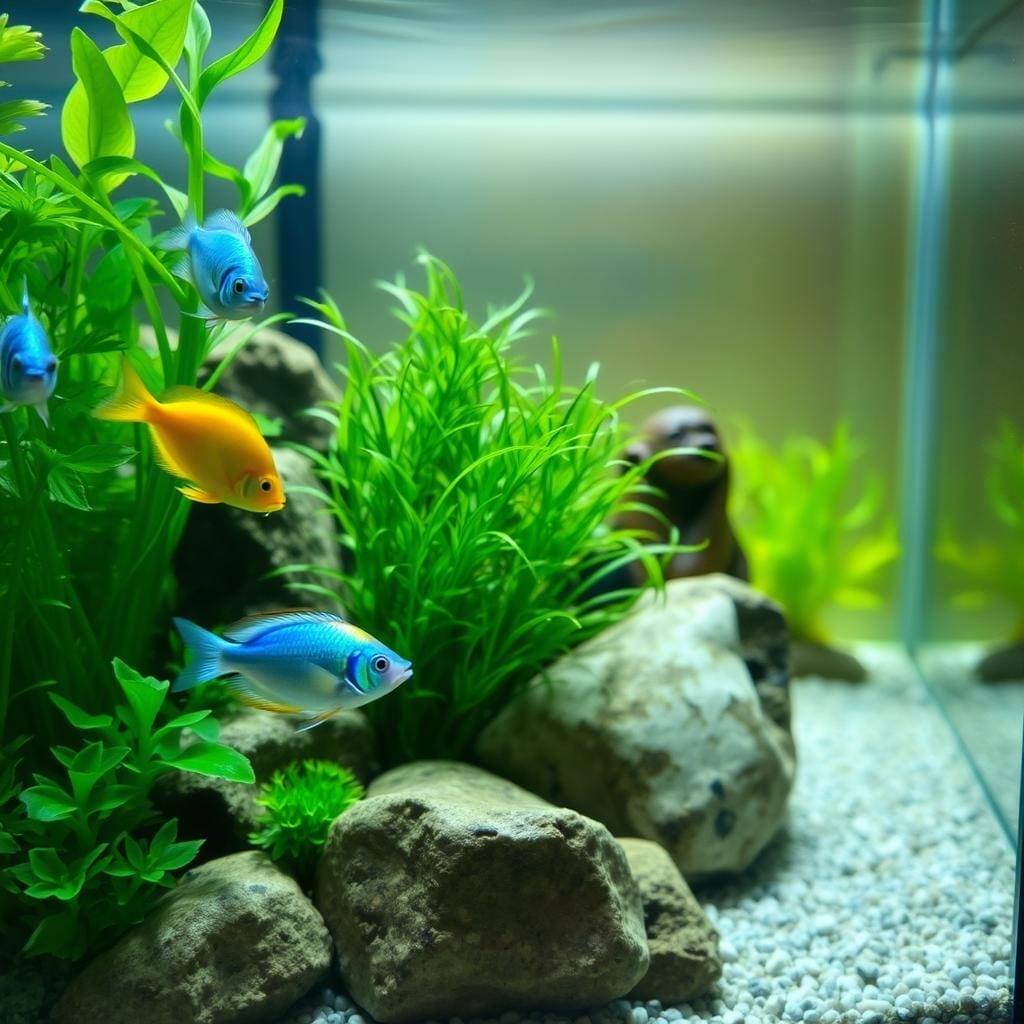
Java Fern’s rhizome system makes it a favorite among professionals. Its roots grip rocks and driftwood naturally, freeing you from substrate hassles. You’ll find varieties like Windelov with lacy leaf tips or Trident with slender, forked fronds—each adding unique texture.
Anubias varieties shine in shaded spots. Their thick leaves resist algae and damage, while pre-attached roots on decorations simplify placement. Imagine rearranging your design in minutes without disturbing the water or uprooting greens.
Proven Performance
Leading aquascapers praise these species for tolerating crowded layouts and fluctuating conditions. Java Fern handles softer or harder water with equal ease, while Anubias grows steadily even when partially buried under decor.
Three expert-backed advantages:
- Instant placement: Pre-mounted options skip planting steps
- Visual flexibility: Mix leaf sizes from petite to broad
- Low demands: Absorb nutrients directly from the water
You’ll appreciate how these greens maintain their vibrancy with minimal input. Their resilience lets you focus on creative layouts rather than constant upkeep.
Optimizing Tank Setup for Healthy Plant Growth
Your tank’s foundation determines whether your greens merely survive or truly thrive. Simple adjustments to your environment create ideal conditions for steady development while reducing maintenance headaches.

Choosing the Right Substrate for Growth
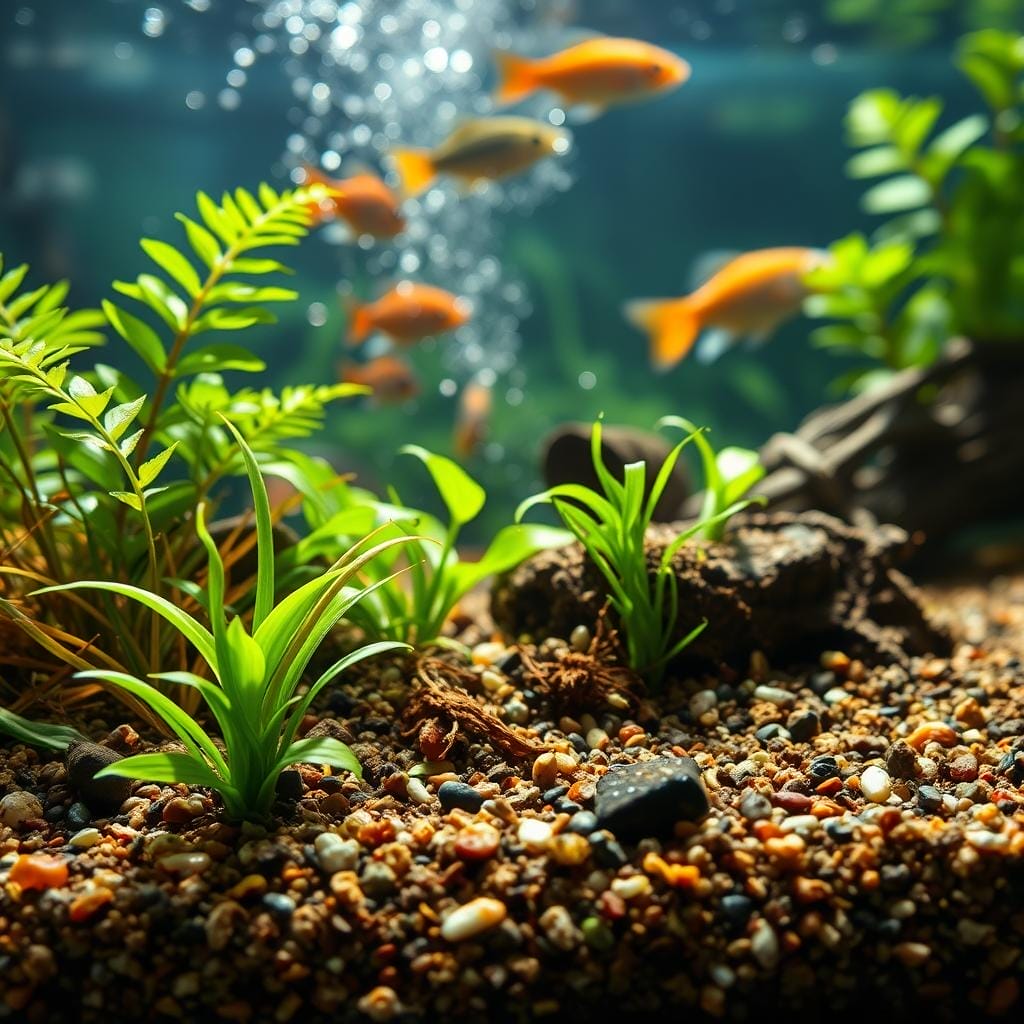
Soil-based substrates work wonders for species like Cryptocoryne that feed through their roots. These nutrient-rich foundations release essential minerals gradually, supporting long-term health without constant fertilization. Aim for 2-3 inches of depth to let roots establish firmly.
When working with rhizome plants like Java Fern, secure them to rocks or driftwood using aquarium-safe glue. Within weeks, tiny roots will grip surfaces naturally. This technique keeps delicate rhizomes above the substrate where they thrive best.
Adjusting Lighting for Low-Tech Conditions
Most species flourish with just 6 hours of daily illumination. Use a timer to maintain consistency – erratic schedules stress plants and encourage algae. Position your lights 6-12 inches above water level for even coverage.
Three lighting essentials for success:
- Avoid direct beams: Diffuse intense LEDs with floating plants
- Monitor intensity: Start at 50% brightness, increase gradually
- Watch for cues: Pale leaves signal too little light; algae means too much
These strategies help your greens grow steadily while keeping water conditions stable. You’ll create a balanced ecosystem where both plants and fish prosper.
Essential Care Tips for Vibrant Aquascapes
Your aquascape becomes a living masterpiece when care routines align with nature’s rhythms. Balance comes from understanding how nutrients flow through your ecosystem and responding to subtle changes. Let’s explore methods that keep your greens thriving while saving you effort.

Fertilization and Pruning Techniques
Fast-growing species like Anacharis turn fish waste into fuel, reducing the need for added nutrients. This natural recycling system keeps nitrate levels stable while feeding your greens. For slower growers like Java Fern, occasional liquid supplements provide missing minerals without overwhelming delicate roots.
Trim stems just above leaf nodes using sharp scissors. This encourages sideways growth, creating fuller appearances. Remove yellowing leaves promptly to redirect energy to healthy parts. You’ll shape your underwater garden while preventing overcrowding.
Maintaining Water Quality and Nutrient Balance
Weekly 20% water changes refresh dissolved minerals without shocking your greens. Test nitrate levels monthly – readings between 5-10 ppm indicate ideal conditions. Pair this with gentle flow from your filter to distribute nutrients evenly.
Three signs your setup needs adjustment:
- Stunted growth: Add iron-rich supplements
- Algae blooms: Reduce lighting duration
- Cloudy water: Check filter flow rates
For more design inspiration, explore our guide to best aquarium plants that complement these care strategies. Consistency matters most – simple weekly tasks protect your investment and keep your aquatic world flourishing.
Troubleshooting Common Aquatic Plant Challenges
Every aquarist faces hurdles when establishing their underwater oasis. Transparent leaves or sudden wilting often signal your greens are adapting, not failing. This adjustment phase strengthens their resilience, much like athletes building endurance through training.

When Greens Fight Back: Melt & Algae Solutions
Leaf melt occurs when submerged species transition from air-grown nursery conditions to your tank’s water parameters. Don’t panic if stems look bare – new growth often emerges within 3 weeks. Trim damaged areas to redirect energy toward healthy shoots.
Fast-growing varieties like Hornwort act as natural allies against algae. They consume excess nitrates that fuel unwanted green blooms. Pair these with:
- Consistent lighting: 6-8 hours daily prevents drastic swings
- Targeted feeding: Overfed fish produce excess waste
- Strategic placement: Position flow-loving species near filters
Your finned friends contribute more than beauty. Species like Otocinclus catfish graze on soft algae without harming tender leaves. For persistent issues, reduce lighting intensity by 30% for 5 days – most invaders retreat when starved of their energy source.
Discover proven recovery methods in our low-light setups guide. Simple water changes (20% weekly) often resolve multiple issues simultaneously. Test nitrate levels after adjustments – stable readings between 5-15 ppm mean your solutions are working.
Remember: Temporary setbacks build long-term success. Each challenge overcome deepens your understanding of aquatic ecosystems. Your patience today cultivates tomorrow’s thriving underwater garden.
Integrating Floating and Background Plants for Visual Appeal
Transform your tank into a living tapestry by combining surface dwellers with tall greenery. This approach creates dynamic layers that serve practical purposes while showcasing your aquatic design skills.
Benefits of Floating Plant Options
Surface greens like Frogbit or Salvinia act as natural water purifiers. Their dangling roots absorb excess nutrients, reducing algae growth while creating shaded areas fish adore. Contain them using airline tubing circles – simple rings that keep clusters in place without blocking filter flow.
Three advantages emerge when using these surface stars:
- Instant coverage: New shoots form weekly
- Stress reduction: Shy species gain hiding spots
- Temperature control: Leaves minimize evaporation
Arranging Background Elements for Depth
Tall varieties like Vallisneria create stunning backdrops. Plant them in staggered rows, placing shorter stems in front. This technique mimics natural riverbanks, guiding the eye toward your tank’s focal points.
Balance is key. Limit floating coverage to 40% of the surface – enough for benefits without starving submerged greens. Position background clusters near filters where water movement strengthens their stems. Your fish will navigate through lush corridors that highlight their colors beautifully.
Wrapping Up Your Aquascape Journey
Your aquatic journey evolves with every plant you nurture, transforming challenges into triumphs. Starting with hardy varieties builds the confidence needed to expand your underwater garden. From petite crypts creating delicate foregrounds to towering Amazon Swords dominating the background, each species plays its role in your tank’s ecosystem.
Positioning matters – whether anchoring moss to rocks with aquarium-safe glue or letting rhizome plants cling to driftwood. These choices demonstrate how substrate types and placement strategies work together. Older leaves may yellow during transitions, but new growth soon follows, proving your system’s balance.
You’ve mastered matching plant sizes to tank dimensions and fish behaviors. This knowledge lets your greens thrive while supporting aquatic life naturally. Those initial “experiments” with low-light setups have blossomed into a self-sustaining habitat.
Ready for more? Explore different moss textures or try red-toned varieties that pop against green foliage. Every addition deepens your understanding of aquatic ecosystems. Share your progress in our blog comments – we’d love to see how you’ve transformed water and substrate into living art.
FAQ
Can Java Fern survive without CO2 injection?
Yes! Java Fern thrives in low-tech setups without added CO2. It absorbs nutrients directly from the water column through its leaves, making it ideal for tanks with minimal equipment. Just ensure it’s anchored to driftwood or rocks rather than buried in substrate.
How often should I fertilize Anubias in low-light tanks?
Anubias benefits from monthly liquid fertilization like Seachem Flourish. Since it grows slowly, avoid overfeeding—excess nutrients can trigger algae. Pair with root tabs if planted in nutrient-rich substrates like Fluval Stratum.
Do floating plants block too much light for other species?
Floating varieties like Frogbit provide gentle shade, which helps reduce algae. Leave 30-50% of the water surface open to ensure enough light penetrates for background plants like Cryptocoryne or Vallisneria.
Why are my Cryptocoryne leaves turning brown?
“Crypt melt” often occurs after sudden water parameter changes. Trim damaged leaves and maintain stable conditions. New growth usually rebounds within weeks if kept in soft, slightly acidic water with temperatures between 72-82°F.
Can I use gravel for rooted plants like Amazon Sword?
While Amazon Swords prefer nutrient-dense substrates, gravel works if supplemented with root tabs. Place tabs near the base every 3 months and monitor leaf color—yellowing indicates a need for iron or potassium.
How do I prevent algae in low-light setups?
Limit lighting to 6-8 hours daily and introduce algae-eating companions like Nerite snails. Fast-growing stems like Hornwort also outcompete algae for resources. Perform 20% weekly water changes to remove excess organics.
What’s the best way to attach moss to hardscape?
Use cotton thread or super glue gel (cyanoacrylate-based) to secure Java Moss to rocks or driftwood. It’ll naturally cling within 4-6 weeks. Trim regularly to encourage dense, bushy growth and prevent debris buildup.
Also Read: Common Aquarium Problems and How to Fix Them
Hi, I'm Millie a passionate fish enthusiast and blogger. I loves learning about all kinds of aquatic creatures, from tropical fish to stingrays.