
Stop pH Crashes: Tips for a Healthy Aquarium Environment
 Millie Douglas
Updated on: December 1, 2025 .
12 min read
Millie Douglas
Updated on: December 1, 2025 .
12 min read
What if the biggest threat to your beautiful aquarium isn’t something you can see swimming around, but rather the invisible chemistry of your water itself?
Creating balanced water conditions is one of the most vital skills you’ll develop as an aquarium keeper. When your water chemistry stays stable, your fish thrive, your plants grow lush, and your entire tank ecosystem flourishes.
While sudden changes in water balance might seem intimidating, they’re completely manageable with the right knowledge. This comprehensive guide will walk you through everything you need to know about preventing and correcting water chemistry issues.
Whether you’re setting up your first tank or have years of experience, understanding water stability will give you confidence and help you avoid common problems. You’ll learn to spot early warning signs and take immediate action when needed.
By the end of this article, you’ll have practical strategies for maintaining excellent water quality. With consistent care and the right approach, you can enjoy a beautiful, healthy aquarium for years to come.
Understanding pH Crashes in Aquariums
The stability of your aquarium’s water is its silent guardian. When it fails, the consequences are swift and severe. Knowing what causes this instability is your first line of defense.
What is a pH Crash?
This event is a sudden, rapid drop in your aquarium’s acidity level. It shifts the water from a safe, neutral state to a dangerously acidic one.
Healthy freshwater systems usually stay between 6.5 and 7.5. When the level drops far below this range, it creates a true emergency.
This doesn’t happen randomly. Your water contains natural buffers, called carbonate hardness or KH. These buffers neutralize acids. When they get used up, the pH plummets.
Impacts on Fish, Plants, and Beneficial Bacteria
The effects are a devastating chain reaction. First, the good bacteria in your filter begin to die. This collapse leads to dangerous ammonia spikes.
Your fish experience extreme stress. Their immune systems weaken, and they can struggle to breathe. Your plants may also suffer, unable to absorb nutrients properly.
While this sounds frightening, understanding this process empowers you. You can now take the right steps to prevent or fix the problem in your tank.
Identifying Early Warning Signs in Your Tank
Your fish have a secret language that tells you when something’s wrong in their underwater world. Learning to understand these signals helps you catch problems early.
Behavioral Changes in Fish
Watch your fish closely each day. They’ll show you when the water quality changes.
Look for fish gasping at the surface or acting unusually tired. They might clamp their fins or hide more than normal. Reduced appetite is another red flag.
Multiple fish deaths over a few days often mean trouble has already started. Don’t wait to test your water if you see this.
Visible Water Quality Indicators
Your tank itself gives you clues. Cloudy or smelly water needs immediate attention.
One hobbyist caught a dangerous drop by testing early one morning. Their reading showed a significant change just hours after normal results.
Regular observation makes you a better aquarium keeper. You’ll spot changes faster and protect your fish from serious harm.
Key Causes of pH Crashes
Several everyday factors in your aquarium can quietly chip away at its natural defenses. Understanding these triggers helps you build a stronger, more resilient aquatic home.
You can address the root of the problem instead of just reacting to emergencies. Let’s explore the main reasons your water balance might become unstable.
Low Buffering Capacity and KH Levels
Your water has a natural defense system called carbonate hardness, or KH. This is your tank‘s buffering capacity.
Think of KH as a protective shield. Carbonate minerals neutralize acids as they form. This keeps your water stable.
When KH drops too low, this shield weakens. Your tank loses its ability to resist change. Even small issues can then cause a major shift.
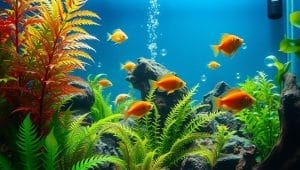
Your filter bacteria consume these carbonate buffers during the nitrogen cycle. This slowly uses up your tank‘s protection. Regular testing and replenishment are essential.
Some tap water is naturally soft and low in minerals. Your regular water changes might not add enough carbonate back. This makes proactive maintaining proper pH levels even more important.
Overfeeding, Waste Buildup, and Decaying Organics
Too much food and too many fish create excess waste. Uneaten food and waste break down into organic acids.
These acids first use up your KH shield. Then, they cause the acidity level to fall. It often drops slowly before a sudden, larger change.
Decaying plant leaves, dead snails, or other organic matter also release acids. When this debris builds up in your filter or substrate, it creates a constant acid source.
Skipping water changes allows these problems to compound. Organic acids build up week after week. They steadily consume your buffering minerals until none are left.
This often leads to dangerous ammonia spikes as your biological filter is affected. Knowing these causes empowers you to stop problems before they start.
Stop pH Crashes: Immediate Action Steps
Emergency situations in your aquarium demand both speed and precision to protect your aquatic friends. Discovering your tank has experienced a balance shift can be stressful, but you can absolutely fix it with the right approach.
The key is acting quickly while avoiding sudden parameter swings that could shock your fish. Gradual, careful adjustments will restore stability safely.
Performing a Partial Water Change and Testing Parameters
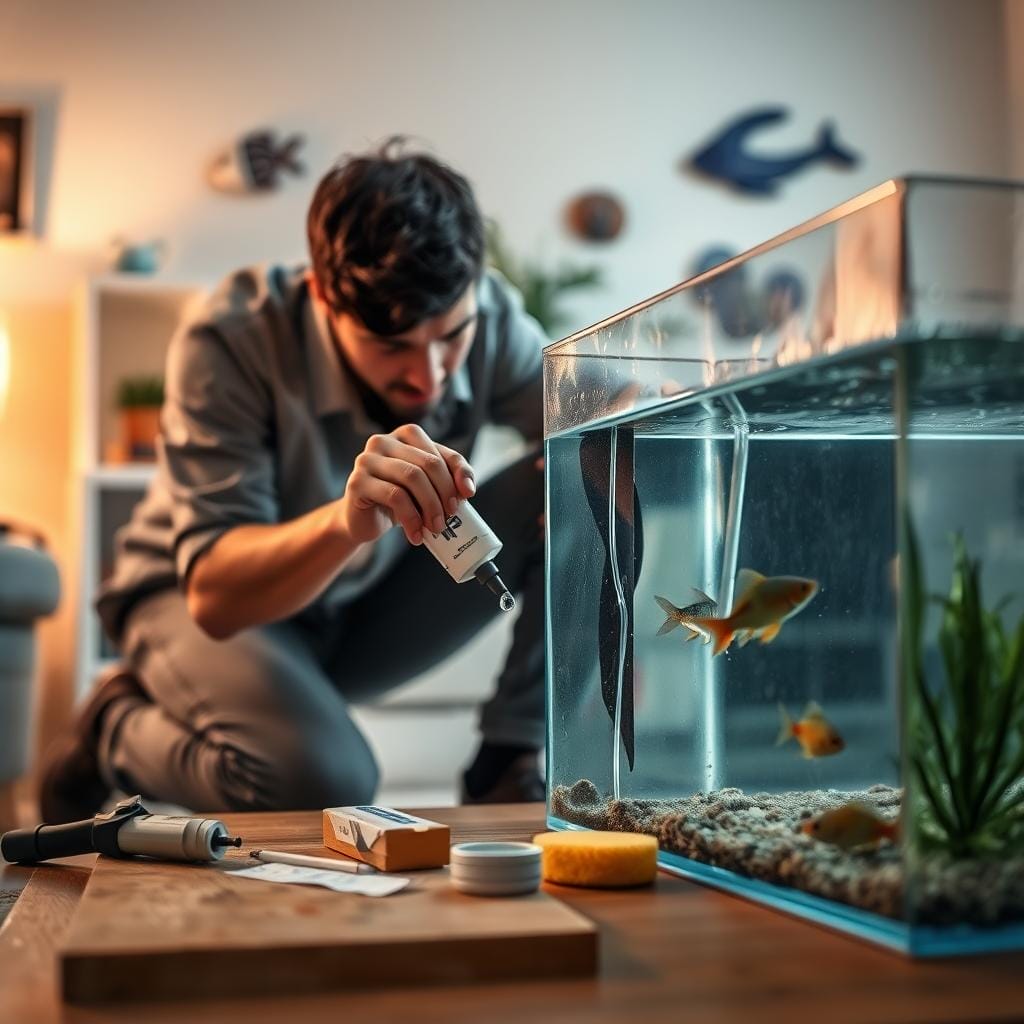
Your first critical step is a partial water change. Replace 25-50% of your tank water immediately using properly treated tap water. This dilutes accumulated acids and begins restoring mineral balance.
Always use a quality water conditioner before adding new water. This neutralizes chlorine while adding back protective minerals your tank needs.
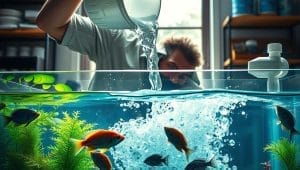
After the water change, test your parameters right away. Check not just the acidity level but also ammonia and nitrite readings. A balance shift often disrupts your beneficial bacteria, leading to dangerous spikes.
One aquarist documented their experience: readings showed 0.25-0.50 ppm ammonia before the event. After the level dropped to 6, nitrites spiked to 5 ppm despite lower ammonia.
Also Read: Tank Leaks Repair: Simple Steps to Fix Leaks
Continue monitoring by testing twice daily for 3-5 days. Check morning and evening to catch any further changes early. Remember that stability matters more than achieving a perfect number immediately.
Gradual improvement is safer for your fish than rapid swings. Your patience will be rewarded with a healthy, balanced aquarium environment.
Enhancing Buffering Agents and Water Condition
A stable aquarium environment relies on a strong foundation, and that foundation is your water’s buffering capacity. Once you’ve stabilized your tank with an emergency water change, the next crucial step is to actively strengthen this defense. This prevents future instability by adding essential carbonate minerals back into the system.
Utilizing Crushed Coral, Baking Soda, and KH Boosters
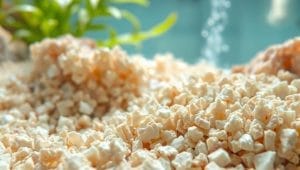
Crushed coral is one of the most effective long-term solutions. These small pieces slowly dissolve, continuously releasing carbonate minerals into your water. You can add crushed coral directly to your substrate or place it in a mesh bag inside your filter for maximum contact.
For a quick adjustment, baking soda (sodium bicarbonate) is an affordable option. It’s the same active ingredient found in expensive commercial buffers. Start with very small amounts—about one teaspoon per five gallons. Add it gradually over several hours while you test your water frequently to avoid shocking your fish.
While some hobbyists consider adding baking soda daily, products like specialized KH boosters or aragonite sand offer a more stable, gradual release. Consistent testing is your best tool. Check your KH weekly and aim to keep it above 4 dKH for optimal protection, a key part of successfully buffering the water in your tank.
Optimizing CO₂ Injection and Planted Tank Care
A thriving planted tank is a sight to behold, but the very thing that makes your plants flourish can also challenge your water‘s stability. Injecting CO₂ is fantastic for growth, but it requires careful management to keep your fish safe and your environment balanced.
Monitoring CO₂ Levels and Adjusting for Stable pH
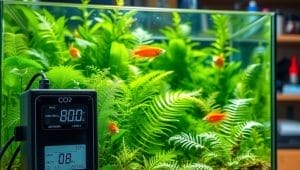
When CO₂ dissolves in your water, it forms a mild acid. This is normal and helps your plants grow. However, too much can cause the acidity level to drop too far, too fast.
The best tool for monitoring is a drop checker. This simple device sits in your tank and gives you a constant color-coded reading. Green means your CO₂ levels are perfect. Yellow is a warning sign that things are too high.
If you see the drop or your test shows a significant change, reduce the CO₂ bubble rate gradually. Sudden adjustments can stress your aquatic life. For a deeper dive into this balance, exploring resources on pH swings and CO₂ injection is highly recommended.
Remember, your tank has a natural daily cycle. Plants use CO₂ when the lights are on, which can raise the water‘s balance. At night, they produce it, which can cause a drop. Timing your CO₂ to turn on before lights and off before they go out helps smooth this cycle.
Using specialized plant boosters can also support stability. These products help your plants thrive and often contain elements that naturally help balance your water over time.
- Promote healthier plant growth
- Provide essential trace minerals
- Support a more resilient tank environment
With consistent monitoring and gentle adjustments, you can enjoy a beautiful planted tank where both your plants and fish are happy and healthy.
Preventative Maintenance and Routine Water Changes
The secret to long-term aquarium success lies in the small, regular actions you take. Building consistent habits prevents emergencies before they start.
The Importance of Regular Testing with Reliable Kits
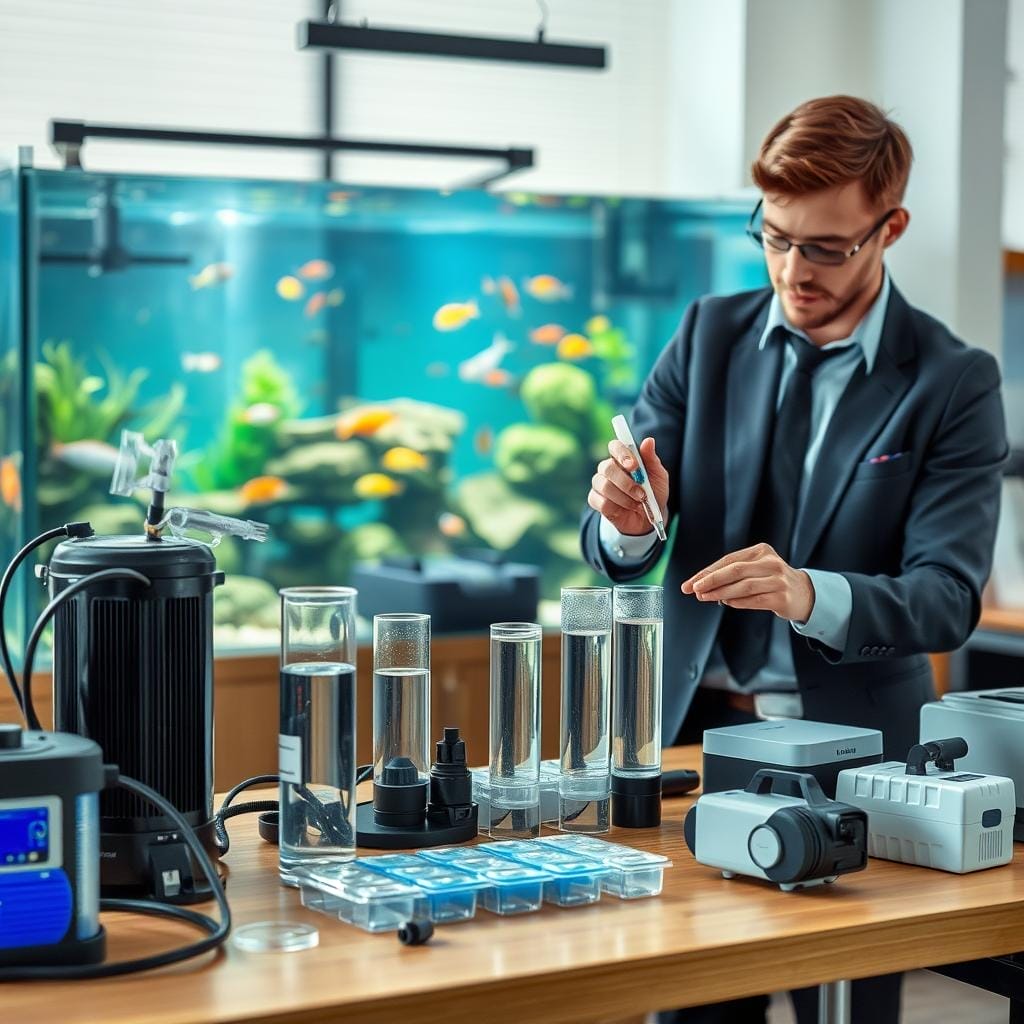
Weekly testing gives you early warnings about water changes. Use reliable test kits to check your water parameters.
Liquid test kits often provide the most accurate readings. They help you track ammonia levels and carbonate hardness over time.
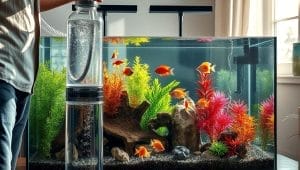
Testing your tap water periodically is a good idea. Water quality can vary by location and season.
Smart Feeding Practices and Consistent Water Changes
Regular water changes are your most powerful tool. Changing 20-30% weekly removes waste and adds fresh minerals.
Avoid overfeeding to prevent acid buildup. Feed small amounts your fish can finish in 2-3 minutes.
Clean your filter gently in old tank water every few weeks. This preserves beneficial bacteria while removing debris.
These simple habits become second nature. They create a stable environment that rarely experiences problems.
Final Reflections on a Balanced Aquarium Ecosystem
Your journey toward aquarium mastery has brought you to the most rewarding phase: confident, proactive care. While water chemistry issues might have seemed daunting initially, you now possess the knowledge to handle them effectively.
Remember that maintaining your aquatic environment isn’t about achieving perfection. It’s about the consistent habits that keep your biological cycles running smoothly. Your weekly testing and regular water changes create a stable foundation.
Your tank is a living ecosystem where fish, plants, and beneficial bacteria work together. Proper buffering minerals support this delicate balance. Every aquarium is unique based on stocking levels, filtration, and water source.
Stay proactive with your maintenance routine. The small time investment in weekly care prevents larger problems down the road. Bookmark this guide for quick reference whenever you need to review aquarium water chemistry solutions.
With consistent care and attention to early signs, you’ll maintain a thriving environment that brings joy for years. Your dedication to proper aquarium care creates a beautiful, healthy home for your aquatic friends.
FAQ
What should I do right away if my aquarium’s pH drops suddenly?
Your first step is to perform a partial water change using properly conditioned tap water. This helps dilute acidic compounds. Test your water immediately with a reliable test kit to check ammonia, nitrite, and KH levels. Avoid making large, rapid adjustments, as sudden changes can stress your fish more than the low level itself.
How can I prevent these sudden drops from happening in the first place?
The best prevention is maintaining a stable environment. This includes regular water changes to replenish essential minerals, testing your water’s carbonate hardness (KH) weekly, and using buffering products like crushed coral in your filter or a KH booster during water changes. Good habits like avoiding overfeeding also play a huge role.
My tap water is soft. Am I more likely to have problems with instability?
Yes, soft water naturally has a lower buffering capacity, meaning it’s more susceptible to acidification from fish waste and other natural processes. In this case, being proactive is key. Adding a buffer, such as a small amount of crushed coral or a commercial KH stabilizer, directly to your tank or filter will provide the mineral support needed to prevent a crash.
Can my filter bacteria be harmed by a sudden drop?
Absolutely. The beneficial bacteria in your filter that consume ammonia and nitrite are living organisms. A significant and rapid drop can stall or even kill these bacteria, potentially causing your tank to re-cycle. This is why maintaining stability is so critical for the overall health of your entire aquarium ecosystem.
Is baking soda a safe way to raise my KH and pH?
Baking soda (sodium bicarbonate) can be used carefully to increase carbonate hardness. However, it’s important to dissolve it in water first and add it slowly over time to avoid shocking your fish. For a more long-term, steady solution, many aquarists prefer using crushed coral, which dissolves gradually as needed.
Aquarium pH stabilityFish tank pH controlHealthy aquatic environmentpH level managementpH maintenance tipsWater chemistry in aquariums
Hi, I'm Millie a passionate fish enthusiast and blogger. I loves learning about all kinds of aquatic creatures, from tropical fish to stingrays.