
Creative 5 Gallon Tank Ideas for Your Small Aquarium
 Millie Douglas
Updated on: July 16, 2025 .
11 min read
Millie Douglas
Updated on: July 16, 2025 .
11 min read
Did you know a single teaspoon of water in a well-maintained aquarium contains more microorganisms than there are stars in our galaxy? This hidden complexity makes even compact aquatic setups extraordinary learning tools. Your journey into this mesmerizing world starts here.
Small aquariums demand creativity and precision, but they reward you with unmatched intimacy. Unlike larger systems, every plant placement and water change directly impacts your tiny ecosystem. This hands-on experience teaches patience and problem-solving—skills that deepen your connection to the hobby.
You’ll discover how beneficial bacteria colonies stabilize water quality and why selecting nano fish species matters. These details transform challenges into triumphs. Many seasoned aquarists prefer smaller setups for their ability to showcase intricate designs without overwhelming maintenance.
Imagine crafting a lush underwater garden or a minimalist Zen retreat. Your space becomes a living art piece that calms the mind and sparks curiosity. We’ll guide you through equipment choices, stocking strategies, and maintenance routines tailored for success in confined environments.
Ready to prove that big wonders fit in small packages? Let’s create something extraordinary together.
Understanding the Limitations of a 5 Gallon Aquarium
Small aquatic environments demand precision. Unlike larger setups, every decision you make has immediate effects. Let’s explore how to work with these unique conditions for a thriving ecosystem.
Navigating Chemical Shifts
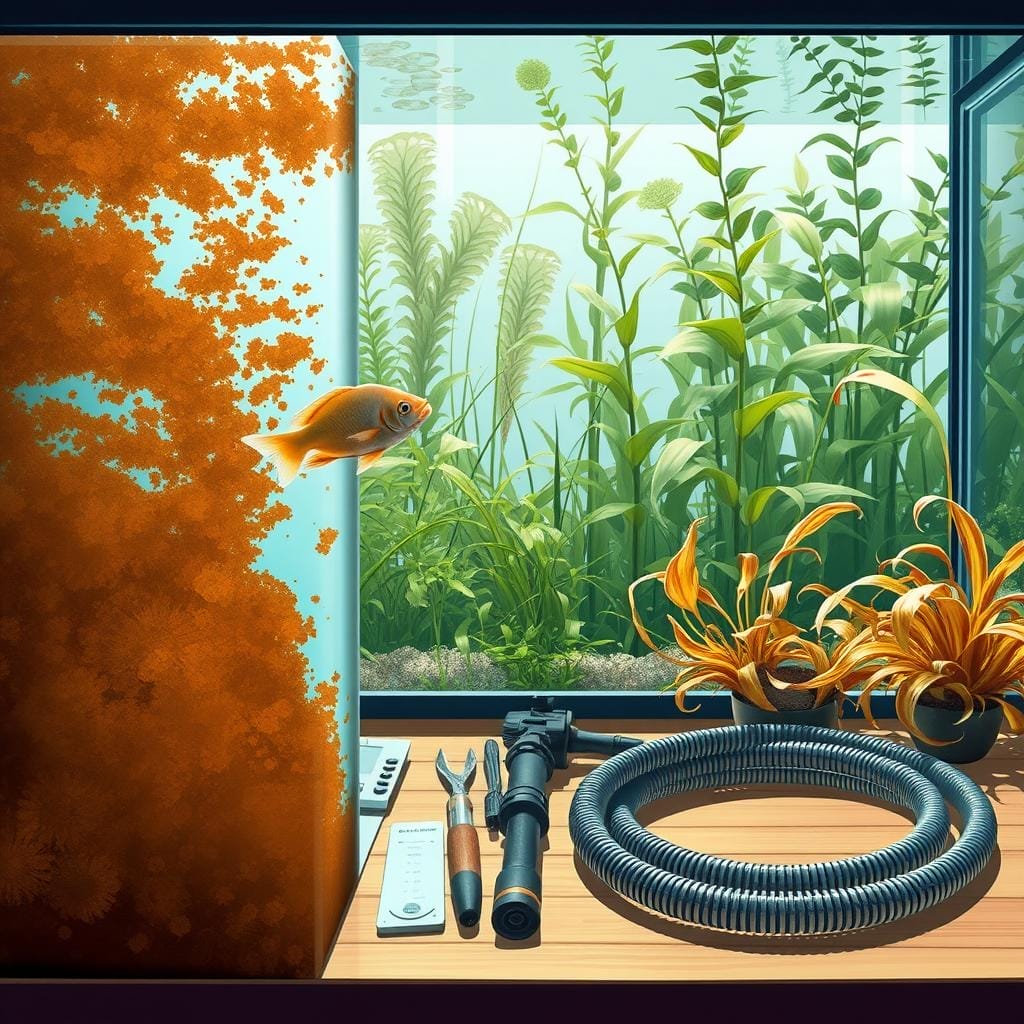
Water quality swings happen fast in limited spaces. A single overfeeding session or delayed cleaning can spike ammonia levels. Test weekly with liquid kits—they’re more accurate than strips for detecting subtle changes.
Partial water changes become your best friend. Replace 20-25% every 5 days to dilute toxins without shocking inhabitants. Pair this with a gravel vacuum to remove hidden waste.
Smart Inhabitant Selection
More creatures mean faster pollution. Stick to species that thrive in snug spaces—think shrimp or snails. If adding fish, one small schooling group works best.
- Test water parameters every 3 days initially
- Choose species with minimal bioload
- Perform partial changes consistently
These constraints aren’t barriers—they’re invitations to master aquarium care. You’ll develop sharper observation skills and learn how ecosystems truly function. That’s where the magic happens.
Essential Equipment and Setup for Small Tanks
Creating a thriving aquatic environment starts with choosing tools that match your space’s unique needs. The right gear balances function with subtlety, letting life flourish without dominating your setup.
Heater, Filter, and Lighting Essentials
Temperature stability is non-negotiable in compact systems. A submersible heater with adjustable settings prevents sudden swings that stress inhabitants. Look for models rated for your tank’s size—oversized units cook water, while undersized ones struggle.
Filtration requires a delicate touch. Sponge filters excel here, offering gentle flow and surface area for beneficial bacteria. Pair them with weekly maintenance to keep water pristine without stripping essential nutrients.
LED lighting systems with adjustable intensity support plant growth and highlight your aquascape’s beauty. Timers automate daily cycles, mimicking natural daylight patterns. This consistency encourages healthier behaviors in both flora and fauna.
When selecting gear, prioritize proportional designs. Bulky equipment steals valuable swimming space and disrupts visual harmony. Many manufacturers now offer nano-specific options that blend seamlessly into small environments.
Investing in quality tools from trusted brands pays dividends. You’ll spend less time troubleshooting and more time enjoying your miniature ecosystem’s vibrant energy.
Selecting the Right Inhabitants for a Nano Tank
What if your compact aquatic world could thrive with vibrant life while keeping maintenance simple? The secret lies in choosing companions that match your space’s scale. Let’s explore how to build a harmonious community where every creature plays a vital role.
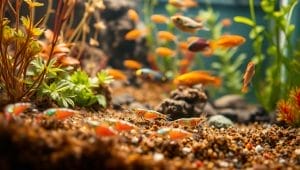
Choosing Shrimp, Snails, and Micro Fish
Shrimp steal the spotlight in small setups. Their confetti-like colors and constant scavenging keep tanks lively without overwhelming filtration systems. A group of six cherry shrimp adds motion and helps control algae naturally.
Snails work behind the scenes as nature’s cleanup crew. A single nerite glides across surfaces, consuming leftover food and biofilm. Their spiral shells become living decorations that fascinate observers.
For those craving fish, micro species like celestial pearl danios fit perfectly. These inch-long swimmers school gracefully while producing minimal waste. Always research adult sizes—many “small” fish outgrow nano environments quickly.
Assessing Bioload and Water Quality
Every inhabitant affects your aquatic balance. Shrimp and snails create less waste than most freshwater fish, making them safer stocking options. Use this simple guide:
- Start with 2-3 shrimp per gallon
- Add one snail per 3 gallons
- Limit fish to 1-2 nano species total
The one thing that guarantees success? Matching creatures to your tank’s capacity. Overcrowding stresses animals and spikes toxin levels. Test water weekly, and you’ll create a thriving ecosystem where all inhabitants flourish together.
Innovative 5 gallon tank ideas for a Thriving Aquarium
Small spaces offer big creative opportunities when you know how to maximize every inch. Your aquatic environment becomes a canvas where thoughtful design meets functionality, creating visual magic that belies its compact size.
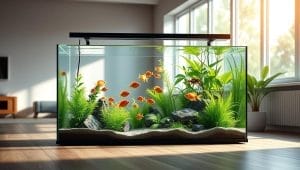
Creative Layouts and Unique Decorations
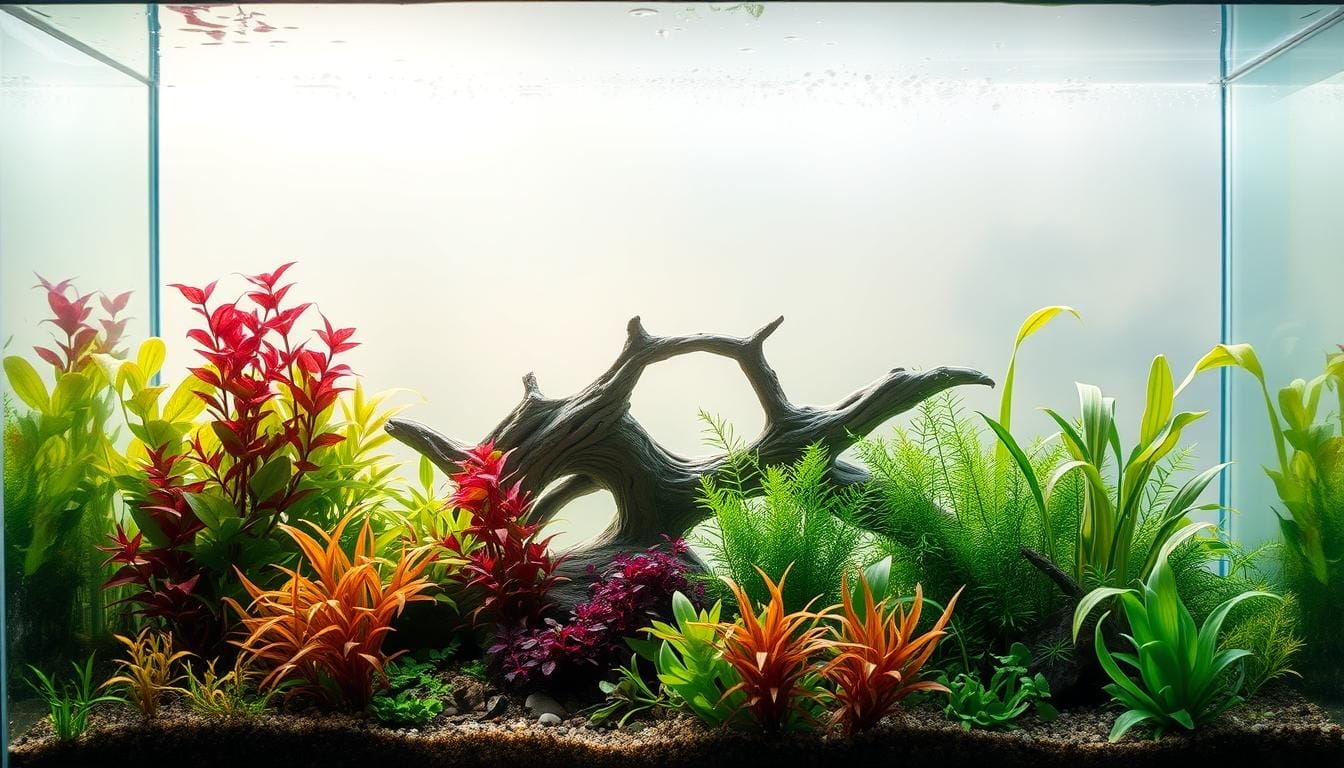
Elevate your setup by thinking vertically. Attach moss walls or floating plants to draw attention upward, freeing precious floor space for swimming creatures. Horizontal arrangements using staggered rocks or sloping substrates create stunning depth illusions.
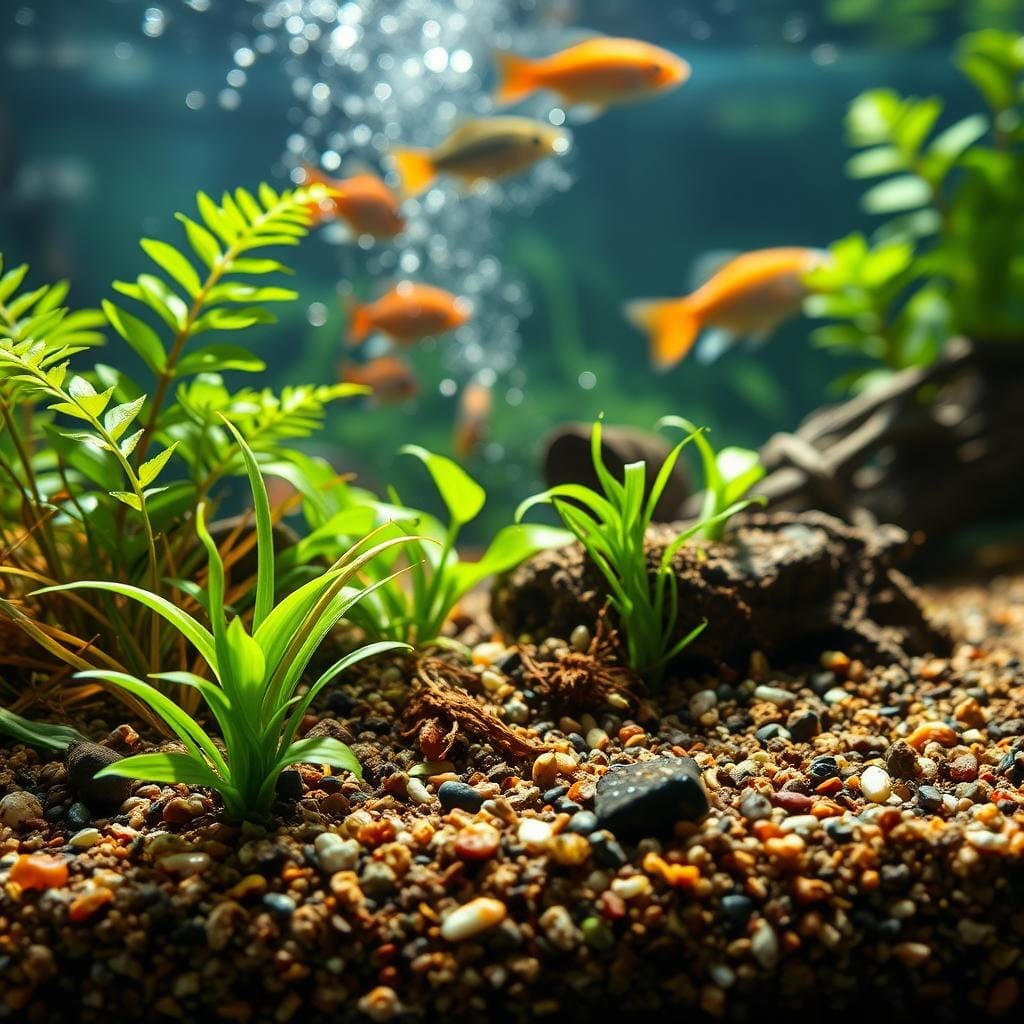
Live plants serve dual purposes here. Species like anubias nana or java fern purify water while adding lush greenery. Cluster them in corners for natural filtration stations, or let them cascade from driftwood branches for dramatic effect.
Natural elements transform ordinary setups into art. Try these combinations:
- Spiderwood arches with marimo moss balls
- Stacked slate stones forming miniature caves
- Sand pathways winding through dwarf hairgrass
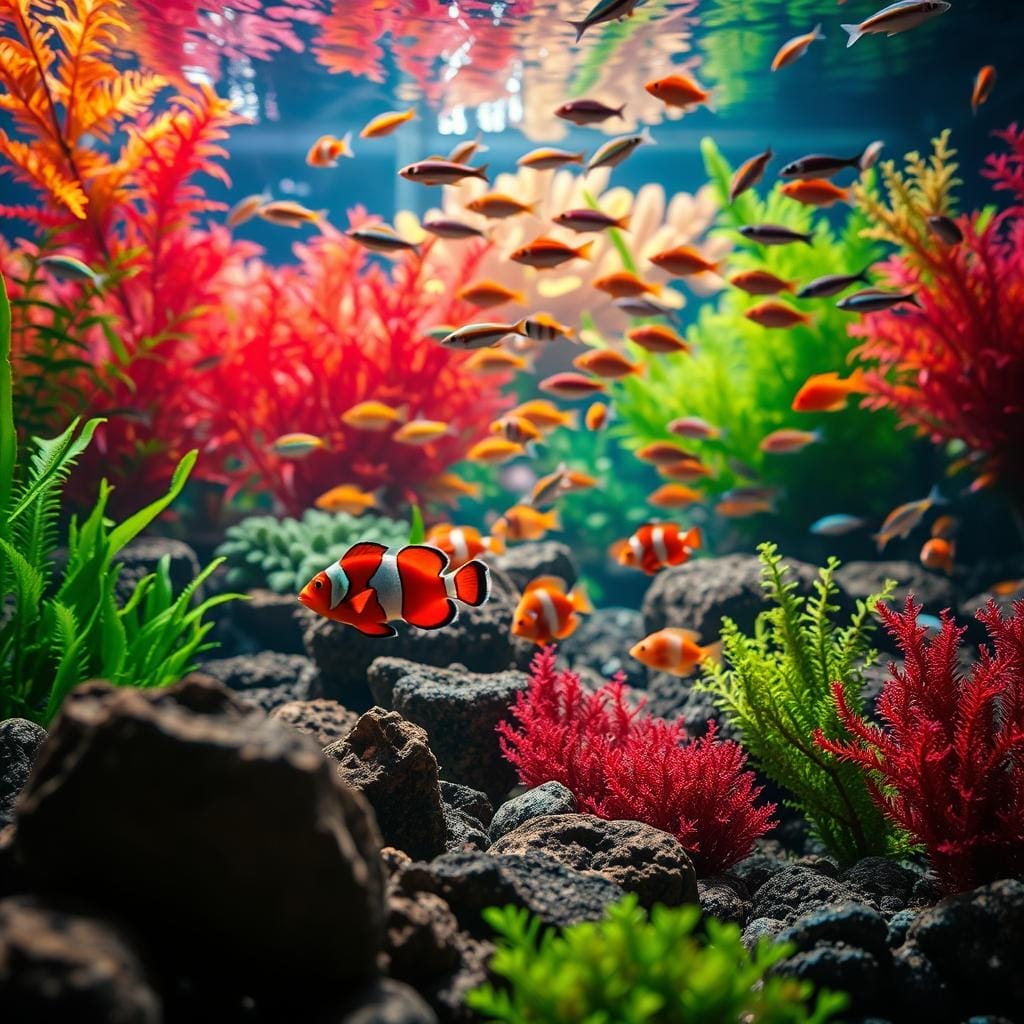
Themed designs let personality shine. Build a tropical jungle with bright red shrimp, or craft a serene rock garden featuring single specimen plants. Each concept teaches new care techniques while keeping maintenance manageable.
Remember: every addition should enhance both beauty and balance. Test layout options temporarily before securing decorations, ensuring your final design supports happy, healthy inhabitants.
Highlighting Popular Fish Choices for Small Aquariums
Your compact aquatic world comes alive when stocked with vibrant personalities. Each species brings unique behaviors and visual appeal, transforming your space into a dynamic showcase. Let’s explore top contenders that balance beauty with practicality.
Betta Fish, Guppies, and Endlers
Betta fish reign supreme in nano environments. Their flowing fins and interactive personality captivate owners, but they need heated water (78-80°F) and gentle filtration. Contrary to myths, these solitary swimmers thrive in planted setups with hiding spots—not barren bowls.
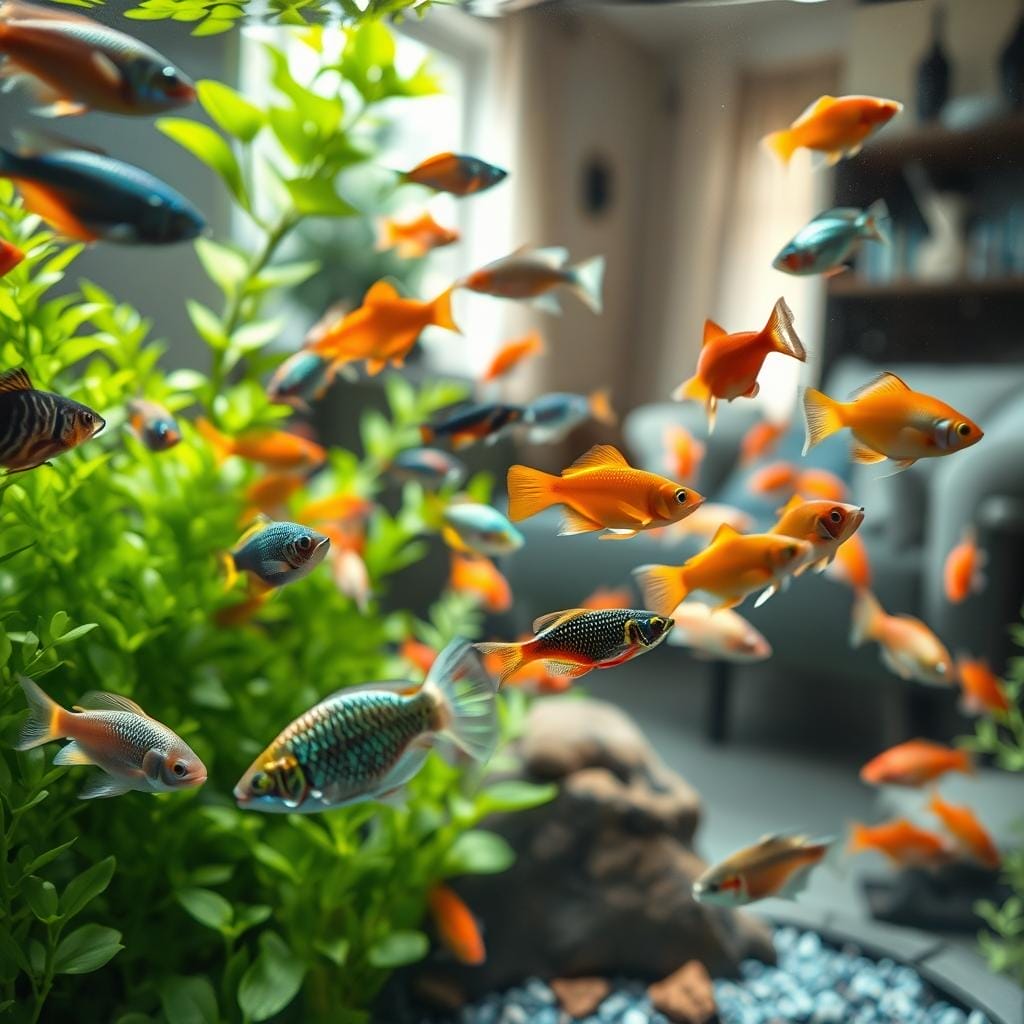
Guppies explode with coloration like living rainbows. The Green Lace strain dazzles with lime-green mosaic tails. Keep males only to prevent breeding explosions in limited spaces. Their constant motion adds energy without overwhelming bioloads.
Endlers outshine guppies for some enthusiasts. These cousins display metallic hues across their entire bodies, creating cohesive visual impact. A trio makes excellent starter fish—hardy enough for beginners yet striking enough for experts.
Spotlight on Celestial Pearl Danios and Ember Tetras
Discovered in 2006, celestial pearl danios sparkle like aquatic fireflies. Their pearl-like spots glow against red fins, creating mesmerizing displays. Six danios form a peaceful school that dances through plants without disturbing decor.
Ember tetras ignite under proper lighting. Morning reveals their transformation—dull orange bodies become flaming coals by midday. A group of six swims in synchronized harmony, proving tiny fish create big visual statements.
Key considerations when choosing:
- Match fish temperament to your maintenance routine
- Prioritize species with low bioloads
- Create visual contrast through complementary colors
These selections prove size doesn’t limit possibilities. With thoughtful pairing, your miniature ecosystem becomes a living kaleidoscope of movement and color.
Tips for Aquascaping and Plant Dynamics
Transform your miniature aquatic world into a living masterpiece with strategic design choices. Even in limited spaces, thoughtful plant placement and creative decor turn setups into thriving ecosystems. You’ll discover how to balance aesthetics with practicality, creating environments where life flourishes in every inch.
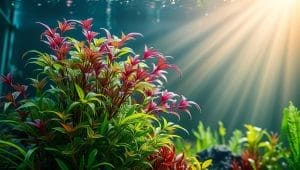
Incorporating Live Plants and Natural Decor
Live plants do more than beautify your setup—they’re natural water purifiers. Species like java moss and dwarf hairgrass thrive in compact environments, consuming excess nutrients while oxygenating the water. For inspiration, explore various aquascaping styles that suit small-scale designs.
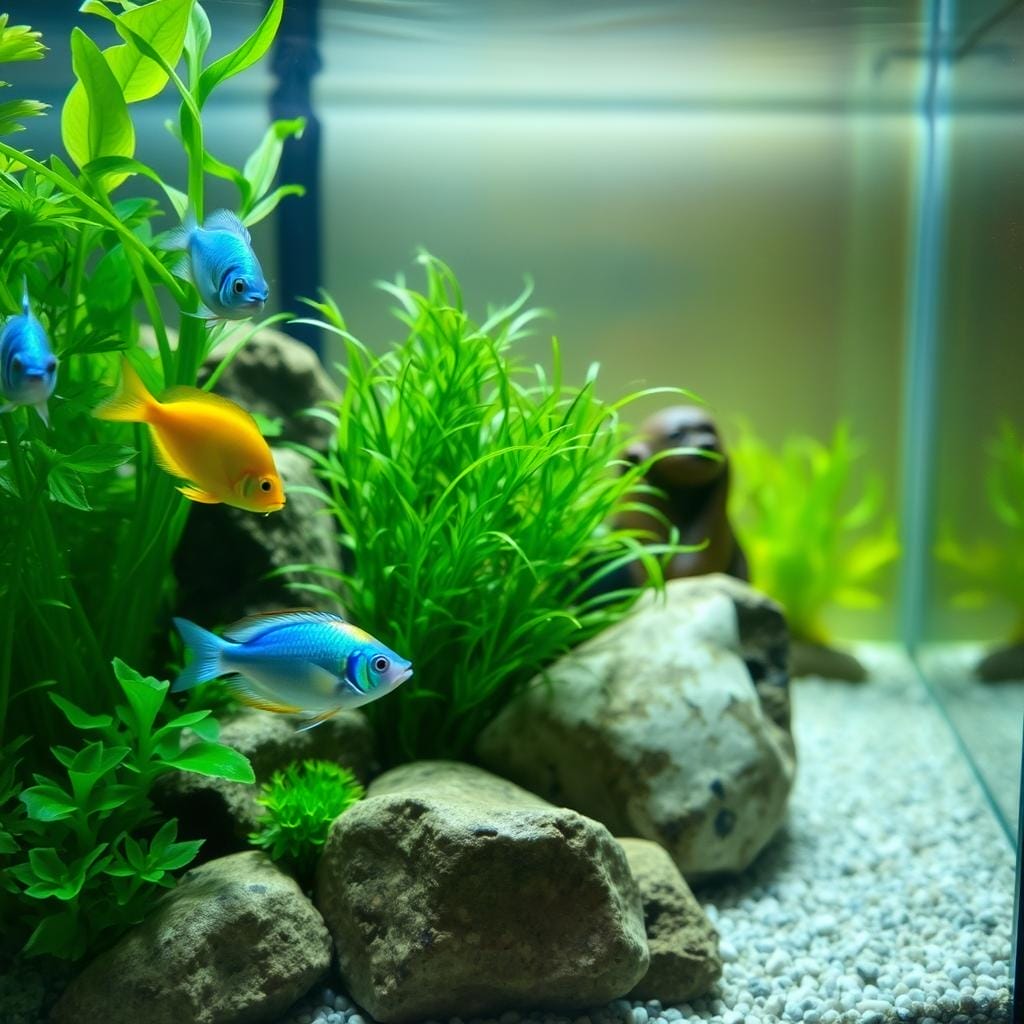
Arrange taller plants at the back to create depth illusions. Use driftwood or lava rock as focal points, ensuring they occupy less than 30% of the floor space. This approach maintains swimming areas while adding visual interest.
DIY Ideas and Space Utilization
Maximize vertical space with these clever solutions:
- Attach moss walls using aquarium-safe mesh
- Stack slate stones to form tiered planting shelves
- Hang floating betta logs from suction cups
Repurpose household items like ceramic mugs as quirky hideouts—just boil them first to remove contaminants. Layer foreground plants like Monte Carlo to create lush carpets without overwhelming inhabitants.
Remember: every addition should serve multiple purposes. A well-placed rock becomes both decoration and a territorial boundary. Test layouts temporarily before securing them, ensuring your design supports healthy plant growth and fish behavior.
Case Studies from Passionate Aquarium Hobbyists
Imagine walking into a room where a palm-sized aquatic world becomes the centerpiece of conversation. Meet Sofia from Austin, who transformed her compact setup into a self-sustaining ecosystem using dwarf shrimp and floating plants. Her secret? Weekly 15% water changes and strategic placement of fast-growing mosses.
Real-Life Success Stories
Local fish clubs reveal surprising triumphs. Marcus in Portland maintains a thriving community tank with six ember tetras and cherry shrimp. He credits his success to daily parameter checks and a customized feeding schedule. “Patience beats perfection,” he advises newcomers.
Seattle-based hobbyist Priya proves small spaces can host dynamic groups. She kept groups of celestial pearl danios by pairing them with a nano tank principles approach—low bioload species and layered filtration. Her tank became a living lesson in balance through three key strategies:
- Prioritizing plant diversity over decoration quantity
- Implementing staggered water change days
- Using snail companions as natural cleaners
These stories show how varied approaches yield success. Whether creating a shrimp haven or micro-fish paradise, each hobbyist’s experience reinforces one truth: meticulous care creates breathtaking results. Your journey could inspire the next wave of local fish enthusiasts.
Expert Advice and Community Insights
The true magic of nano aquariums reveals itself when seasoned keepers share their hard-won wisdom. Veteran aquarists emphasize one key thing: success lies in balancing creativity with practicality. Local fish communities often become treasure troves of tailored solutions for compact setups.
Tips from Veteran Aquarists
Cherry shrimp and nerite snails dominate expert recommendations for small systems. These species handle fluctuating conditions better than most fish while adding vibrant activity. “Start with shrimp colonies—they’re forgiving teachers,” advises marine biologist Linda Chen. Her favorite hack? Using freshwater shrimp care principles to maintain stable water parameters.
For those considering betta splendens, experts suggest heated tanks with gentle filtration. Pair them with amano shrimp for natural algae control. Always test water weekly—small volumes demand vigilance.
Learning Through Local Fish Community Experiences
Joining aquarium clubs accelerates your learning curve. Portland’s Nano Tank Collective shares proven stocking formulas: 6 cherry shrimp + 1 nerite snail per 3 gallons. Their members swear by live plants for absorbing excess nutrients.
Online forums buzz with creative solutions, like using pygmy corydoras as bottom dwellers in planted setups. Many recommend low-maintenance setups featuring mystery snails for beginners. As hobbyist Raj Patel notes, “Every challenge you solve deepens your connection to this living art.”
FAQ
Can I keep celestial pearl danios in a 5-gallon tank?
Yes! Celestial pearl danios thrive in small, well-maintained setups. Their tiny size (under 1 inch) and peaceful nature make them ideal for nano tanks. Pair them with cherry shrimp or nerite snails for a lively micro-ecosystem. Just ensure stable water parameters and plenty of hiding spots.
Why are some fish unsuitable for 5-gallon aquariums?
Active swimmers like neon tetras need horizontal space, while larger species produce excess waste. Overstocking strains filtration and raises toxin levels. Always prioritize low-bioload options—think betta splendens, ember tetras, or pygmy corydoras—to maintain balance.
Do I need a heater for a shrimp-only tank?
Absolutely. Most shrimp species (like cherry or amano shrimp) prefer consistent temperatures between 72–78°F. A small adjustable heater prevents harmful fluctuations. Pair it with a sponge filter to protect delicate shrimp fry.
How can I make a 5-gallon tank look visually dynamic?
A> Use layered hardscape! Create depth with driftwood, slate, or dragon stone. Add texture using mosses like java or flame moss on rocks. Floating plants like red root floaters soften lighting and provide shade—perfect for shy inhabitants.
Also Read: Common Aquarium Problems and How to Fix Them
What’s the biggest mistake beginners make with small tanks?
Overcrowding. Even tiny fish like guppies need space. Stick to 3–4 micro fish or a single betta. Supplement with shrimp or snails. Test water weekly—ammonia spikes happen faster in smaller volumes. Patience is key to a thriving nano habitat!
5 gallon tank setupCreative aquascapingMiniature underwater landscapesNano aquarium ideasSmall tank fish species
Hi, I'm Millie a passionate fish enthusiast and blogger. I loves learning about all kinds of aquatic creatures, from tropical fish to stingrays.