
Your Guide to Aquarium Plant Care: Tips & Tricks
 Millie Douglas
Updated on: July 16, 2025 .
8 min read

Did you know a single aquatic plant can release enough oxygen daily to support 10 gallons of water? These natural powerhouses do more than beautify your tank—they create life-sustaining conditions for every creature swimming beside them.
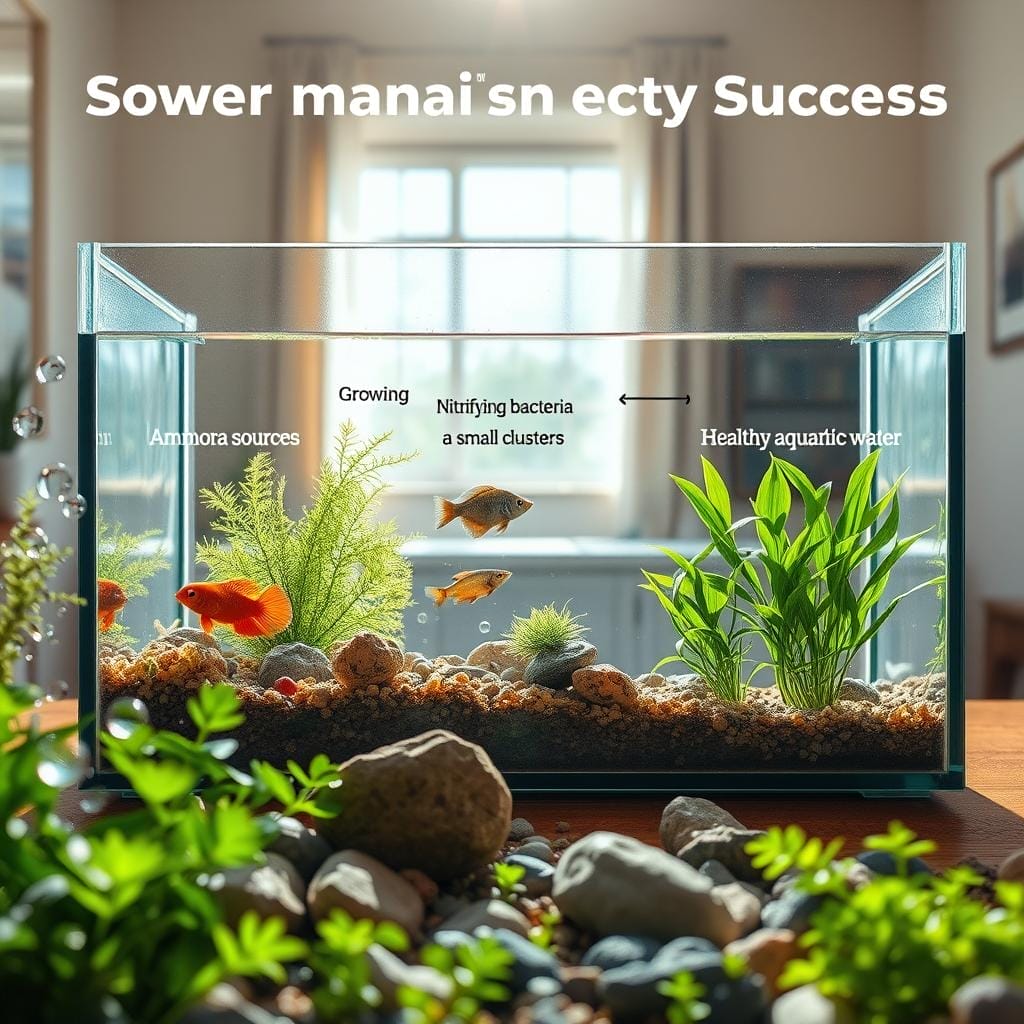
Living greens transform glass containers into vibrant ecosystems, acting like nature’s filtration system. During daylight hours, they absorb carbon dioxide and release fresh oxygen while helping balance pH levels. This invisible teamwork makes your underwater world safer and more stable.
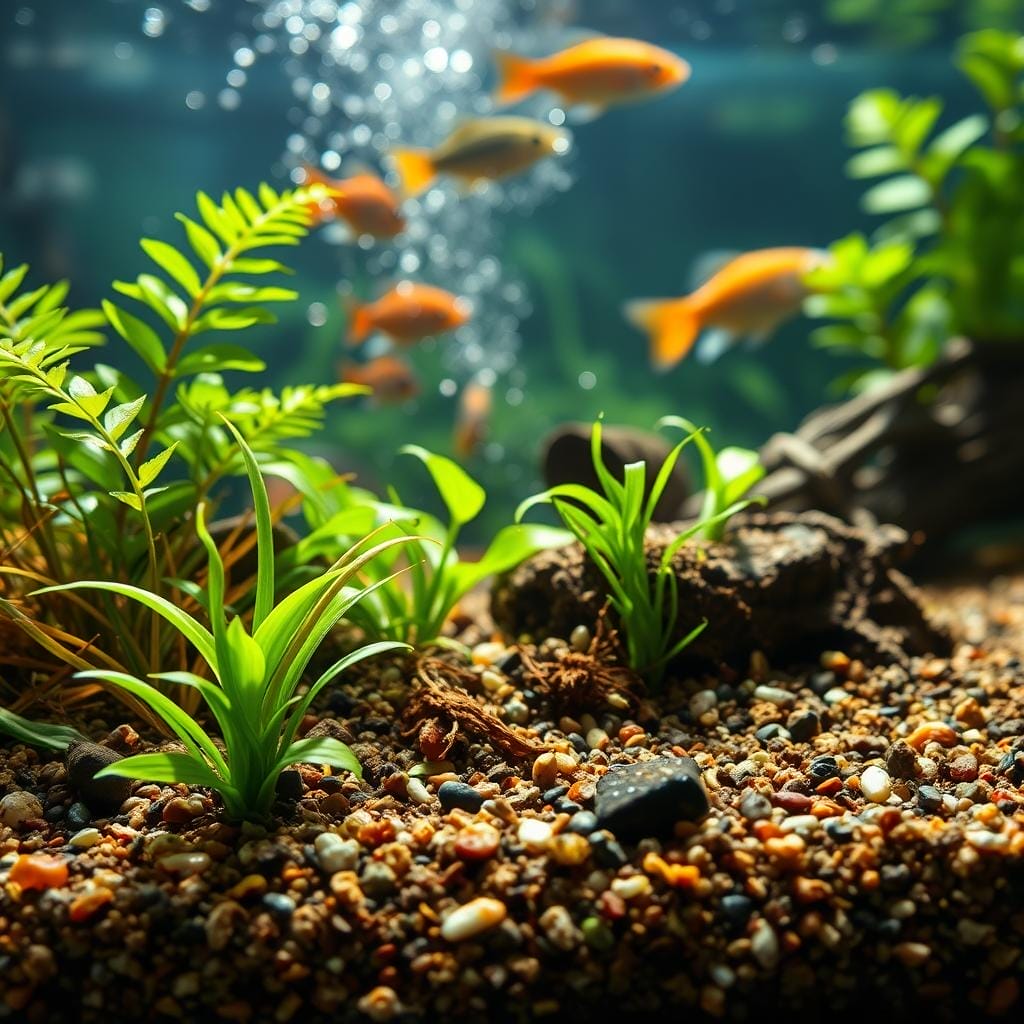
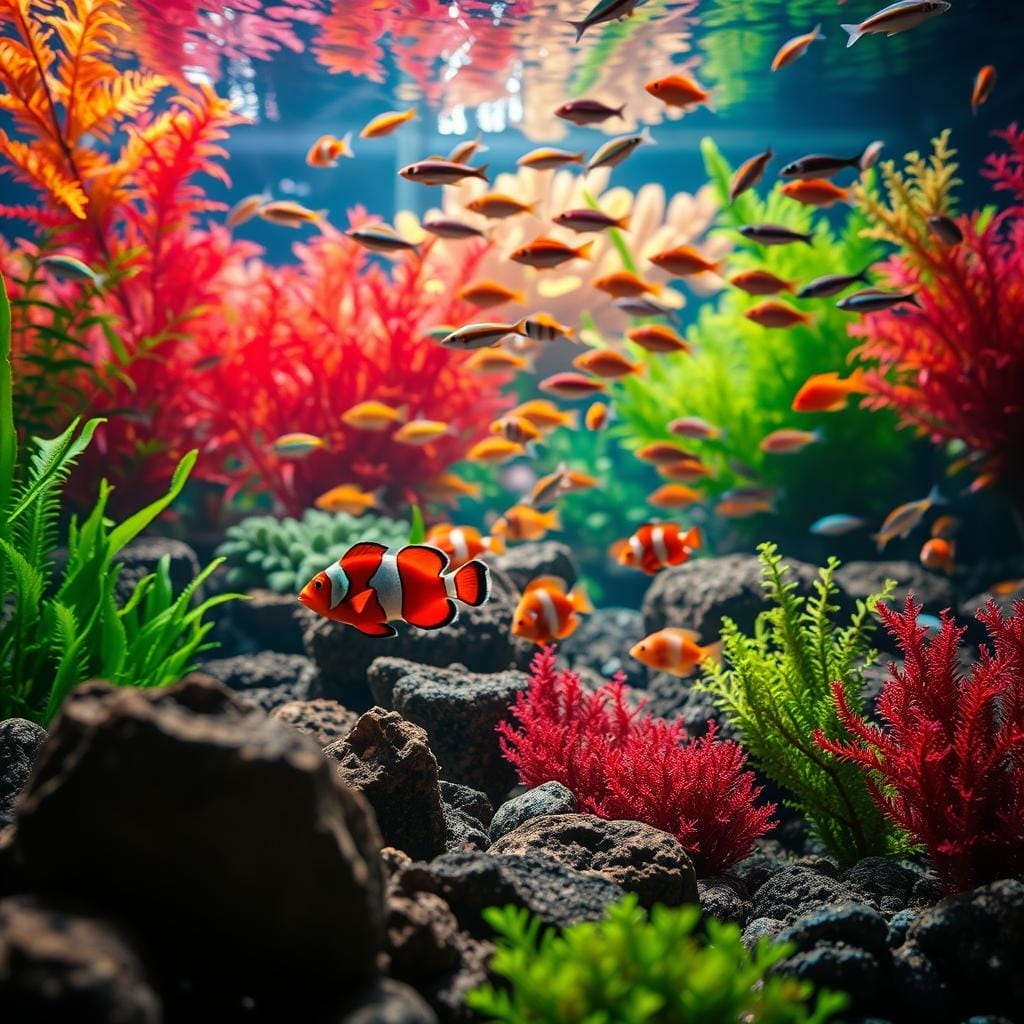
Fish thrive when surrounded by flowing stems and broad leaves. The gentle sway of foliage mimics their wild habitats, reducing stress and encouraging playful exploration. Shy species find shelter in dense growth, while bold swimmers claim territories among the greenery.
Newborn fry hide safely in plant clusters, and herbivorous residents snack on tender shoots. Even your water quality improves as roots absorb excess nutrients that might otherwise fuel algae growth.
This guide reveals how to harness these benefits through simple, effective practices. You’ll discover why nurturing your green allies is just as vital as feeding your fish—and how both efforts combine to create breathtaking aquatic harmony.
Understanding the Benefits of Live Aquarium Plants
Imagine leafy sanctuaries where your fish dart through swaying stems like tiny explorers. These underwater gardens do more than decorate—they become life-support systems through natural teamwork.
Nature’s Breathing Partners
During daylight hours, your green allies convert carbon dioxide into fresh oxygen. This daily rhythm works with your filtration system to maintain balanced water chemistry. You’ll notice:
- Clearer water as leaves trap floating particles
- Stable pH levels through continuous gas exchange
- Reduced algae growth from nutrient absorption
Behavior Boosters for Aquatic Friends
Shy species gain confidence when surrounded by familiar textures. Curious swimmers investigate nooks between stems, while breeding pairs claim sheltered areas. Three key advantages emerge:
- Newborn fry hide in dense foliage during critical early days
- Herbivores nibble tender shoots as natural snacks
- Territorial fish establish boundaries using plant clusters
Watch your aquatic community flourish as these living features satisfy instinctual needs. You’re not just decorating a tank—you’re crafting an ecosystem where every resident thrives.
Mastering Aquarium Plant Care: Essential Practices
Unlock lush growth by mastering three hidden factors in your tank. Water chemistry, nutrient balance, and consistent routines work together like silent conductors—orchestrating vibrant greenery beneath the surface.

Key Elements for Healthy Growth
Your greenery thrives when you maintain:
- pH harmony between 6.5-7.8—test weekly with strips
- Water hardness of 50-100 ppm for sturdy stems
- Steady temperatures (74°-80°F) to avoid growth stalls
Warmer waters accelerate development but may weaken leaves. Colder environments slow metabolism—balance is crucial.
Regular Maintenance and Monitoring
Swap 10% of water weekly using a gravel vacuum. This refreshes minerals while removing organic waste. Add Reef Carbon to filters—it clears yellow tints that block light.
Watch for:
- New shoots emerging regularly
- Leaves maintaining rich color
- Roots spreading through substrate
Adjust your routine if growth slows or leaves brown. Consistent care builds resilience, letting your underwater garden flourish year-round.
Choosing the Ideal Substrate for Your Planted Aquarium
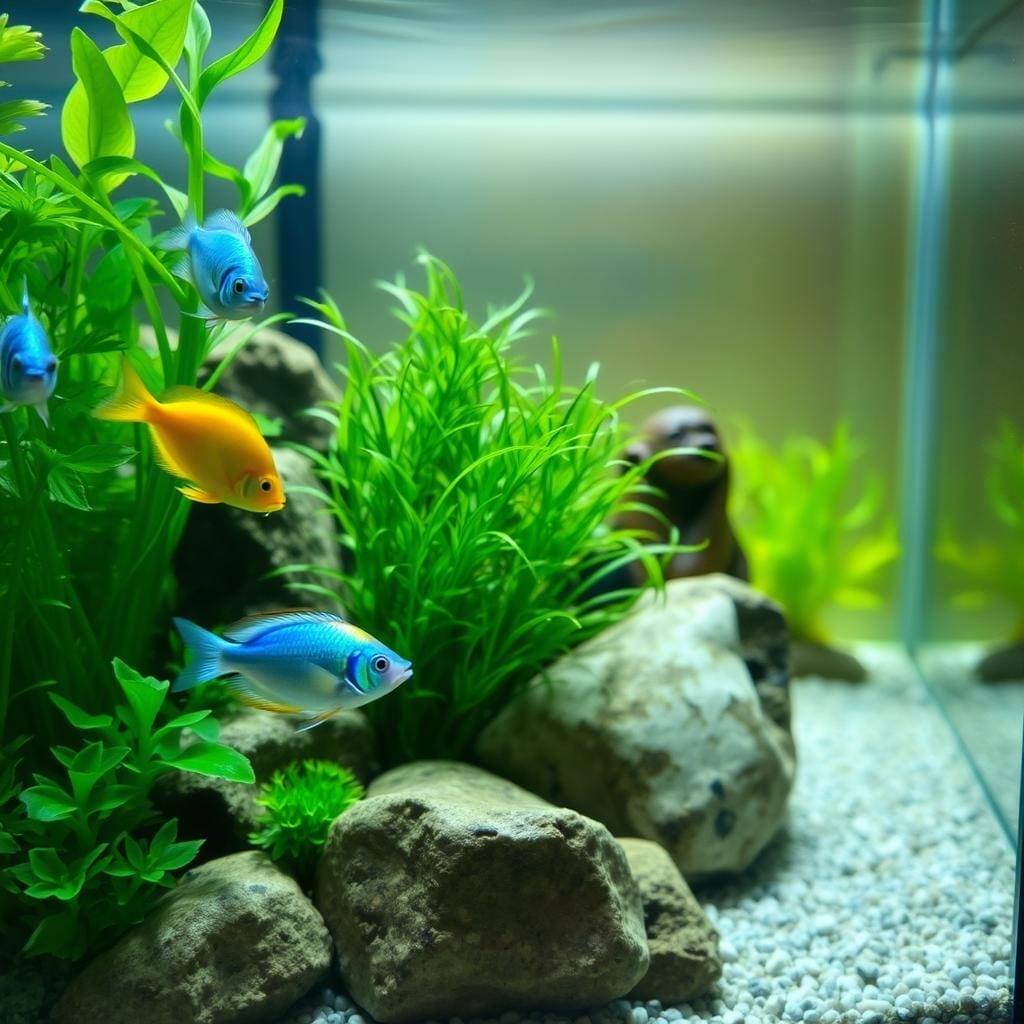
Your tank’s floor does more than hold decorations—it’s the pantry and foundation for your green stars. What lies beneath determines how well roots anchor and access nourishment while influencing water quality for all inhabitants.

Gravel, Sand, and Soil: Pros and Cons
Medium-grade gravel offers the Goldilocks zone for many setups. Its pebble gaps let water circulate freely, reducing dead zones. You’ll need root tabs since this type substrate lacks natural nutrients. Regular vacuuming prevents debris buildup between stones.
Sand creates a sleek look and stays cleaner on the surface. But its tightly packed grains challenge root systems trying to spread. Even with added nutrients, roots struggle to absorb them effectively in dense sand beds.
Soil substrates work like buffets for aquatic plants. They release steady nutrients through their structure and naturally soften water. Avoid disturbing soil during cleaning—it clouds water and might clog filters. This type substrate demands higher initial investment but rewards you with vigorous growth.
The Role of Substrate in Nutrient Delivery
Your green stars’ roots interact with substrate in three key ways:
- Absorbing minerals through root hairs
- Storing energy reserves in rhizomes
- Exchanging gases with the surrounding environment
Soil-based substrates constantly feed roots through decomposition. Inert options like gravel or sand require root tabs placed near root zones. Test water parameters weekly when using soil—it gradually lowers pH and softens water through natural ion exchange.
Lighting, Water Parameters, and CO2: Balancing Essential Factors
What if your tank could mimic nature’s perfect sunrise? The right combination of light, water chemistry, and CO2 transforms glass walls into thriving ecosystems where every leaf becomes a solar panel for life.

Optimizing Aquarium Lighting for Photosynthesis
Choose full-spectrum bulbs rated 6500K—the sweet spot between energy efficiency and growth stimulation. This daylight-mimicking range fuels photosynthesis while making red and blue pigments pop in leaves. For most setups, 2 watts per gallon works well, though deeper tanks might need stronger fixtures.
Set timers for 6-8 hours daily. Consistency matters—sudden changes encourage algae. Morning ramp-up periods mimic dawn, reducing stress for light-sensitive fish.
Maintaining Ideal Temperature and pH Levels
Keep water between 74°-80°F for optimal metabolic activity. Cooler temps slow growth; warmer speeds it up but risks leaf damage. Test pH weekly:
- 6.5-7.5 suits most species
- Use driftwood to lower naturally
- Adjust during water changes if needed
Guidelines for Effective CO2 Supplementation
Start with low-demand species like Java Moss before adding CO2 systems. Three options work best:
- Pressurized kits for precision control
- Liquid carbon supplements for small tanks
- DIY yeast reactors for budget setups
Watch fish behavior—if they gasp at the surface, reduce CO2 immediately. Balance light intensity with carbon levels to prevent algae outbreaks while keeping leaves vibrant.
Feeding Your Plants: Fertilizers and Nutrient Management

What if your underwater garden’s secret weapon sat in a bottle? Like fish needing balanced meals, your green residents crave specific minerals to flourish. Let’s explore how to fuel their vibrant displays without turning your tank into an algae buffet.
Smart Fertilizer Choices
Aquatic greenery absorbs nourishment through leaves or roots—sometimes both. Liquid formulas like Tropica Fertilizer work best for stem species that drink through foliage. Tablet forms buried near roots feed heavy root-feeders like Amazon swords. Three factors guide your selection:
- Leaf texture (delicate vs. waxy surfaces)
- Growth speed (fast vs. slow developers)
- Existing fish population (more waste = fewer supplements)
Algae-Proof Nutrient Balancing
Test water weekly before adding anything. Stable pH (6.5-7.5) and bright light let greenery use nutrients effectively. Notice these signs of imbalance:
- Yellow leaves = iron deficiency
- Holes in foliage = potassium shortage
- Green water = excess phosphorus
Cut doses by 25% if algae appears. Warmer tanks (above 78°F) need more frequent feeding—but never exceed label instructions. Your fish food contributes nitrogen, so adjust fertilizer amounts accordingly.
Bringing All Elements Together for a Thriving Tank
Picture your underwater world humming with life—every element working in sync like gears in a fine watch. Start with hardy species like sword plants, whose broad leaves anchor your system while you master light and nutrient balance. These resilient starters build confidence as you learn to pair substrate choices with targeted fertilization.
Your equipment becomes an invisible partner. Quiet filtration systems team with live greenery to polish water clarity, while timers maintain steady light cycles. Test weekly—adjusting doses when leaves pale or algae appears—and watch growth patterns guide your care rhythm.
Soon, you’ll spot subtle signs of harmony: roots weaving through gravel, fish darting through new shoots, and water parameters holding steady. For ongoing success, adopt essential maintenance routines that prevent issues before they arise. Each small step builds toward a self-sustaining display where every component supports the whole.
This journey transforms glass boxes into living art. With patience and observation, you’ll craft ecosystems where sword plants tower and schooling fish shimmer—proof that nature thrives when given the right tools.
FAQ
How do live aquatic greens improve water quality?
They absorb nitrates and organic waste, reducing algae risks while releasing oxygen. This creates a balanced ecosystem where fish thrive and pH stays stable naturally.
What’s the easiest way to start a planted tank?
Begin with hardy species like Java fern or Amazon sword. Use nutrient-rich soil or sand capped with gravel. Pair with moderate lighting (6–8 hours daily) and liquid fertilizers for steady growth.
Can I use regular gravel for rooted varieties?
Fine-grained substrates like Seachem Flourite or CaribSea Eco-Complete work best. They anchor roots securely and provide iron, potassium, and other minerals through their porous surfaces.
How often should I trim overgrown stems?
Prune every 2–3 weeks to maintain shape and prevent shading. Remove yellowing leaves promptly, and replant healthy cuttings to fill sparse areas—this encourages bushier growth.
Do all tanks need CO2 systems?
Low-tech setups can thrive without injected CO2 if you choose slow-growing species like Anubias. For dense carpets or vibrant colors, consider a pressurized system paired with timed diffusers.
Why are my leaves developing brown spots?
This often signals nutrient deficiencies. Try adding root tabs for iron or magnesium. Test water parameters—low potassium or excess phosphate can also cause discoloration.
What’s the ideal temperature range for tropical species?
Most flourish between 72–78°F. Use a reliable heater like the Eheim Jager, and avoid sudden fluctuations. Cooler water slows metabolism, while warmer temps may boost algae growth.
How do I combat green hair algae outbreaks?
Reduce lighting duration to 6 hours, manually remove visible strands, and introduce algae eaters like Amano shrimp. Check fertilizer doses—overfeeding can trigger blooms.
Hi, I'm Millie a passionate fish enthusiast and blogger. I loves learning about all kinds of aquatic creatures, from tropical fish to stingrays.