
Aquarium Substrate: The Foundation of a Healthy Aquarium
 Millie Douglas
Updated on: December 1, 2025 .
9 min read
Millie Douglas
Updated on: December 1, 2025 .
9 min read
What if the most important part of your tank isn’t what you see swimming around, but what lies beneath their fins?
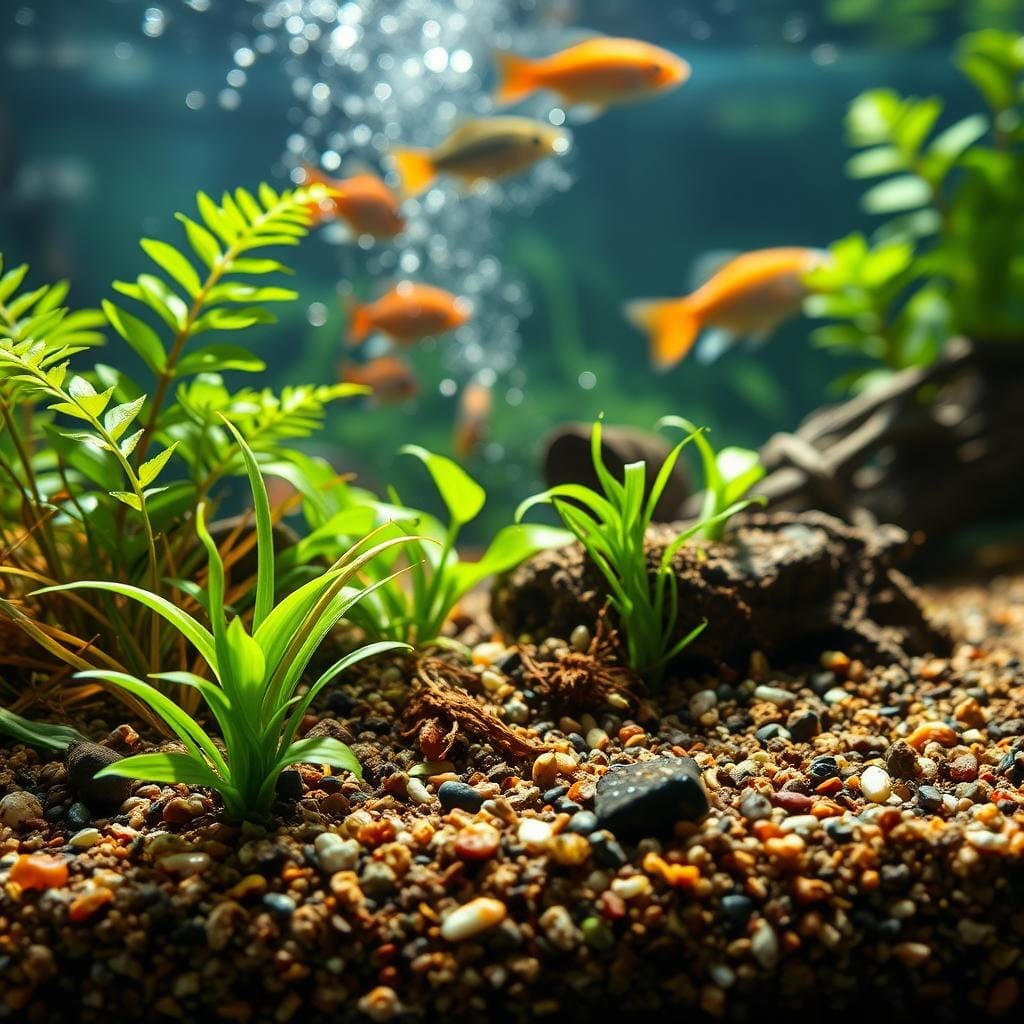
Many aquarists focus on fish and decorations, overlooking the foundation that supports everything. Your tank’s base layer does much more than just look pretty. It creates a living environment where essential processes happen.
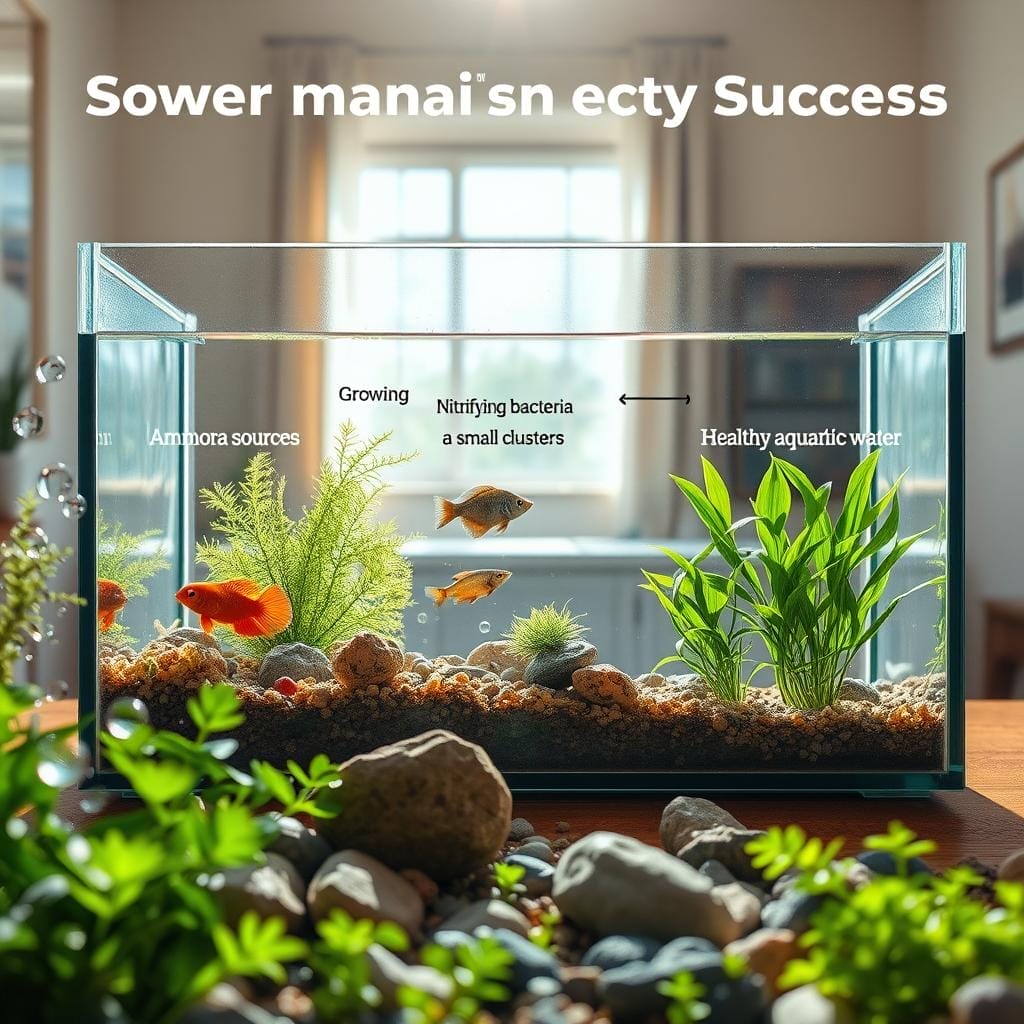
This material serves as home to beneficial bacteria that keep your water safe. These tiny workers convert harmful waste into nutrients your plants can use. They primarily live in this foundation area, even more than in your filter.
Think of it as the soil for your underwater garden. Your plants need this base to root and grow strong. The right depth provides surface area for bacterial colonies to thrive.
You’ll discover how this foundation impacts everything from water chemistry to plant growth. Understanding this helps you create a beautiful, balanced ecosystem for your fish and microscopic helpers.
Understanding the Essentials of Aquarium Substrate
Beneath the shimmering water and graceful fish lies a hidden world that powers your entire aquatic ecosystem. This foundation does far more than create a beautiful landscape for your tank.
Definition and Key Benefits
Your tank’s base material serves as both anchor for plants and home for microscopic life. The benefits extend beyond simple aesthetics to create a functioning biological system.
This layer becomes a living filter where beneficial bacteria colonize vast surface areas. These microorganisms work constantly to break down waste into valuable nutrients.
Over time, your foundation develops into a complete recycling center. It captures organic debris and transforms it into plant food.
How Substrate Supports Aquarium Life
Your foundation creates a thriving microenvironment for bottom-dwelling creatures. Shrimp and snails feast on the bacterial biofilm that forms naturally.
The material provides significant surface area for bacterial colonization. This biological filtration works alongside your mechanical filter for superior water quality.
A deeper layer (over one inch) maximizes this natural processing power. This creates stable conditions for healthy plant growth and fish wellbeing.
Exploring the Variety of Substrate Types
Your journey to a thriving tank begins with a crucial choice. You have several distinct material types to consider, each with unique strengths.
Your selection depends on your goals, from a simple fish-only setup to a lush, planted paradise. Understanding these options empowers you to build the perfect foundation.
Inert Substrates and Their Characteristics
If you prefer stability and full control, inert media is your best friend. Common examples include gravel and sand.
These materials are chemically stable. They won’t alter your water parameters over time.
When choosing gravel, pay close attention to grain size. A 1-3mm size is ideal for most tanks and helps plant roots anchor securely.
Comparing Commercial Aquasoils and DIY Options
For ambitious planted aquarium enthusiasts, nutrient-rich soils are a game-changer. Brands like ADA Amazonia or Fluval Stratum are packed with essential nutrients.
They actively support robust plants but break down slowly. You may need root tabs later to maintain their power.
A DIY substrate offers a budget-friendly alternative. You can layer garden soil under a cap of sand.
This method creates a fertile base for your plants. It’s a great project for experienced hobbyists seeking creative control.
Each type has its place. The right substrate sets your entire ecosystem up for success.
Aquarium Substrate: How to Select, Install, and Maintain It
Getting your foundation layer right from the start saves you countless hours of maintenance later. The right installation and care routine keeps your underwater environment healthy and beautiful.

Best Practices for Installation
Begin by selecting material with the ideal grain size. You’ll want to make sure it falls between 1-3mm for most setups.
This range allows plant roots to penetrate while preventing compaction. Always rinse your gravel or sand thoroughly before adding it to your tank.
Continue washing until the water runs clear. This prevents cloudy water and protects your filter from dust and debris.
Aim for a depth of 1-2 inches, creating gentle slopes for visual appeal. Heavier materials make planting easier than lightweight options.
Maintenance Tips for a Healthy Tank Base
Your care routine should include gentle vacuuming during water changes. Focus on areas with visible waste while avoiding planted zones.
For sand substrates, gently stir the surface occasionally. This prevents dangerous anaerobic pockets from forming.
Different materials need different approaches. Regular vacuuming works well for inert gravel.
Nutrient-rich soils benefit from lighter maintenance. You’ll make sure your aquarium foundation supports life for years to come.
Tailoring Your Substrate to Fish, Plants, and Aesthetics
Customizing your tank’s base material transforms it from a simple container into a personalized aquatic habitat. Your choices here directly impact both the health of your residents and the overall beauty of your setup.
Matching Substrate to Specific Aquatic Species
Different fish species have unique preferences for their foundation. Bottom-dwellers like Corydoras catfish thrive on soft, sandy materials they can sift through comfortably.
African cichlid enthusiasts achieve better results with crushed coral or aragonite sand. These materials maintain the higher pH levels these species need while supporting their natural behaviors.
Enhancing Visual Appeal with Colors and Textures
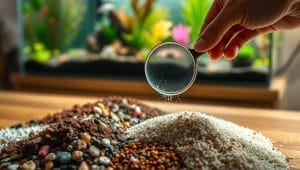
The color of your foundation significantly affects your tank’s appearance. Darker gravel and sand make fish colors pop vibrantly, while lighter tones create a softer, more natural look.
For planted setups, nutrient-rich soils support robust root growth in species like Amazon swords. When choosing the right foundation, consider how different textures interact with your hardscape elements.
Brown and tan sands create authentic riverbed appearances when paired with driftwood. You can even mix substrates in different tank zones to achieve both functional and aesthetic goals.
Optimizing Water Parameters with the Right Substrate
Creating the perfect water conditions starts with understanding how your bottom layer interacts with your aquatic environment. Your foundation material actively shapes chemistry in ways that support your specific fish and plant needs.
Boosting Beneficial Bacteria Growth
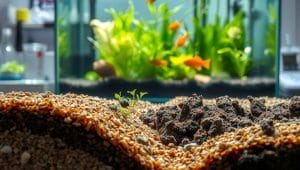
Your tank’s foundation provides massive surface area for microscopic helpers to thrive. These beneficial bacteria establish colonies throughout your base material, creating a biological filter that works constantly.
You’ll find that a well-established bottom layer hosts more bacteria than your mechanical filter. This makes it one of the most important parts of your nitrogen cycle.
Controlling pH and Water Hardness Naturally
Different materials naturally adjust your water chemistry. Aquasoils containing peat soften water and lower pH levels, perfect for soft-water species.
For hard-water fish like African cichlids, crushed coral or aragonite sand gradually raises pH and hardness. This reduces your need for constant parameter adjustments.
Most aquatic plants prefer neutral to slightly acidic conditions. When using nutrient-rich soils for your planted aquarium setup, you may need fewer fertilizers initially. Adding root tabs over time helps maintain nutrient levels as the material ages.
Celebrating a Healthy Aquarium: Final Thoughts on Your Substrate Journey
Your tank’s success story begins with understanding the vital role your base layer plays in creating balance. The choice between nutrient-rich soils and inert media like gravel or sand shapes your entire aquatic experience.
Over time, you’ll notice how soil supports robust plant growth with stronger roots, while inert options give you more control. Both approaches can create stunning tanks when matched to your specific goals and species needs.
Remember that your foundation provides essential surface area for beneficial bacteria. As your system matures, these microscopic communities become more effective at supporting your fish and plants. For deeper insights into specialized foundation materials, explore our detailed substrate research and recommendations.
Also Read: Common Aquarium Problems and How to Fix Them
You now have the knowledge to build the healthy, beautiful underwater world you’ve envisioned. Trust your understanding and create an environment where both your aquatic life and your enjoyment can thrive.
FAQ
How deep should I layer the gravel in my tank?
A good starting point is 2 to 3 inches. This depth is ideal for most setups, providing enough space for plant roots to anchor and grow while allowing beneficial bacteria to thrive. For tanks with heavy root feeders, you might go a bit deeper. Just make sure it’s not so deep that it traps harmful debris.
Can I mix different types of sand and gravel together?
Yes, you can create a custom look by mixing substrates! This is a great way to achieve unique textures and colors. The key is to combine materials with similar sizes and weights to prevent them from separating over time. Always rinse each type thoroughly before mixing to keep your water clear.
Does the substrate affect my water parameters?
Absolutely. Certain types, like crushed coral or some commercial aquasoils, can slowly release minerals that influence pH and hardness. Inert materials like quartz sand typically don’t alter water chemistry. It’s important to choose a type that aligns with the needs of your specific fish and plant species.
How often do I need to clean the bottom of my aquarium?
Regular vacuuming during partial water changes is the best practice. For most tanks, a quick vacuuming every one to two weeks helps remove waste and debris from the surface without disturbing the beneficial bacteria colony living deeper within the substrate. This keeps your tank healthy and looking great.
What’s the best substrate for a planted tank?
For vibrant plant growth, nutrient-rich substrates are top choices. Commercial aquasoils are popular because they provide essential nutrients for roots and support beneficial bacteria. You can also use an inert gravel or sand base and supplement with root tabs to feed your plants directly, achieving similar benefits.
Is a bare-bottom tank a bad idea?
Not necessarily! Some species, like certain goldfish or breeding tanks, do well with a bare bottom because it makes cleaning easier and prevents debris buildup. However, most aquariums benefit from having a substrate, as it provides a surface for bacteria, reduces fish stress, and supports a more natural environment.
Hi, I'm Millie a passionate fish enthusiast and blogger. I loves learning about all kinds of aquatic creatures, from tropical fish to stingrays.