
Blackwater Tanks: Expert Tips for Setting Up Your Aquarium
 Millie Douglas
Updated on: December 2, 2025 .
12 min read
Millie Douglas
Updated on: December 2, 2025 .
12 min read

Did you know 73% of aquarium fish thrive better in water conditions mimicking their natural habitats? This surprising fact explains why more hobbyists are exploring specialized environments that recreate nature’s balance. If you’ve ever wondered how to create a stunning, healthy ecosystem for your aquatic pets, you’re in the right place.
Unlike traditional setups, these tinted-water environments use natural tannins from leaves and driftwood. This gentle approach supports fish health while creating mesmerizing visual effects. You’ll find they’re easier to maintain than you might think, especially with proper guidance.
In this guide, we’ll walk through everything from selecting the right materials to balancing water chemistry. You’ll learn how simple adjustments can reduce stress for sensitive species and enhance your tank’s beauty. We’ve designed this resource to help you succeed, whether you’re a first-time owner or a seasoned enthusiast.
Key benefits include: stronger immune systems for fish, natural algae control, and unique aesthetic appeal. You’ll discover how to create that perfect amber glow while keeping your aquatic friends happy and healthy.
By the end, you’ll have a clear roadmap for deciding if this approach aligns with your goals. Let’s dive into the fascinating world of nature-inspired aquarium keeping together!
Understanding the Science Behind Blackwater Tanks
Have you ever wondered why certain rivers appear tea-colored yet support thriving ecosystems? These unique waters form through ancient geological processes, not just decaying leaves. Let’s explore how Earth itself crafts these remarkable habitats.
Nature’s Recipe for Tinted Waters
True blackwater environments begin with ancient rock formations. The Guiana Shield in South America – a 2-billion-year-old geological structure – slowly releases minerals into waterways. Over time, rainwater washes organic compounds from soil and weathered stones, creating a cocktail of tannins and acids.
Water Chemistry Made Simple
These habitats have distinctive chemical fingerprints. Their soft, acidic nature (pH 4-6) comes from dissolved plant substances, not carbonic acid. You’ll find minimal calcium or magnesium here – these waters contain up to 10x fewer minerals than typical aquariums.
Electrical conductivity tests reveal their purity. While home setups can’t perfectly replicate these conditions, understanding natural parameters helps you create healthier environments. Focus on balancing tannins and monitoring mineral levels for success.
Exploring Botanical-Style Aquarium Setups
Creating a botanical aquarium feels like brewing nature’s tea—patience rewards you with liquid amber beauty. These living ecosystems use organic materials to release beneficial compounds while crafting stunning visual depth. Let’s unlock the secrets of this art form through smart material selection and natural processes.

Integrating Leaves, Seed Pods, and Driftwood
Start with leaves and seed pods that mimic forest floors. Indian almond leaves and catappa pods work beautifully, releasing tannins gradually. Pair them with driftwood or twisted branches to create hiding spots for fish.
Always boil materials first to remove impurities. Soak seed pods for 48 hours to prevent floating. Arrange pieces to let water flow naturally around them—this prevents dead spots while enhancing decomposition efficiency.
Achieving the Perfect Tannin-Tinted Water
The magic happens when water interacts with botanicals like tea leaves in hot water. You’ll notice color changes within days as organic acids and minerals seep out. Pro tip: Use a mix of fresh and aged materials to maintain stable tint levels.
Monitor decomposition weekly. Replace leaves when they turn translucent, and rotate seed pods every 2-3 months. Test pH regularly—these natural setups often stabilize between 6.0-6.8, perfect for tetras and rasboras.
Remember, each tank develops its unique character. Some hobbyists love the ever-changing leaf patterns, while others focus on crafting permanent hardscape features. Your care for botanicals leaves room for creativity while supporting healthier fish.
Ecological and Geological Influences on Aquarium Water
Picture an ancient landscape where water becomes tea through forces older than dinosaurs. The Brazil Rio Negro’s signature amber hue begins with rocks formed over two billion years ago. These geological foundations shape every aspect of natural habitats your fish ancestors called home.

How Soil and Rocks Shape Aquatic Environments
The Precambrian Guiana Shield acts like nature’s water filter. Its quartz-rich sands and weathered stones create podzol soils – acidic, nutrient-poor grounds that starve decomposing organisms. This “podzolization” process preserves organic layers, slowly releasing tannins into waterways like the Brazil Rio Negro.
You’ll notice similar patterns in home setups. Sandy substrates mimic these natural conditions by limiting mineral content. Choose fine-grained quartz sand for your tank – it resists compaction while letting beneficial microbes thrive. Avoid calcium-rich materials that alter water chemistry unexpectedly.
Weathering processes in ancient rock formations teach valuable lessons. Soluble minerals like magnesium get washed away over millennia, leaving soft, acidic water. Test your tank’s hardness regularly – aim for under 50 ppm to mirror these unique conditions. Add peat moss or almond leaves to maintain stable acidity without harsh chemicals.
Understanding these geological principles helps you recreate thriving ecosystems. Your aquarium becomes a living tribute to Earth’s patient craftsmanship, supporting fish that evolved in these specialized waters. Simple choices in substrate and water treatment honor nature’s billion-year-old blueprint.
Selecting the Right Materials and Substrate
Your aquarium’s foundation matters more than you think. The materials under your fish’s fins directly impact water chemistry and overall health. Let’s explore how to build a stable base that supports your aquatic ecosystem without unwanted surprises.
Choosing Substrate Materials Without Altering pH
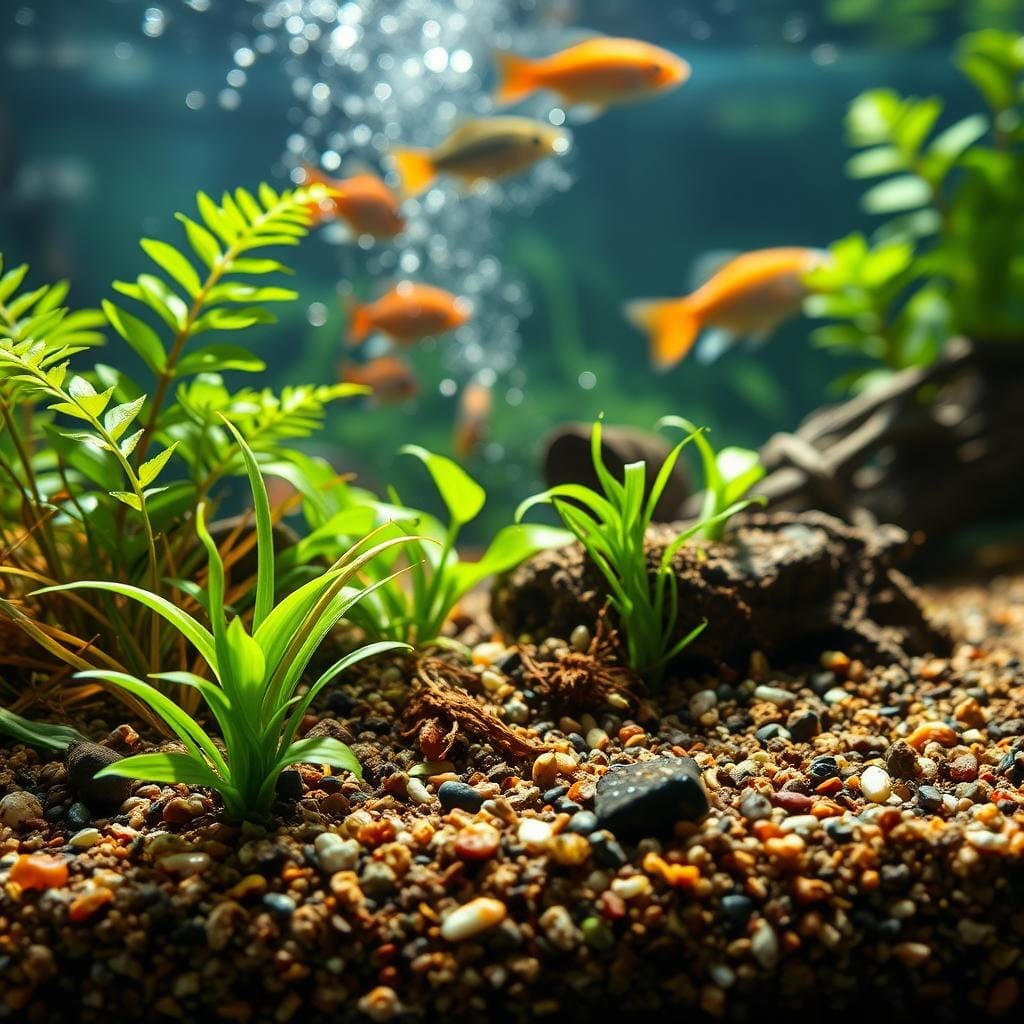
Silica sand shines as the top choice for mimicking natural riverbeds. Unlike crushed coral or limestone, it won’t release minerals that raise pH levels. Look for fine-grained options that allow proper water flow while creating a natural look.
Avoid materials containing calcium carbonate like aragonite. These dissolve over time, making your water harder. Test unfamiliar substrates by soaking them in distilled water for 48 hours – if pH rises, skip them.
Utilizing Additives and Hardscape Elements
Enhance your setup with branches and stones that complement your substrate. Spiderwood and Malaysian driftwood add texture without affecting water parameters. Pair them with inert rocks like slate or quartz for visual contrast.
Three safe hardscape combinations:
- Silica sand + twisted mangrove roots
- Fine gravel + smooth river stones
- Mixed grain sizes + vertical slate formations
Maintain 1.5-2 inches of substrate depth for optimal plant growth. Rinse all materials thoroughly before adding them to your setup. This prevents cloudiness while preserving your carefully balanced water conditions.
Expert Blackwater Tanks Setup Guide
Transforming your aquarium into a thriving ecosystem doesn’t require magic – just smart planning. Let’s walk through a method that blends beauty with practicality, creating a space where fish flourish and natural elements shine.

Mastering the Balance of Aesthetics and Functionality
Begin with purified water. A reverse osmosis system strips away unwanted minerals, giving you complete control over water chemistry. This blank canvas lets you craft conditions that mirror soft, acidic habitats. Our step-by-step guide to creating specialized aquatic environments simplifies this process.
Layer your base with clay-rich sediment. This porous material supports plant roots while hosting beneficial bacteria. Aim for 1.5 inches of substrate – enough depth for stability without trapping debris.
Arrange hardscape elements like driftwood first. Position branches to create shaded areas and swimming lanes. Add seed pods or almond leaves last, letting them release tannins gradually. Test pH weekly during the first month, adjusting with botanicals if needed.
Three keys to success:
- Use dark substrate to enhance water coloration
- Soak wood pieces for 48 hours to prevent floating
- Introduce fish only after parameters stabilize
Your home aquarium will evolve over weeks as materials interact. Observe how light plays through leaf litter and adjust placements for both fish comfort and visual impact. Remember – nature works slowly, and so should you.
Essential Maintenance and Long-Term Care Strategies
Maintaining your aquatic ecosystem becomes simpler when you understand its natural rhythms. Unlike standard setups, these environments thrive through gentle, consistent care that supports both fish health and water clarity. Let’s explore how to preserve that beautiful amber glow while keeping inhabitants thriving.
Your Weekly Checkup Routine
Test water quality every 7 days using pH strips and GH/KH test kits. Aim for pH 5.5-6.8 and GH below 4°dH – parameters that mirror natural habitats. Record results to spot trends before issues arise.

Refresh 15-20% of the water biweekly using temperature-matched, treated water. This maintains tannin levels while preventing mineral buildup. Always siphon debris from the substrate gently to avoid disturbing beneficial bacteria colonies.
Rotate care botanicals like leaves and seed pods every 3-4 weeks. Remove decomposing materials when they lose structural integrity – this prevents ammonia spikes. Add new botanicals gradually to maintain stable tannin release.
Three signs your biome needs attention:
- Cloudy water despite regular changes
- Fish gasping at the surface
- Rapid pH swings exceeding 0.5 units
Adjustments become easier with practice. If tannins fade too quickly, add alder cones or peat pellets. For excessive acidity, introduce small amounts of crushed coral in a mesh bag. Your tank will reward consistent care with vibrant fish and crystal-clear amber water.
Troubleshooting Common Blackwater Aquarium Issues
Even well-planned setups can face challenges – but every problem has a natural solution. You’ll find most issues stem from imbalances in decomposition rates or environmental factors. Let’s tackle these head-on with simple adjustments that keep your aquatic haven thriving.

Managing pH Fluctuations and Water Hardness
Botanical decomposition naturally lowers pH, but sudden drops stress fish. Test weekly using liquid kits – digital meters can misread tinted water. If acidity spikes, replace 25% of your water with reverse osmosis-treated H2O to dilute tannins gently.
Hardness creep often comes from substrate choices. Swap calcium-rich gravel for inert silica sand if GH rises above 4°dH. Add almond leaves gradually – one per 10 gallons – to stabilize conditions without overwhelming your system.
Addressing Algal Growth and Biofilm Concerns
Algae thrives when light meets excess nutrients. Reduce daily illumination to 6 hours and introduce floating plants like frogbit. They’ll outcompete algae while softening your tank’s appearance.
Biofilm on wood? It’s harmless shrimp food initially. If it persists beyond two weeks, scrub surfaces during water changes. Adjust feeding amounts – leftover food accelerates microbial growth. Your cleanup crew will handle the rest!
Remember: Murky water often clears naturally as bacteria balance. If cloudiness lingers, check filter flow rates. Upgrade to a canister model if needed, but preserve beneficial microbes by rinsing media in tank water only.
Integrating Advanced Aquascaping Techniques
Transform your aquarium into a living sculpture that evolves with time. Strategic placement of natural materials creates depth while supporting fish behavior. You’ll craft spaces where beauty meets purpose through thoughtful design choices.
Building Natural Architecture
Start with driftwood twigs and branches as your framework. Position taller pieces vertically to mimic submerged trees, creating shaded zones for shy species. Layer horizontal branches near the substrate to form fish highways between territories.
Combine stones with organic textures for contrast. Use flat rocks as anchors for delicate stems or seed pods. This mix of textures guides the eye while providing microhabitats for aquatic life.
Three dynamic arrangements to try:
- Spiderwood arches over a carpet of leaf litter
- Twisted mangrove roots surrounded by floating stems
- Stacked slate paired with cascading seed pods
Rotate botanicals seasonally – autumn leaves in fall, fresh pods in spring. This natural decay process becomes part of your design, releasing tannins that tint water while reshaping the landscape. Test weekly to ensure pH stays stable as materials break down.
Balance open swimming areas with dense thickets of stems. Leave 40% of your tank’s front section clear for viewing. Your fish will thrive in this mix of exploration spaces and secure retreats.
Comparing Home Aquariums and Professional Setups
What makes a hobbyist’s aquatic environment different from expert facilities? While both aim to replicate natural habitats, home systems offer personalization that large-scale operations can’t match. You control every detail, from leaf selection to lighting schedules, creating a living work of art tailored to your space.
Benefits and Challenges for Hobbyists
Home environments thrive on flexibility. You can experiment with tannin levels using almond leaves or adjust hardscape layouts weekly. Unlike professional tanks built for durability, your setup evolves with your growing expertise. This hands-on approach deepens your connection to the aquatic world.
Maintenance presents unique considerations. Smaller water volumes mean faster parameter shifts—test weekly and change 15-20% biweekly. For inspiration on balancing aesthetics with ecosystem health, explore our guide to biotope creation.
Three key advantages of personal systems:
- Customized lighting for plant growth
- Controlled introduction of botanicals
- Adaptable filtration based on species needs
Challenges like algae management become opportunities to learn. Start small, observe daily, and let your aquatic habitat teach you its rhythms. With patience, you’ll craft an environment where both fish and hobbyist flourish.
Also Read: Common Aquarium Problems and How to Fix Them
FAQ
How do I start creating tannin-tinted water in my aquarium?
Begin by adding natural botanicals like catappa leaves, seed pods, or driftwood. These release tannins gradually, mimicking habitats like Brazil’s Rio Negro. Pre-soak materials to avoid rapid pH shifts and monitor water parameters weekly.
Will botanicals make my water too acidic for fish?
Most species from tinted-water habitats (like betta fish or apistogramma) thrive in slightly acidic conditions. Test pH regularly using a reliable kit—aim for 6.0–6.8. For sensitive livestock, buffer changes by adding botanicals slowly over weeks.
How do I prevent biofilm on seed pods and driftwood?
Biofilm is harmless and often eaten by shrimp or snails. If it bothers you, briefly boil botanicals before adding them. Regular partial water changes (10–15% weekly) also reduce excess organic buildup.
Can I use regular gravel in a botanical-style setup?
Yes! Choose inert substrates like sand or smooth gravel that won’t alter pH. Pair with leaf litter or spider wood to enhance natural aesthetics. Avoid calcium-rich materials like crushed coral if aiming for soft water.
How often should I replace leaves and seed pods?
Replace them as they fully decompose—usually every 4–6 weeks. Leave some fragments to support beneficial microorganisms. Rotate additions to maintain consistent tannin levels without overwhelming your filtration.
What lighting works best for these setups?
Use dimmable LEDs with adjustable color spectrums. Soft, warm tones (2700–4000K) highlight natural textures without promoting algae. Limit photoperiods to 6–8 hours daily for balanced plant growth and biofilm control.
Are water changes different in these aquariums?
Perform smaller, more frequent changes (10% weekly) to preserve stable chemistry. Use reverse osmosis (RO) water if your tap water is hard. Always match temperature and pre-treat with a dechlorinator suited for delicate ecosystems.
Aquarium design ideasAquascape techniquesBlackwater tanks setupNatural aquarium environmentsTropical Fish CareWater parameters for blackwater tanks
Hi, I'm Millie a passionate fish enthusiast and blogger. I loves learning about all kinds of aquatic creatures, from tropical fish to stingrays.