
Decoding Fish Hiding Behavior: What You Need to Know
 Millie Douglas
Updated on: December 1, 2025 .
7 min read

Have you ever found yourself staring into your aquarium, wondering where your aquatic friends have gone? You’re certainly not alone in this experience.
Watching your underwater pets swim gracefully is one of the greatest pleasures of maintaining an aquarium. It can be frustrating when they seem to vanish for extended periods.
The good news is that this disappearing act can be completely natural for certain species and situations. However, it might also indicate that something needs your attention in the tank environment.
Throughout this guide, you’ll discover the key reasons your aquatic companions may retreat from view. We’ll explore everything from natural instincts and adjustment periods to stress factors like loud noises or water quality concerns.
You have the power to create positive changes that help your pets feel secure and thrive. Understanding their natural tendencies is the foundation for building an aquarium where everyone feels comfortable and visible.
With the right knowledge and a few thoughtful adjustments, you can transform your tank into a vibrant, active community where your aquatic friends spend more time exploring their beautiful home.
Understanding Fish Hiding Behavior
When your aquatic companions stay out of sight, it helps to know whether this is normal or a sign of trouble. Recognizing the difference ensures you provide the best care for your underwater friends.
Identifying Natural Versus Stress-Induced Hiding
Many aquatic pets have natural tendencies to stay concealed. Nocturnal species like Plecos and Kuhli loaches typically rest during daylight hours. Timid varieties such as Danios may briefly retreat when startled but quickly return to view.
New arrivals often need several days to adjust to their surroundings. This settling-in period is completely normal as they establish their place in the community. If this concealment continues beyond a week, it might indicate underlying issues.
Watch for warning signs like constant concealment in previously active pets or symptoms including clamped fins. These signals suggest stress rather than natural behavior patterns.
Exploring Environmental and Biological Triggers
Your tank environment significantly influences your pets’ comfort levels. Sudden changes in decor, lighting adjustments, or loud noises near the aquarium can cause retreat. Even household activities like foot traffic might make creatures seek shelter.
Water conditions play a crucial role in their wellbeing. Incorrect temperature, low oxygen levels, or poor water quality create uncomfortable situations. These environmental factors often drive aquatic life to find safer spaces.
Biological reasons also explain this conduct. Your pets might conserve energy while recovering from illness or injury. Natural predator avoidance instincts remain strong even in safe environments. Breeding periods also trigger protective concealment to safeguard eggs and offspring.
Knowing your specific species’ natural patterns helps distinguish between typical conduct and situations needing your attention. This understanding empowers you to create a habitat where your aquatic friends feel secure and thrive.
Creating a Safe and Stimulating Aquarium Environment
Transforming your tank into a welcoming space requires attention to several essential elements. A comfortable environment encourages your aquatic pets to explore freely and feel secure in their home.

Optimizing Water Quality, Temperature, and pH
Start with your water conditions. Regular testing keeps ammonia and nitrite at zero. Maintain stable temperature and pH levels suitable for your specific species.
Weekly water changes of 20-25% help control nitrate buildup. Proper filtration supports a healthy aquatic environment. Consistent monitoring prevents stress for your pets.
Designing Effective Hiding Spots with Rocks, Caves, and Plants
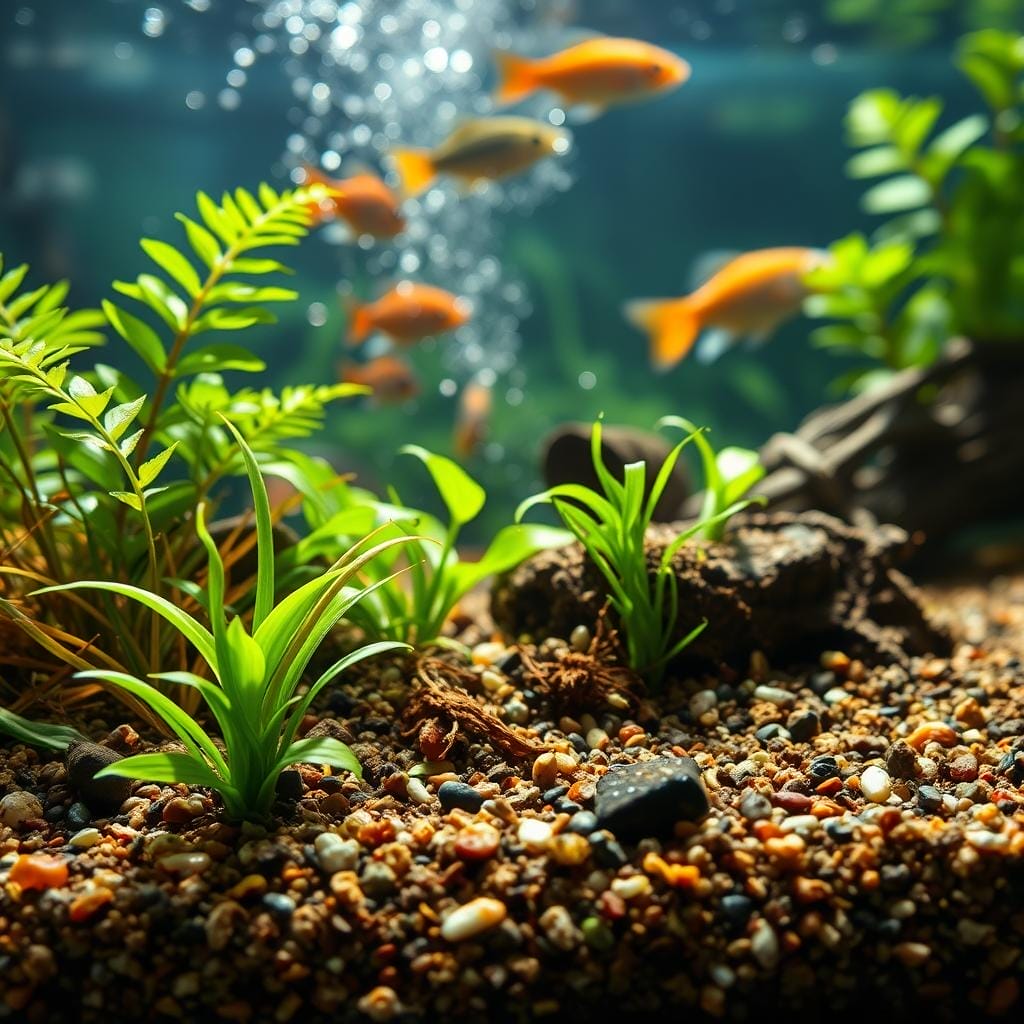
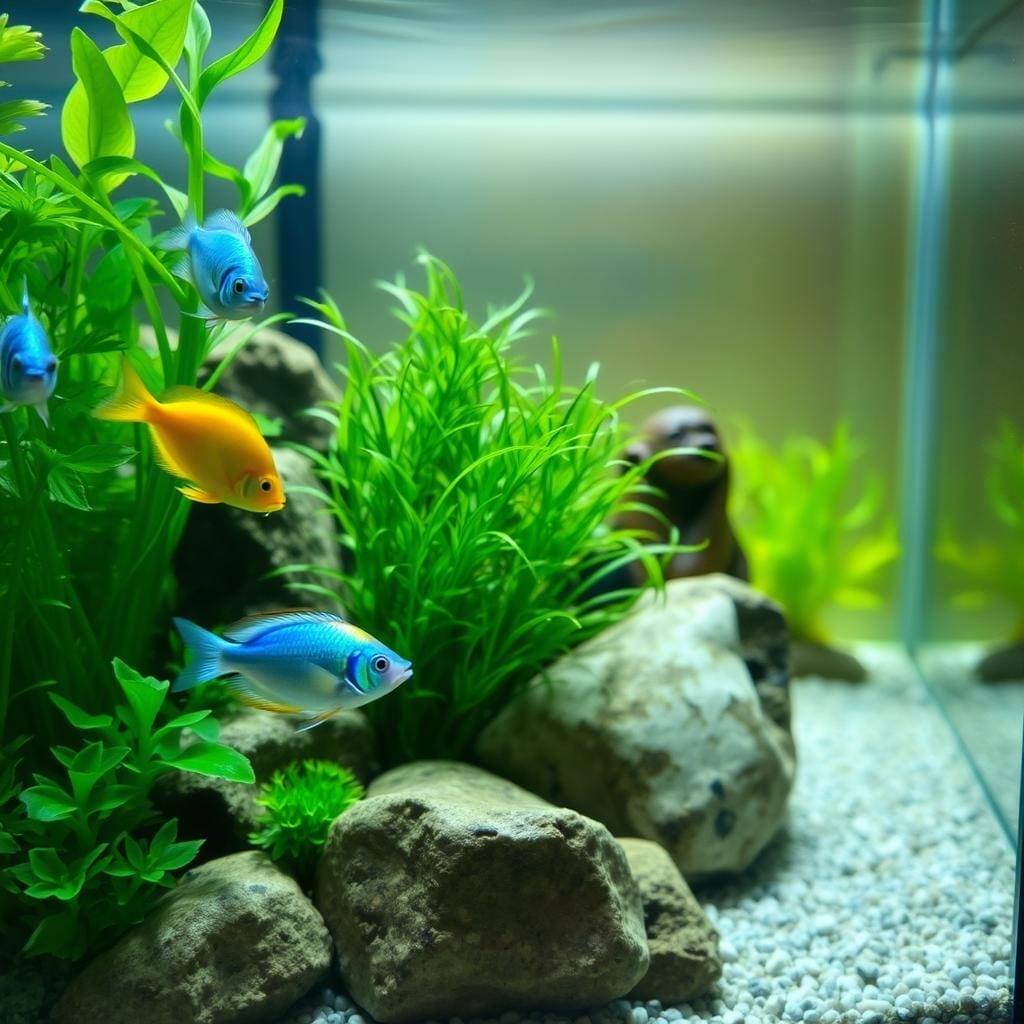
Create secure retreats using natural materials. Stack rocks to form caves and overhangs. Driftwood with arches provides excellent cover.
Live plants like water lilies and cattails offer dual benefits. They provide hiding places while improving water quality. When pets know they have safe retreats, they explore more confidently.
Selecting Compatible Tank Mates and Adjusting Decor
Research temperament before adding new companions. Peaceful species coexist better than aggressive ones. This is especially important for cold-water aquarium fish with specific needs.
Avoid overcrowding your tank space. Provide adequate territory for each inhabitant. Proper planning creates a harmonious community where everyone thrives.
Effective Approaches to Curb Fish Hiding Behavior
Your aquarium’s social dynamics can shift dramatically when introducing new inhabitants. With thoughtful strategies, you can help everyone feel comfortable and visible in their shared space.
Managing New Fish Transitions and Territorial Conflicts
When adding new aquatic pets to your tank, expect them to stay hidden initially. This adjustment period typically lasts 2-3 days as they adapt to unfamiliar surroundings.
If concealment continues beyond a week, territorial conflicts might be the cause. Established pets often defend their space from newcomers, creating stress for everyone.
A highly effective solution involves rearranging your aquarium decor. Moving rocks, plants, and structures resets established territories. This gives all inhabitants equal footing to explore.
Don’t worry if all pets temporarily retreat after rearranging. This normal adjustment usually resolves within a few days as new territories form.

Incorporating Environmental Enrichment to Reduce Stress
Create a stimulating environment that minimizes stress and boredom. Vary hiding structures throughout the tank to provide multiple safe zones.
For schooling species, maintain groups of at least 4-5 individuals. They feel vulnerable without their school’s security. Larger groups of 6-10 work even better.
Consider rotating decorations occasionally to provide novel exploration opportunities. This approach aligns with established enrichment guidelines for aquatic pets.
Minimize external stressors like loud noises near the tank. Creating a calm environment helps your pets feel more secure. Understanding these patterns through resources like behavior guides empowers you to build a harmonious community.
Final Insights and Steps for a Vibrant Aquarium
The journey to a vibrant, active aquarium begins with careful observation and thoughtful adjustments. Your aquatic pets retreat for many reasons—from natural instincts to environmental stress. The solution lies in correctly identifying each cause.
Spend time watching your community to learn individual patterns. Note when different species seek shelter. This awareness helps you spot changes that signal problems.
Providing adequate hiding places actually increases visibility. When pets know safe spots exist, they explore more confidently. This applies whether you’re setting up a freshwater aquarium or maintaining an established tank.
Start with small, consistent improvements. Test water conditions weekly. Rearrange decor to reset territories. Evaluate tank mate compatibility to prevent stress.
Some predator-aware conduct is natural and healthy. Occasional retreating shows instincts that help species survive. For specialized care, consider proper quarantine procedures when adding new arrivals.
You have the knowledge to create a secure environment where everyone thrives. The reward of watching confident pets explore makes every effort worthwhile. For advanced techniques, explore aquarium breeding methods to expand your community.
FAQ
Is it normal for my new fish to hide all the time?
Yes, this is very common. New arrivals need time to adjust to their surroundings. They often stay hidden for a few days as they get used to the water conditions, tank layout, and other community members. Providing plenty of caves and plants helps them feel secure during this transition.
What water parameters might cause my species to hide?
Sudden changes in temperature, pH, or poor water quality are major triggers. Even small shifts can stress your aquatic pets, prompting them to seek shelter. Regularly testing and maintaining stable conditions is key to preventing this behavior.
How can I tell if my pet is hiding due to bullies or aggression?
Watch for signs of chasing, nipped fins, or one individual constantly guarding territory. If a specific fish is always driven away from food or open spaces, tank mate incompatibility is likely the issue. Rearranging decor can help break up established territories and reduce conflict.
Can loud noises or activity near the aquarium cause hiding?
Absolutely. Vibrations and loud sounds can startle these sensitive creatures, making them retreat to their safe spaces. Try to place your setup in a calm area of your home to minimize sudden disturbances from household activity.
What are the best types of hiding places I can add?
A variety of structures works best. Combine live plants like Java fern, rock caves, driftwood, and even specialized aquarium ornaments. This diversity allows different species to find spots that match their natural instincts, making the entire environment feel safer and more engaging.
Hi, I'm Millie a passionate fish enthusiast and blogger. I loves learning about all kinds of aquatic creatures, from tropical fish to stingrays.