
Explore Fish Tank Themes: Tips for a Beautiful Aquarium
 Millie Douglas
Updated on: July 16, 2025 .
9 min read
Millie Douglas
Updated on: July 16, 2025 .
9 min read
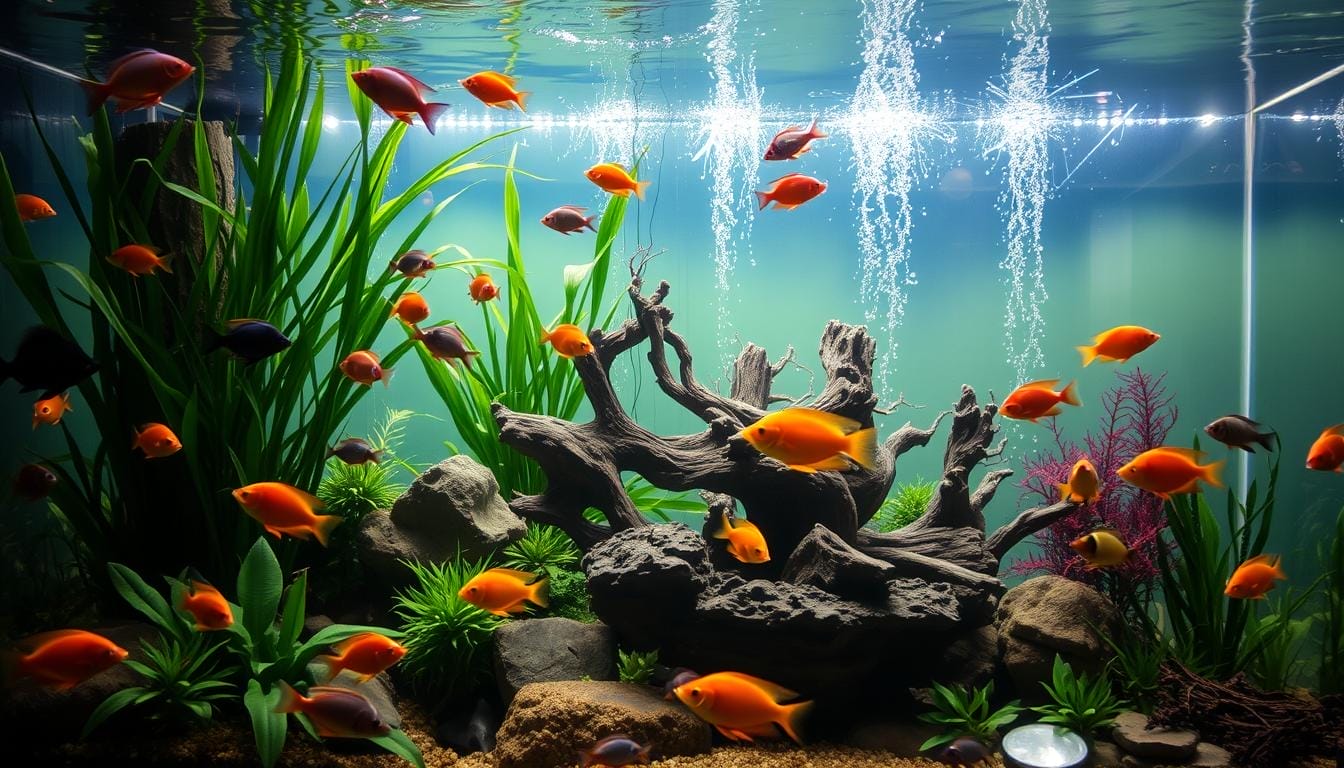
Did you know 85% of aquarium owners never fully explore design themes, leaving their setups looking generic? Your aquatic environment could be so much more than glass walls and bubbling filters. With thoughtful planning, even a basic setup can become a breathtaking underwater scene that captivates anyone who sees it.
The right visual approach does more than please the eye. It creates natural-feeling spaces where your aquatic friends thrive. From minimalist modern layouts to dense jungle-inspired arrangements, every choice impacts both aesthetics and animal well-being.
You’ll discover how simple decorations and strategic aquascaping techniques can transform ordinary tanks into cohesive environments. We’ll break down the essentials: selecting color schemes, arranging plants, and balancing open swimming areas with hiding spots. Even beginners can achieve professional-looking results with these foundational principles.
Why settle for dull when your aquarium could tell a story? Whether recreating a Amazonian riverbed or crafting an ethereal moonlit scene, your creativity sets the stage. Let’s dive into designs that turn maintenance into a joy and ordinary tanks into conversation starters.
Understanding the Art of Aquarium Design
Imagine your aquarium as a living canvas where every plant placement tells a story. Aquascaping transforms glass containers into miniature ecosystems, blending artistry with biology. This practice goes beyond decoration – it’s about crafting environments where plants and aquatic life coexist harmoniously.
Embracing the Creative Process
Your design journey starts with understanding balance. Think about textures, colors, and growth patterns. Will you create flowing hills of carpeting plants or dramatic rock formations? Every choice shapes your aquarium’s personality while supporting its inhabitants’ needs.
A Brief History of Aquascaping
The 1990s brought a revolution when Takashi Amano introduced the Nature Aquarium style. His approach mirrored landscapes using asymmetrical layouts and native plants. Earlier in 1985, Amano also pioneered Iwagumi layouts – minimalist designs featuring three main stones symbolizing harmony.
Dutch Aquarium styles offer contrast with vibrant plant clusters arranged like floral gardens. These three approaches show how cultural preferences shape design philosophies. Whether you lean toward Japanese minimalism or Dutch density, your aquarium becomes an extension of your creative vision.
Getting Started with Your Aquarium Layout
Your aquarium’s foundation begins with two critical choices: the vessel and its base. These elements shape everything from visual harmony to aquatic health. Let’s explore how these components work together to create environments where life flourishes.
Selecting the Ideal Tank and Substrate
Size and shape dictate design possibilities. A long, shallow container mimics river ecosystems, while tall tanks suit vertical plant arrangements. Measure your space first – oversized setups can overwhelm rooms, while cramped ones limit creativity.
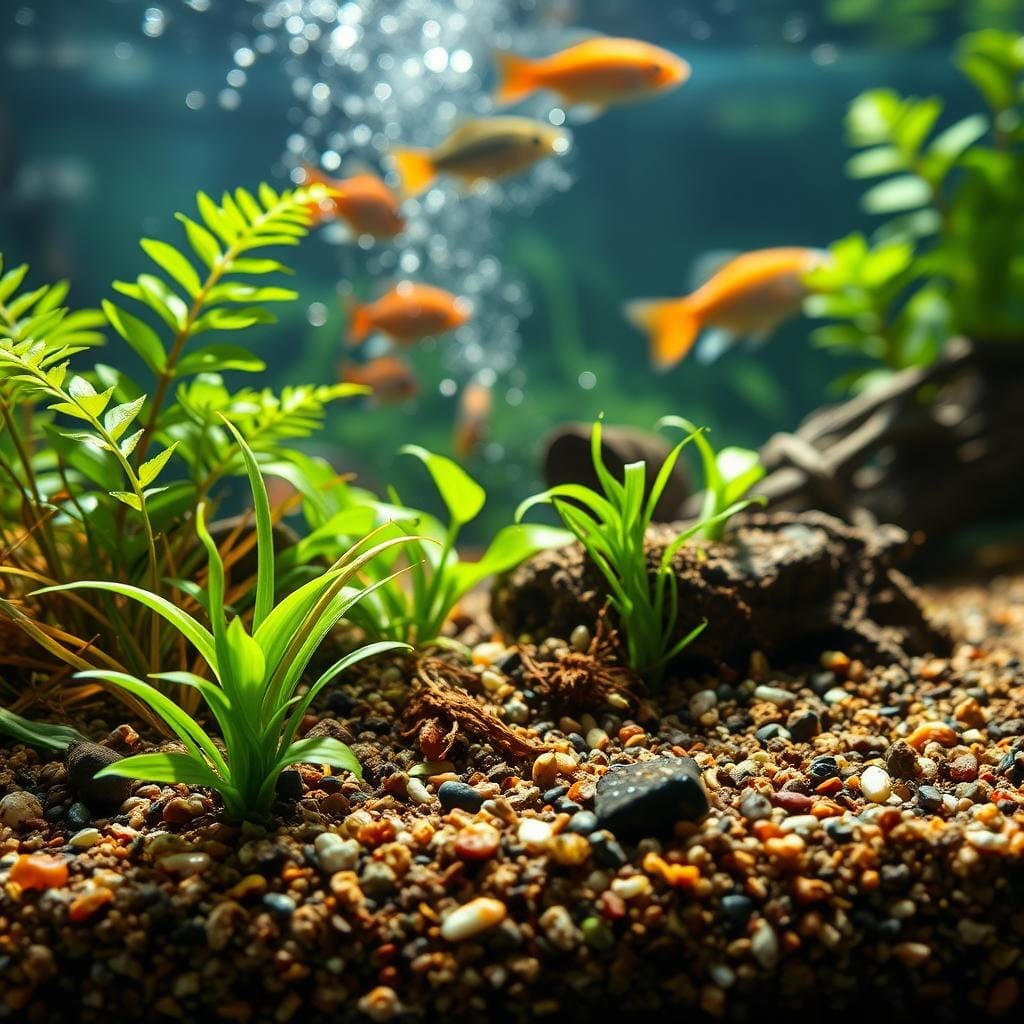
Substrate does more than anchor plants. Sandy textures protect delicate barbels on bottom-dwelling species, while nutrient-rich soils boost root growth. Darker tones make colors pop in brightly lit setups, whereas light sands brighten dimmer spaces naturally.
Calculate depth using this simple method: multiply tank length by width, then divide by 15. This gives the substrate volume in pounds needed for proper root zones. Always rinse materials thoroughly to prevent cloudy water – a common beginner oversight.
Your choice matters for both form and function. Pair smooth pebbles with flowing schools for dynamic movement, or use jagged lava rocks to create dramatic focal points. Remember: every layer contributes to your underwater story.
Incorporating Key Aquascaping Techniques
Your aquarium becomes art when you master foundational design principles. Strategic arrangements transform flat spaces into dynamic underwater worlds. Let’s explore methods professionals use to create depth and harmony.

Layering, Depth, and Focal Points
Focal points anchor your aquascape. Position a twisted driftwood branch or striking stone cluster where eyes naturally land. Odd numbers work best—three moss-covered rocks or a single dramatic centerpiece create balance without symmetry.
Build layers by varying elevations. Place taller plants or stacked stones at the back, sloping toward shorter elements in front. This mimics natural landscapes, adding mystery to your design. Leave open swimming areas between features to prevent overcrowding.
Using Natural Hardscape Elements
Combine textures for contrast. Pair smooth river stones with jagged lava rocks, or weathered driftwood with feathery ferns. Variety sparks visual interest while replicating habitats your aquatic life recognizes.
Position hardscape materials at angles to guide sightlines. Lean a branch diagonally across the space, or stack flat stones like stepping stones. These choices create movement, making your aquascape feel alive even before adding water.
Innovative Fish Tank Themes for Your Aquarium
Transform your aquatic display into a storytelling masterpiece with these innovative design concepts. Themes shape your aquarium’s personality while creating ideal habitats for its inhabitants. Let’s explore creative approaches that turn ordinary setups into extraordinary showcases.

Showcasing Nature-Inspired and Modern Ideas
Three standout styles redefine aquatic artistry while keeping maintenance manageable. Each offers distinct visual rewards and functional benefits:
- Glowing wonderlands: Specialized lighting and decor create ethereal nighttime displays. Safe UV-reactive plants and ornaments transform your space after sunset, delighting viewers of all ages.
- Zen sanctuaries: Smooth stones and minimalist layouts promote tranquility. Floating plants like dwarf water lettuce enhance the meditative atmosphere while filtering water naturally.
- Timeless classics: Combine vibrant artificial corals with live aquatic grasses for low-effort elegance. This flexible style adapts to any room’s decor while providing familiar hiding spots for shy species.
Modern themes push boundaries with interactive elements. Consider adding color-changing LED sequences or 3D-printed cave structures. These tech-enhanced designs let you customize environments daily while maintaining water quality.
Your theme choice impacts both aesthetics and animal behavior. Recreate Amazonian riverbanks with driftwood arches, or simulate coral reefs using textured backdrops. With thoughtful decorations, every viewing becomes an immersive experience.
Styling Your Aquarium with Natural Elements
Natural materials transform aquariums into living art while supporting aquatic health. These elements create habitats where life flourishes and design shines. Let’s explore how organic textures elevate both beauty and functionality in your underwater world.
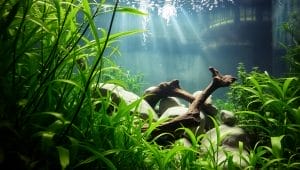
Mastering Organic Textures and Forms
Driftwood anchors designs with timeless character. Its twisted shapes become climbing structures for aquatic life while softening water chemistry. Soak pieces for 2 weeks to remove tannins, then position them to create shaded retreats or flowing visual lines.
Three stone varieties dominate professional aquascapes:
- Seiryu: Blue-gray limestone with dramatic ridges
- Ohko Dragon: Crumbling texture resembling mountain cliffs
- Manten: Flat stacking stones for terraced effects
Arrange rocks using the “rule of thirds” – place key pieces off-center for dynamic compositions. Bury bases securely to prevent shifting, and leave swimming lanes between formations.
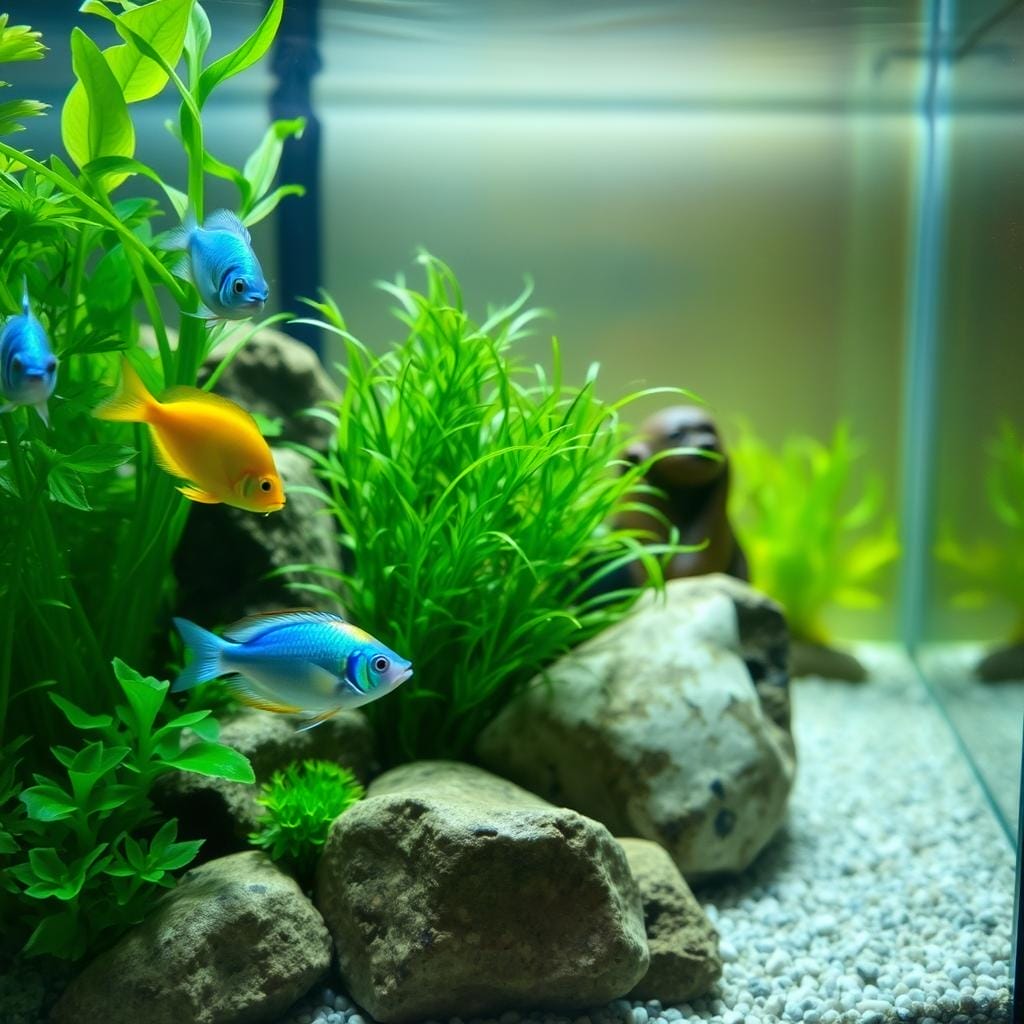
Live plants complete the ecosystem. Attach java fern to driftwood branches or nestle anubias between stones. These species thrive without rich substrates, making them perfect for natural layouts. Combine textures: feathery mosses contrast smooth stones, while broad-leaf varieties complement weathered wood.
Your aquarium becomes a balanced environment when elements work together. Dark substrates make stone colors pop, while vertical driftwood draws eyes upward. Test water parameters weekly as natural materials can alter pH – most species adapt well to gradual changes.
Integrating Tech-Savvy Features into Your Design
Modern aquarium design meets smart technology in ways that simplify care while boosting visual impact. These innovations help maintain ideal conditions and create stunning displays with minimal effort.
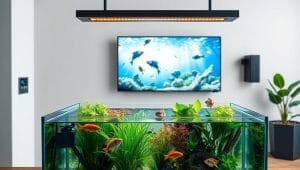
LED Lighting and Automated Feeders
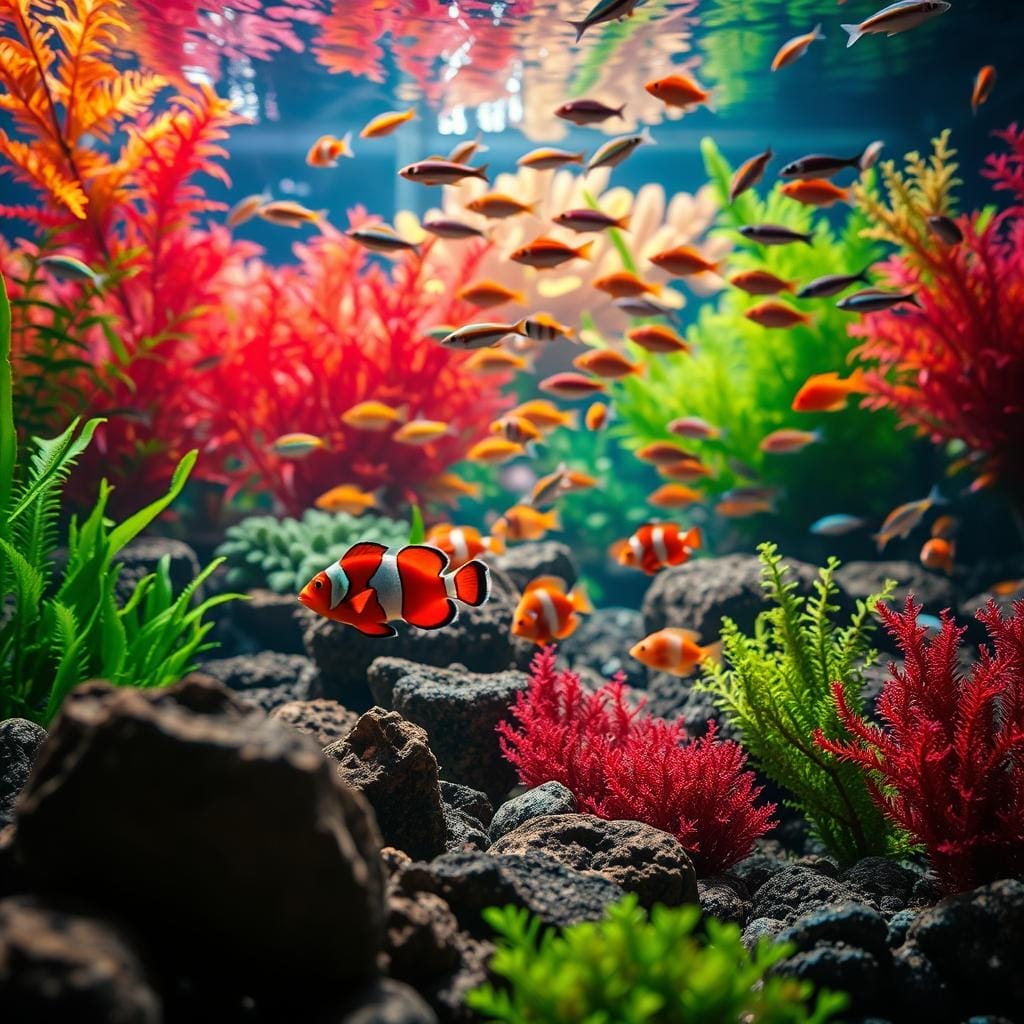
Programmable LED systems redefine how you illuminate aquatic spaces. Energy-efficient and versatile, they offer sunrise/sunset simulations that keep inhabitants healthy. Adjust color temperatures to highlight red plants or enhance blue-hued decor – all while using 50% less energy than traditional bulbs.
Automated feeders solve timing challenges. Preset meal schedules ensure consistent portions, even during vacations. Many models integrate with smartphone apps, letting you adjust feeding routines remotely. Pair these with advanced lighting setups for synchronized dawn-to-dusk cycles.
Three tech benefits transform maintenance:
- Smart controllers track pH and temperature 24/7
- Self-cleaning filters reduce manual water changes
- App-connected cameras let you check conditions anywhere
These tools work seamlessly with unique decorations, preserving your theme’s natural look. Dark substrates make LED colors pop, while hidden compartments conceal tech components. Your aquatic environment stays healthy and visually cohesive – no compromise required.
DIY and Personalized Aquarium Decorations
Your aquatic habitat becomes a personal masterpiece when you blend creativity with everyday materials. Discover how ordinary objects transform into extraordinary features that express your unique vision while keeping inhabitants thriving.
Creative Projects Using Household Treasures
Mason jars become versatile design tools when cleaned and sealed properly. Use them as miniature planters for java moss, or create layered sand art displays. Terracotta pots make excellent caves for shy creatures – just smooth sharp edges with sandpaper.
Try these safe upcycling ideas:
- Turn wine corks into floating feeding stations
- Convert ceramic mugs into shaded retreats
- Use silicone ice molds to craft custom cave systems
Designing Your Signature Atmosphere
Personalized backgrounds set the stage for your aquatic story. Paint acrylic scenes on aquarium-safe boards, or layer natural materials like preserved leaves behind the glass. Driftwood arrangements become functional art when combined with LED spotlights that cast dramatic shadows.
Always prepare materials thoroughly:
- Boil wood for 2 hours to remove contaminants
- Test paints for non-toxic certification
- Rinse repurposed items in dechlorinated water
Your decorations should reflect your style without compromising safety. Mix store-bought pieces with handmade creations for balanced designs that spark joy every time you glance at your aquatic haven.
FAQ
How do I choose the right aquarium size for my space?
Start by measuring your available area and consider maintenance needs. Smaller setups (10–20 gallons) work well for beginners, while larger aquariums offer more creative freedom. Brands like Fluval and Aqueon provide reliable options across sizes.
What substrate works best for planted aquariums?
Nutrient-rich substrates like ADA Aqua Soil or Seachem Flourite support plant growth. Pair them with inert sand or gravel for layered textures. Always rinse materials thoroughly before adding them to your design.
Can I use driftwood or rocks from outdoors?
Natural elements like driftwood enhance authenticity, but boil or soak them first to remove contaminants. Avoid limestone if keeping soft-water species. Brands like Manzanita Driftwood offer pre-treated options for safety.
How does LED lighting improve aquascaping?
Modern LEDs, such as Nicrew or Hygger models, offer adjustable color spectrums to highlight textures and promote plant health. They’re energy-efficient and reduce heat compared to traditional bulbs.
What’s the easiest way to create depth in a small setup?
Use the “rule of thirds” by placing taller plants or hardscape off-center. Slope substrate higher toward the back and add smaller decor upfront. This optical trick adds dimension without crowding swimming space.
Are DIY decorations safe for aquatic environments?
Non-toxic materials like PVC pipes or ceramic tiles can be used creatively. Avoid paints or glues unless labeled aquarium-safe. Test DIY projects in a separate container before introducing them to your main display.
How often should I adjust my aquascape layout?
Minor tweaks monthly help maintain balance as plants grow. Avoid major overhauls more than twice a year to minimize stress on inhabitants. Document changes with photos to track your design evolution.
Aquarium decorAquascaping ideasAquatic plantsCoral reef habitatsFreshwater aquariumsMarine life displaysOcean-inspired themesTropical fishUnderwater landscapes
Hi, I'm Millie a passionate fish enthusiast and blogger. I loves learning about all kinds of aquatic creatures, from tropical fish to stingrays.