
Your Guide to Free Aquarium Resources and Tips
 Millie Douglas
Updated on: December 1, 2025 .
6 min read
Millie Douglas
Updated on: December 1, 2025 .
6 min read
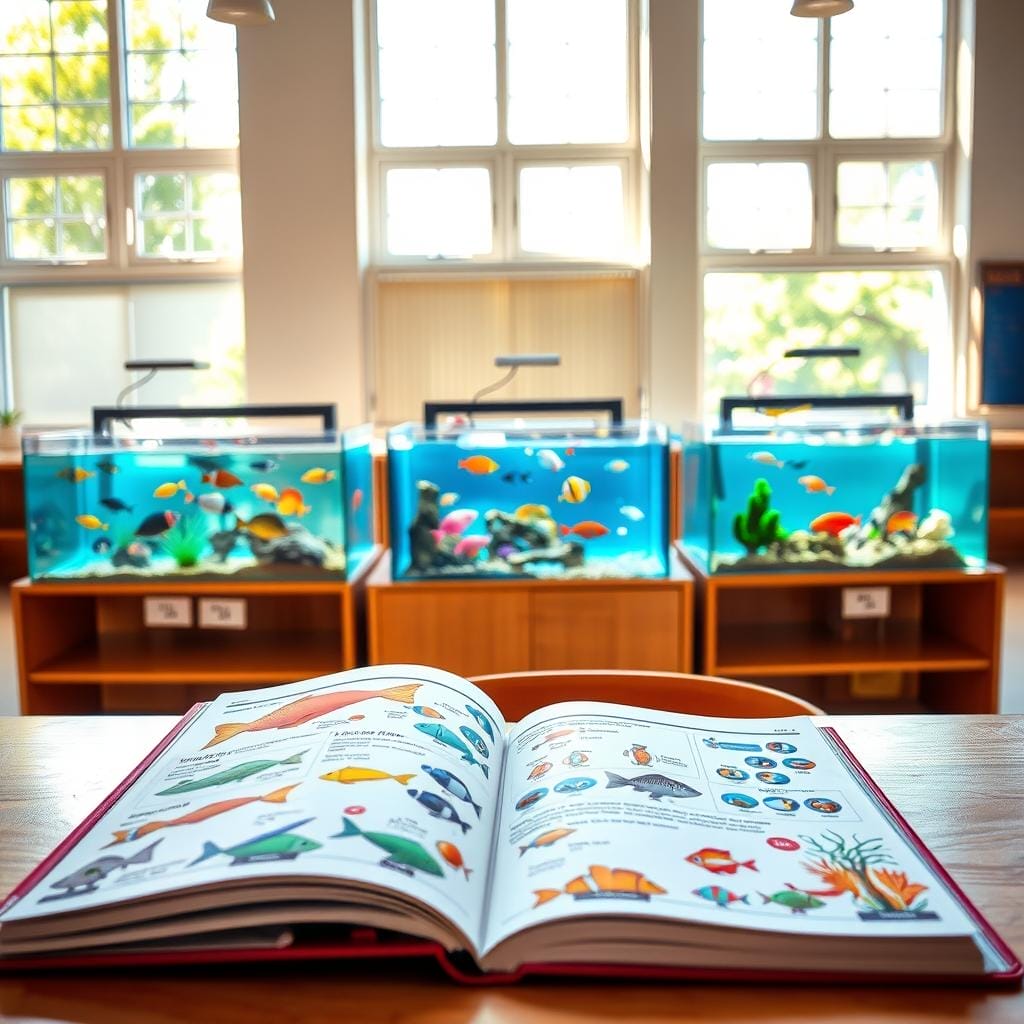
Have you ever wondered if truly captivating marine science lessons are out of reach for your classroom or home? Many believe that bringing the ocean’s wonders to life requires a complex and expensive toolkit.
We’re here to show you a better way. Places like the Georgia Aquarium provide a wonderful variety of teaching tools designed to inspire students of all ages. These materials align with curriculum standards and turn learning into an adventure.
This guide is your personal roadmap. You’ll discover downloadable activities, hands-on experiments, and interactive videos. These resources require little prep but deliver maximum engagement for young children and older students alike.
Our goal is to support educators like you. We’ll help you integrate these tools into your existing plans effortlessly. You can spark curiosity and deepen understanding without stretching your budget.
Discovering Free Aquarium Resources for Educational Settings
Transform your educational space with marine science tools that captivate young minds. These materials work beautifully in both traditional and home-based learning environments. You can adapt them to fit your specific teaching needs and student age groups.
The downloadable PDFs provide structured yet flexible content. They help you create meaningful connections between classroom learning and real-world marine environments.
Engaging Ideas for Classrooms and Field Trips
Prepare your students for an unforgettable field trip experience. Use research projects that explore penguin species and their natural habitats. Your classroom becomes an extension of the marine world.
Mapping exercises help students visualize penguin distributions across the Southern Hemisphere. Food web activities reveal interconnected relationships in marine ecosystems. These hands-on approaches make complex concepts accessible.
Integrating Activities in Home Learning Environments
Parents and homeschool educators can easily adapt these materials. The same projects that work in a classroom setting translate wonderfully to home use. You control the pace and depth of learning.
Discussion-based activities encourage critical thinking about animal adaptations. Compare local birds with penguins to explore survival strategies. These conversations spark natural curiosity and deeper understanding.
Interactive Aquarium Activities to Spark Curiosity
You can create unforgettable learning moments with hands-on marine science explorations. These interactive experiences make complex concepts accessible and memorable for students of all ages.
Your students will dive into marine ecosystems through projects that combine creativity with scientific discovery. Each activity builds understanding while keeping engagement high.
Hands-On Experiences: Mural, Food Webs, and Research
Transform your space with collaborative projects that illustrate marine relationships. Students can map animal habitats and construct food webs showing ocean connections.
The “Create-a-bird” activity encourages creative thinking about adaptation. Students design imaginary birds for unusual environments, learning how real species develop survival features.
DIY Science Experiments and Crafts Inspired by Marine Life
Simple experiments make abstract concepts tangible. The blubber mitt demonstration shows how marine animals stay warm in cold water using everyday materials.
Compare salt water and fresh water freezing points to explore ocean chemistry. Deep sea vent simulations reveal how temperature differences create unique underwater environments.
Creative crafts reinforce learning through hands-on fun:
- Egg carton jellyfish and whale creations
- Paper plate aquarium displays
- Handprint crab and shark puppet projects
Creative Adaptation and Conservation Projects
Discuss endangered species and conservation efforts with engaging activities. Students explore threats facing animals like bald eagles and right whales.
Population density experiments teach scientific methods using simple materials. These projects help students understand how researchers study marine life in the wild.
Leveraging Free Aquarium Resources in Marine Science Education
Discover how thoughtfully designed marine science materials can transform your students’ learning experience. These tools bridge classroom instruction with real-world ocean exploration.
You’ll find structured approaches that guide young minds from initial curiosity to deep understanding. The materials support various learning styles and age groups effectively.
Utilizing Lesson Plans and Interactive Materials
KWL charts help your students track their knowledge journey about marine life. They begin by sharing what they know, then formulate questions, and finally record new discoveries.
Observation worksheets develop critical thinking skills as students draw and describe fish behaviors. The “Invent an Invertebrate” activity challenges them to design creatures with special adaptations for coastal habitats.
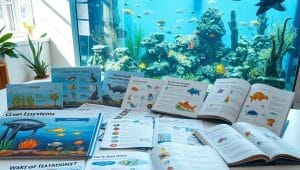
Spotlight resources provide focused information on specific species like sharks and coral reefs. These materials align with the important educational role of public aquariums in science instruction.
Incorporating Social Media and Digital Content to Engage Students
Social media platforms bring real-time ocean updates into your classroom. Following aquarium accounts connects your students with behind-the-scenes content and animal stories.
Digital materials like “I Spy” activities sharpen observation skills in virtual exhibits. These interactive tools show life beneath the water’s surface, supporting the broader goals of ocean education.
Themed activity collections keep learning engaging with focused content on specific marine animals. Your students gain meaningful connections to the wonderful world of marine science.
Wrapping Up Your Aquarium Adventure with Lasting Insights
You now possess a treasure trove of educational approaches that make marine science accessible. These materials work beautifully across different settings, from traditional classrooms to home learning environments. Your students of all ages will benefit from this wonderful variety.
The flexibility of these tools allows you to adapt them to your specific needs. Whether preparing for a field trip or building a comprehensive unit, you can customize the experience. This adaptability makes learning about water ecosystems engaging and meaningful.
Start with one activity that excites you most and watch your students respond. Each project builds connections to marine life and fosters conservation awareness. You’re not just teaching facts—you’re inspiring future ocean advocates who understand the importance of protecting animal species.
FAQ
What kind of educational materials can I find for a field trip to an aquatic center?
You can discover a wonderful variety of pre-visit and post-visit guides, animal fact sheets, and themed scavenger hunts. These tools help structure your visit and extend the learning back into your classroom or home, making the experience meaningful for all ages.
How can I bring ocean science into my home learning environment?
Many institutions offer downloadable activity packets, virtual tours, and live webcams of exhibits. You can use these to create DIY science experiments, like exploring water salinity, or fun crafts that teach about different marine species and their habitats.
Are there projects that focus on animal conservation for students?
Absolutely! Look for adaptation and conservation projects that challenge students to solve real-world problems. These often involve creating models, researching endangered species, and learning about sustainable practices, fostering a deeper connection to protecting aquatic life.
Can I use social media as an educational tool for marine topics?
Yes! Following aquariums and science centers on social media provides a stream of engaging content, from short videos about animal care to behind-the-scenes looks. This is a fantastic way to spark daily curiosity and keep students engaged with current events in marine science.
Aquarium tips and tricksAquatic plants careBeginner aquarium guideBudget-friendly aquarium ideasDIY aquarium projectsFish tank maintenanceFree aquarium resourcesOnline community for fish enthusiastsSetting up a home aquariumSustainable fishkeeping practices
Hi, I'm Millie a passionate fish enthusiast and blogger. I loves learning about all kinds of aquatic creatures, from tropical fish to stingrays.