
Full Spectrum Lighting for a Thriving Aquarium Ecosystem
 Millie Douglas
Updated on: July 16, 2025 .
11 min read
Millie Douglas
Updated on: July 16, 2025 .
11 min read
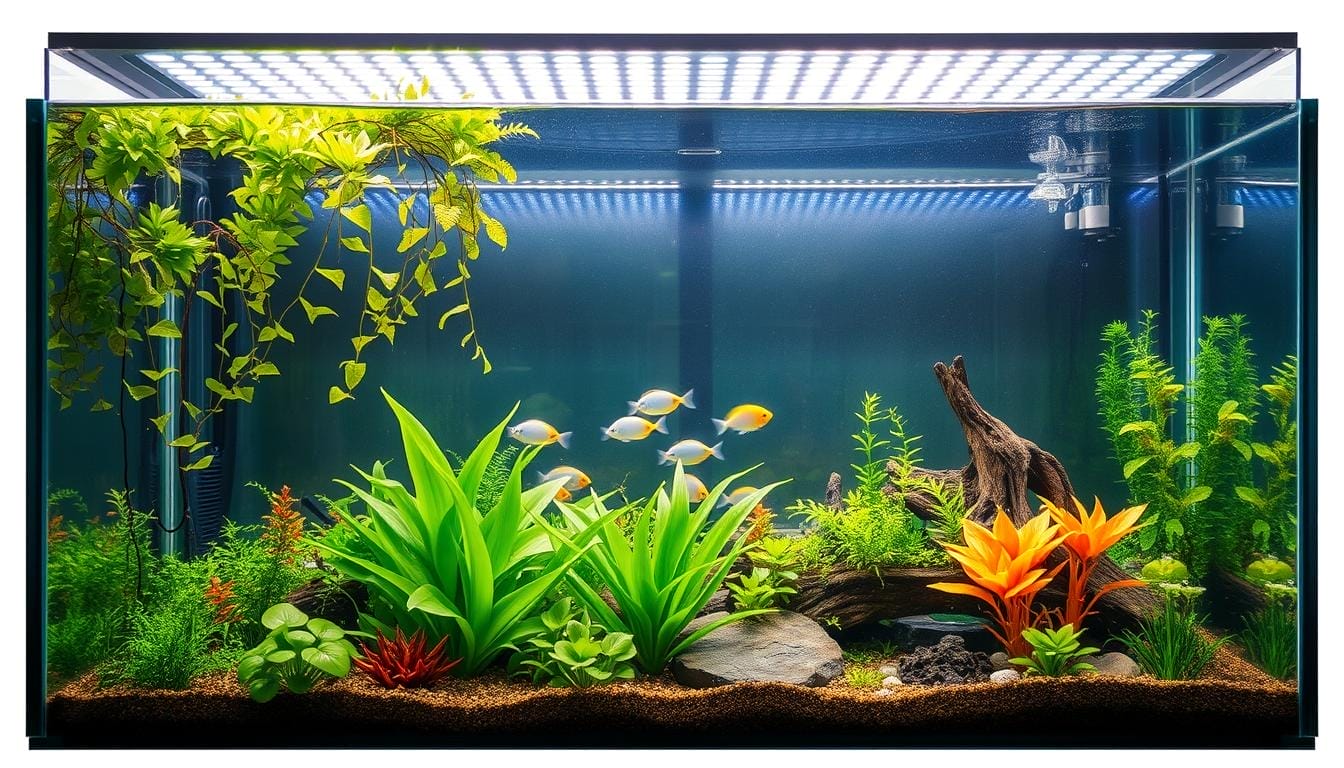
Did you know 80% of aquarium owners unknowingly use lighting that limits plant growth and affects fish behavior? Your underwater world depends on more than just water quality—it needs light that mirrors nature’s brilliance to truly thrive.
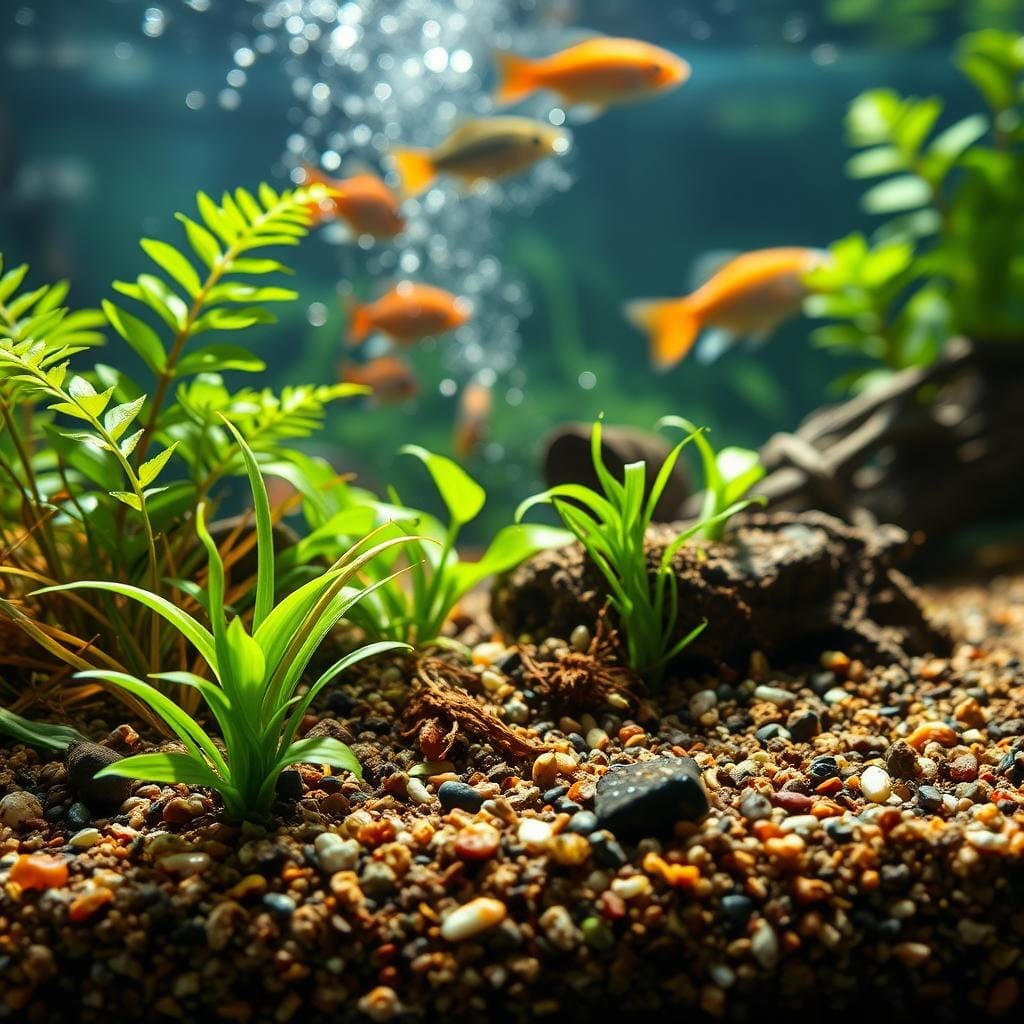
Imagine your aquatic plants growing lush and vibrant while your fish display their most vivid colors. This isn’t just about aesthetics—it’s about recreating the delicate balance found in natural habitats. The right illumination acts like sunshine beneath the water’s surface, fueling photosynthesis and supporting healthy ecosystems.
You’ll discover how specific light wavelengths impact every corner of your tank. From promoting plant vitality to regulating fish activity patterns, every choice matters. We’ll simplify the science so you can make confident decisions without needing a biology degree.
This guide gives you practical steps to choose lighting that works with your aquarium’s unique needs. Whether you’re nurturing delicate coral or creating a planted paradise, you’ll learn to create conditions where life flourishes. Let’s transform your tank into a breathtaking showcase of health and beauty.
Understanding Full Spectrum Lighting
Creating a thriving aquarium starts with choosing illumination that acts like sunshine underwater. The right balance supports vibrant plants and active fish, but how do you achieve this? Let’s explore the essentials of quality aquarium lighting and its natural advantages.
What Is Full Spectrum Lighting?
True aquarium-grade lighting goes beyond basic brightness. It delivers every color wavelength found in sunlight, measured by a Color Rendering Index (CRI) of 95+ and 6500K color temperature. Unlike standard bulbs, this complete range fuels photosynthesis and enhances fish colors naturally.
Here’s what matters: You can’t judge quality by appearance alone. Special tools like spectrometers verify if lights cover all wavelengths without gaps. Manufacturers design these products to match what aquatic life evolved under over millions of years.
How It Mimics Natural Daylight
Think of dawn breaking over a coral reef—that’s what proper lighting recreates. Premium options distribute energy evenly across red, blue, and green spectrums. This balance matters because:
- Plants absorb specific wavelengths for growth
- Fish rely on light cues for feeding and resting
- Water clarity affects how light penetrates
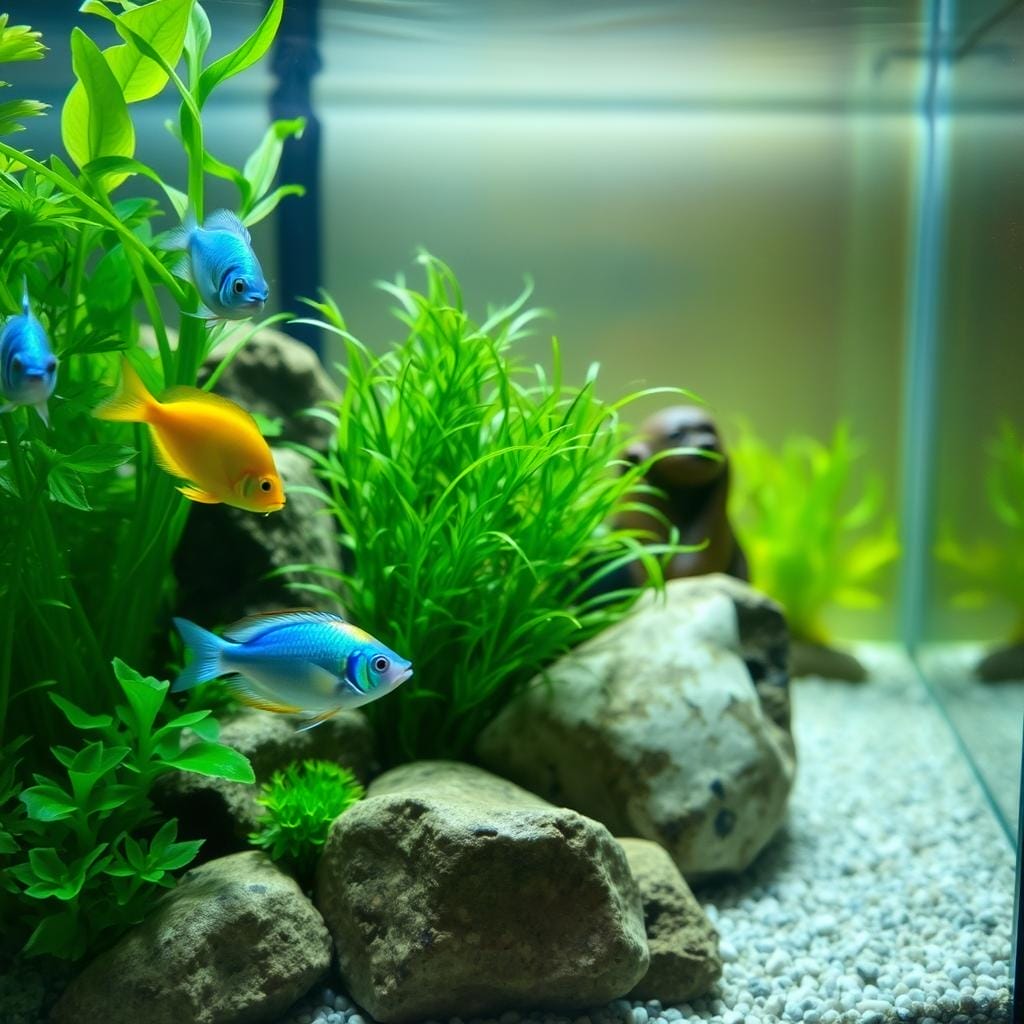
Your tank thrives when its environment mirrors nature’s rhythms. By choosing lights that replicate midday sun to twilight hues, you support healthier ecosystems. It’s like giving your aquatic friends their own slice of the wild—right in your living room.
The Science Behind Aquarium Lighting and Natural Light
Your aquarium’s vitality hinges on invisible light waves you can’t see. Specific wavelengths act like secret messengers, telling plants when to grow and fish when to eat. This hidden language of photons shapes everything from leaf shape to fin coloration.
Impact on Aquatic Life and Plant Growth
Aquatic plants thrive when they receive red and blue wavelengths—the same ones sunlight provides. These colors drive photosynthesis, turning CO2 into energy. Without this balance, stems become weak, and leaves lose their rich green hues.
Fish rely on gradual brightness changes to regulate their internal clocks. Sudden shifts from dark to bright can stress them, while gentle dawn simulations trigger natural behaviors. Their scales also reflect specific light ranges, making colors pop under proper conditions.
Here’s what research reveals:
- Blue wavelengths (450nm) boost leafy growth in plants
- Red light (660nm) encourages flowering phases
- Green spectrum areas help light penetrate deeper water layers
Modern LED systems let you adjust these ratios. You might emphasize blues for moss carpets or add reds for blooming lilies. It’s like being a sunlight DJ—mixing wavelengths to match your tank’s needs.
Your underwater ecosystem depends on these precise interactions. By mirroring natural daylight patterns, you create conditions where life flourishes effortlessly. Watch as your plants stretch toward the glow, and fish display behaviors you’ve never seen before.
Key Features of Full Spectrum Lights for Aquariums
Your aquarium’s brilliance starts with understanding two technical specs that separate average bulbs from true daylight replicators. These measurements determine whether your plants photosynthesize efficiently and your fish display their authentic hues.
CRI and Color Temperature Explained
Color Rendering Index (CRI) acts like a truth-teller for your tank’s colors. Scores above 95 mean your neon tetras’ red stripes look as vivid as they would under actual sunlight. Lower values? They’ll make everything appear washed out, like viewing coral through foggy glass.
That 6500K number you see on quality bulbs? That’s the sweet spot matching midday sun. Go lower, and your water gets a yellowish tint. Higher values create sterile blue tones – great for operating rooms, terrible for recreating Amazonian streams.
Balancing Blue and Red Light
Think of blue wavelengths as your plants’ breakfast buffet – they fuel leafy growth and help light penetrate deeper water layers. Red acts like a multivitamin, encouraging flowering and strong root systems. Get this balance wrong, and you’ll see stunted growth or algae taking over.
Your fish need this mix too. Blue enhances iridescent scales, while red maintains their daily rhythms. Modern LEDs let you adjust ratios with smartphone apps – no lab coat required. Just remember: nature perfected this recipe over millennia, so stick close to 450nm blue and 660nm red for best results.
Assessing Lighting Options for Your Aquarium Ecosystem
Decoding technical jargon can transform how your aquatic life thrives. The right specs act like a roadmap, guiding you to solutions that keep plants photosynthesizing and fish flourishing. Let’s simplify what really matters when comparing products.
Evaluating Technical Specifications
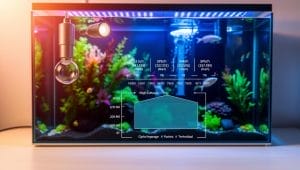
Start by checking three non-negotiable metrics on product labels. CRI above 95 ensures colors appear true-to-life, while 6500K color temperature mimics midday sun. Look for wavelength charts showing complete coverage from 400nm (violet) to 700nm (red).
Modern LED systems excel here, offering:
- Adjustable intensity for different tank depths
- Energy savings up to 60% vs traditional bulbs
- Precision-tuned ratios of blue and red wavelengths
Water penetration matters more than raw brightness. A 12-inch-deep planted tank needs lights emitting at least 50 PAR (Photosynthetic Active Radiation) at substrate level. Deeper reef setups require 200+ PAR for coral symbiosis.
Test duration claims too—quality LEDs last 50,000 hours without color shift. Pair this data with your tank’s unique needs. Are you growing carpeting plants? Prioritize blue-heavy spectrums. Housing discus fish? Ensure gentle transitions between light modes.
Armed with these insights, you’ll spot marketing fluff instantly. Your aquatic friends will reward you with vibrant hues and energetic behaviors that mirror their natural habitats.
Benefits of Full Spectrum Lighting in Your Aquarium
Your aquarium transforms when every color wavelength works in harmony. This approach doesn’t just brighten your tank—it activates biological processes that keep your aquatic world thriving. Let’s explore how balanced illumination creates visible improvements you’ll love.
Brighter Colors, Stronger Growth
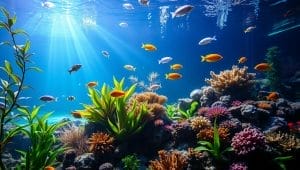
Plants stretch toward complete wavelength coverage like sunflowers tracking daylight. Red and blue peaks fuel photosynthesis, resulting in denser foliage and faster growth rates. You’ll see leaves develop richer greens and stems grow straighter within weeks.
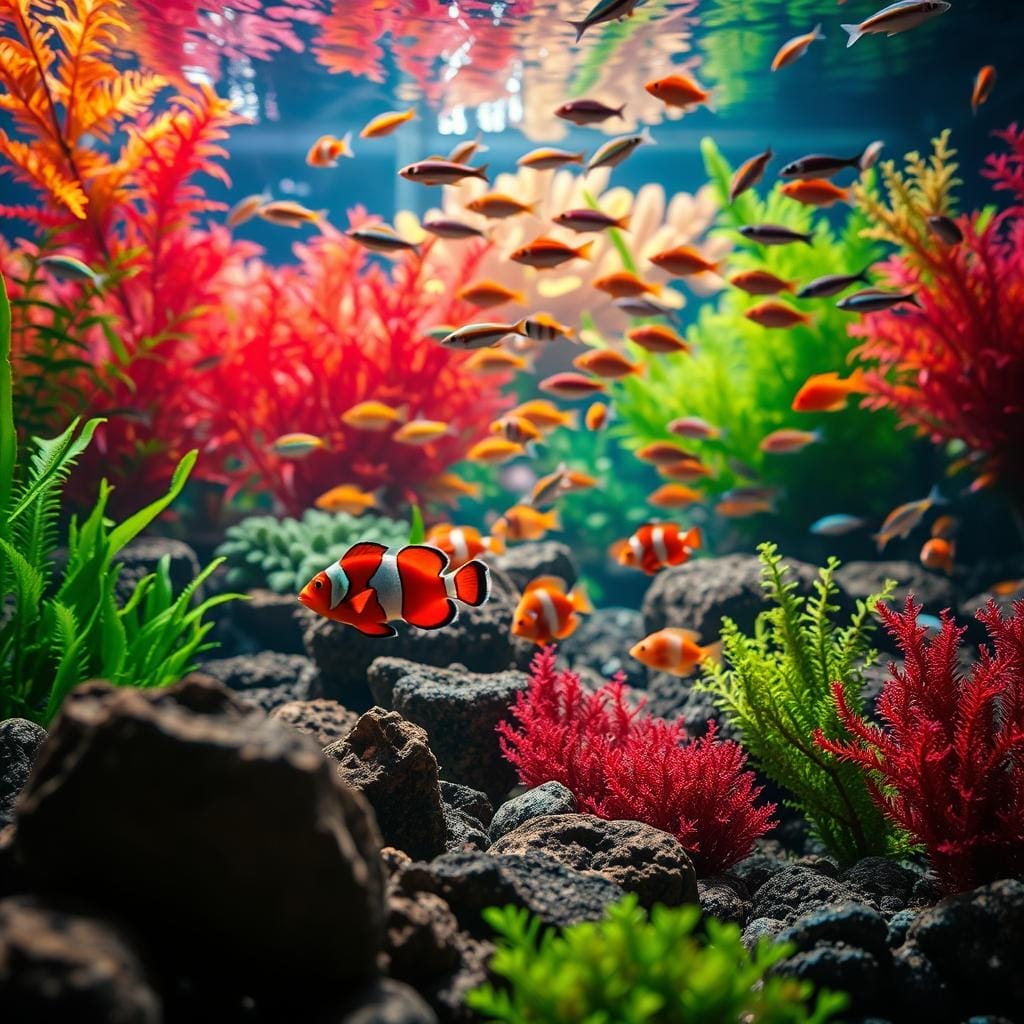
Fish scales reveal hidden details under proper conditions. Neon tetras glow electric red, while angelfish display iridescent streaks you’ve never noticed before. It’s like removing a filter—your aquatic pets finally show their true vibrancy.
A Thriving Miniature World
Balanced illumination supports natural rhythms. Plants release oxygen steadily, improving water quality for fish. This synergy reduces stress, encouraging active swimming and natural feeding behaviors.
Key advantages include:
- Algae control through optimized wavelength ratios
- Consistent circadian rhythms for fish health
- Stronger root systems in aquatic plants
By mimicking daylight patterns, you create an environment where life flourishes effortlessly. Discover how proper aquarium lighting becomes the heartbeat of your underwater ecosystem. Watch as every element—from drifting leaves to darting fish—works together in perfect balance.
Controlling Day-Night Cycles with Versatile Light Modes
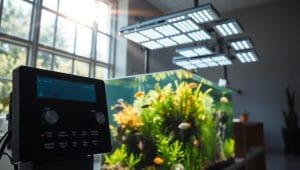
Your aquarium’s daily rhythm matters just as much as your own. Modern systems like the BioLight offer preset modes that recreate nature’s patterns effortlessly. These smart features help you maintain harmony without constant adjustments.
Daytime Brilliance for Thriving Life
Activate spectrum day mode when morning comes. This setting bathes your tank in balanced white rays containing all visible wavelengths—from energizing blues to growth-boosting reds. Plants absorb these colors like solar panels, converting them into lush foliage and oxygen.
Fish respond too. Their colors intensify under this natural-looking glow, while consistent schedules regulate feeding times. You’ll notice:
- Faster stem growth in aquatic plants
- Active swimming patterns during peak hours
- Reduced algae through optimized wavelength ratios
Evening Tranquility Without Disruption
As dusk approaches, switch to blue light free settings. Warm amber tones replace daytime brightness, signaling rest time. This 100% blue-free environment prevents sleep disruption in fish—critical for maintaining healthy immune systems.
Nocturnal species particularly benefit. They explore freely under these dim conditions while diurnal fish settle into sheltered spots. It’s like giving your tank a sunset that lasts all night.
By mirroring these natural transitions, you create an ecosystem where every organism thrives on schedule. Watch as your aquatic community blossoms under care that respects their biological needs.
Energy Efficiency and Flicker-Free Technology
What if your aquarium’s hidden energy costs were stressing both your wallet and your fish? Modern systems like the BioLight solve two problems at once—they cut power consumption by 40% while eliminating harmful flicker patterns found in standard LEDs. This dual benefit protects your aquatic life and reduces long-term expenses.
Low EMF and Consistent Illumination
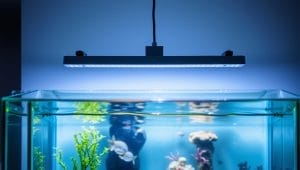
Cheap aquarium lights often pulse rapidly—switching on/off 300 times per second. Though invisible to you, this flicker strains eyes during maintenance and confuses fish. Premium options use flicker-free technology that maintains steady brightness, mimicking natural daylight stability.
Three critical advantages set quality systems apart:
- Zero detectable electromagnetic interference (EMF) with pumps or heaters
- LED arrays that last 50,000+ hours without color degradation
- Consistent energy output matching your tank’s daily needs
You’ll notice calmer fish behavior and clearer viewing within days of switching. The BioLight’s advanced drivers eliminate those rapid power surges, creating a tranquil environment. Your aquatic friends thrive under stable conditions while you enjoy lower energy bills year-round.
Smart technology now lets you prioritize both efficiency and well-being. Invest in systems that prove advanced engineering can be gentle—to your eyes, your pets, and your budget.
Installation and Setup Considerations
Ready to upgrade your aquarium’s glow? Modern systems blend seamlessly into your home setup without complicated rewiring. You’ll find most products work with existing hoods, hanging kits, or rimless tanks—no engineering degree required.
Compatibility With Various Fixtures
Today’s slim LED designs fit standard aquarium lamps and brackets. Check product dimensions against your tank’s width before buying. Adjustable mounting arms let you position bulbs precisely—whether illuminating a 10-gallon desktop tank or a 6-foot showpiece.
Simple Mode Switching Mechanics
Changing light modes takes seconds with intuitive controls. Tap a button to cycle through daylight, sunset, and moonlight settings. Some products sync with smartphone apps, letting you create schedules from your couch. Your home becomes command central for aquatic wellness.
Upgrading doesn’t mean replacing everything. Many systems use universal connectors for retrofitting older lamps. Pair new bulbs with dimmers to fine-tune intensity. With smart products, you’ll spend less time tinkering and more time enjoying your underwater paradise.
FAQ
How does balanced aquarium lighting improve my tank’s health?
Properly calibrated bulbs support photosynthesis in plants while enhancing fish vibrancy. This harmony reduces algae overgrowth and creates stable oxygen levels for thriving aquatic life.
What makes daylight-mimicking bulbs different from regular LEDs?
These bulbs replicate the sun’s natural color blend, including crucial blue and red wavelengths. Standard LEDs often miss this balance, affecting plant growth and animal well-being.
Why does color temperature matter for my aquarium setup?
Measured in Kelvins, color temperature determines whether your tank appears warm or cool. Mid-range values (6500K-7500K) best imitate tropical daylight, promoting healthy ecosystems.
Can I use these lights with my existing hood or fixture?
Most modern designs fit standard aquarium setups. Check your fixture’s dimensions and voltage requirements—many models offer adjustable mounting options for hassle-free installation.
How do day/night modes benefit aquatic environments?
Day mode fuels plant growth with energizing wavelengths, while night mode’s amber tones maintain natural circadian rhythms without disrupting sleep cycles. Timers automate this transition seamlessly.
Are flicker-free bulbs worth the investment?
Absolutely. Consistent illumination prevents stress in light-sensitive species and reduces eye strain for observers. Advanced drivers eliminate disruptive pulsing found in cheaper alternatives.
What’s the ideal daily exposure time for planted tanks?
Most freshwater systems thrive with 8-10 hours of intense daylight simulation. Adjust duration based on plant species—carpeting varieties often need longer periods than floating types.
Also Read: Common Aquarium Problems and How to Fix Them
Aquarium EcosystemAquarium LightingAquatic plantsCoral ReefFull Spectrum LightingLED LightingLight Spectrum for AquariumsMarine LifePhotosynthesis in AquariumsReef Tank Lighting
Hi, I'm Millie a passionate fish enthusiast and blogger. I loves learning about all kinds of aquatic creatures, from tropical fish to stingrays.