
Mastering Large Tank Maintenance: Tips for You
 Millie Douglas
Updated on: December 1, 2025 .
10 min read

Have you ever looked at your impressive aquatic setup and wondered if you’re doing enough? Many aquarists believe that a bigger setup is easier to manage, but that’s not always the case. A sizable aquatic environment has unique needs that, if overlooked, can lead to problems.
We know that keeping a major aquatic system in top shape can feel like a huge task. It doesn’t have to be overwhelming. With the right guidance, you can turn this responsibility into a simple and rewarding part of your routine.
This guide is here to walk you through every step. We’ll break down the essential tasks into clear, manageable actions. You’ll learn professional techniques to keep your water crystal clear and your inhabitants thriving. Proper aquarium fish health starts with a well-maintained environment.
Our goal is to save you time and prevent costly mistakes. You will discover how to establish an effective schedule that protects your investment for years to come. Let’s begin this journey to a healthier, happier aquarium together.
Understanding Your Tank Environment
Your aquarium’s unique characteristics will guide your approach to keeping it healthy and beautiful. The materials used in construction play a huge role in how you’ll care for your aquatic world.
Tank Material Differences and Durability
Aquariums come in various materials, each with distinct advantages. Steel setups offer incredible strength but require watchfulness for rust. Plastic versions are lightweight and corrosion-resistant.
Fiberglass aquariums provide excellent durability against corrosion. They do need careful handling to prevent impact damage. Understanding these differences helps you choose the right cleaning methods.
Identifying Common Maintenance Challenges
Every material brings specific challenges to address. Steel may need protective coatings, while plastic requires temperature monitoring. Fiberglass benefits from gentle cleaning techniques.
You’ll also encounter universal issues like algae on viewing surfaces. Debris accumulation at the bottom is another common concern. Addressing these proactively keeps your fish thriving.
Matching your care routine to your specific setup saves significant time. Your aquatic friends will thank you for the thoughtful approach.
Core Techniques for Large Tank Maintenance
Having the right techniques at your fingertips makes all the difference in keeping your aquatic world vibrant. A logical sequence of steps ensures you cover all bases efficiently.
This systematic approach prevents overwhelm. You’ll find that consistency is your greatest ally in achieving crystal-clear water.

Step-by-Step Cleaning Procedures
Follow this simple process for best results. Each step builds upon the last for a thorough clean.
- Start by testing your water quality. This tells you exactly what’s happening inside your environment.
- Gently scrub viewing panels with an algae scraper. Be careful to avoid scratching the surfaces.
- Prune any aquatic plants by removing dead leaves. This keeps your greenery healthy.
- Always turn off heaters and filters before you start removing water. This prevents equipment damage.
- Use a gravel vacuum to remove debris from the substrate. This step pulls out waste and old water simultaneously.
- Clean your filter media in a bucket of old aquarium water. This preserves beneficial bacteria.
- Refill with fresh water, matching the temperature. Don’t forget to add a dechlorinator.
- Finally, turn all your equipment back on. Give everything a quick wipe for a sparkling finish.
Preventing Algae and Debris Build-Up
Stopping problems before they start is much easier than fixing them later. Simple, regular attention keeps your setup beautiful.
Control algae by balancing your light duration. Manage nutrient levels in the water through careful feeding.
Wipe viewing surfaces every few days. This prevents stubborn algae from gaining a foothold.
Promptly address debris from waste and uneaten food. This proactive habit protects your water quality and keeps your fish stress-free.
Assembling Your Tools and Equipment
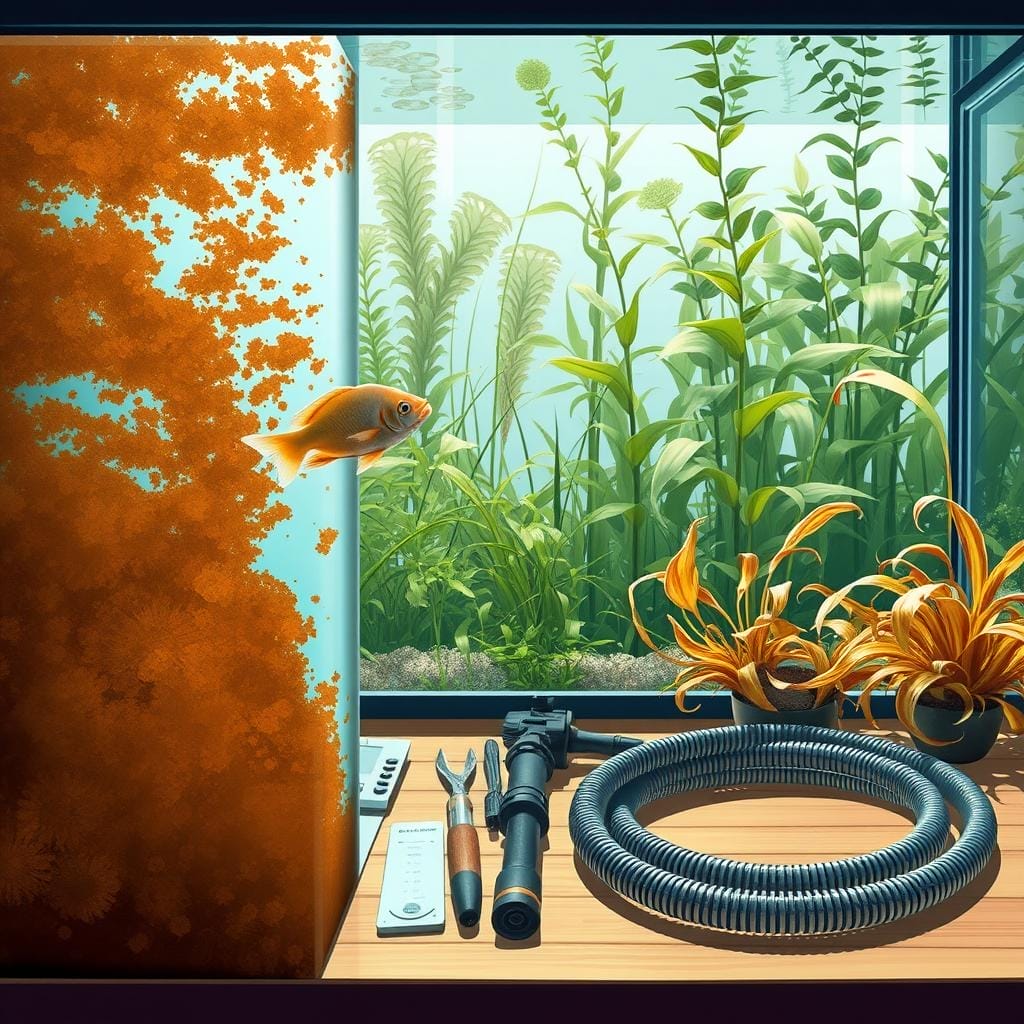
A well-prepared toolkit turns a daunting chore into a smooth, efficient process. Having everything within reach before you start saves you time and prevents mid-task searches. This preparation is key to a successful cleaning session for your aquatic setup.

Your essential cleaning supplies are the foundation of good care. They help you keep the viewing glass clear and the environment healthy.
Must-Have Cleaning Supplies
Your core toolkit should include several key items. An aquarium siphon, or gravel vacuum, is vital for water changes and substrate cleaning. Different diameter tubing offers flexibility for various sized tanks.
For the glass, you’ll need an algae magnet for daily wipes and a scraper for tough spots. Always use aquarium-safe cleaners. Never use household products like Windex near your water.
Other important tools include test strips, a dedicated bucket, a dechlorinator, and a soft toothbrush for decor. Keeping these tools organized in one container makes your equipment easy to find.
Proper Equipment Maintenance and Handling
Taking good care of your equipment extends its life and keeps your aquatic friends safe. Always rinse your tools with fresh water after each use. Let them air dry completely before storing them away.
This simple habit prevents harmful residue buildup. It also stops cross-contamination between your different tanks. Your filter media should be cleaned in old aquarium water to protect beneficial bacteria.
Proper handling of your equipment ensures every cleaning task supports a thriving ecosystem. Your careful approach makes all the difference.
Routine Tasks for Optimal Tank Health
Establishing a consistent rhythm of care is your key to a thriving aquatic world. These regular habits prevent problems before they start. Your fish will reward you with vibrant health and activity.

Water Changes and Quality Testing
Weekly water changes form the foundation of excellent water quality. Replacing about 10% of your tank water removes accumulated waste and rebalances chemistry. The exact volume depends on your fish population and biological filtration.
Regular testing helps you catch issues early. Make sure to check nitrate levels, keeping them below 40 ppm. This simple step ensures a safe environment.
When adding new water, always match the temperature to your existing tank water. Your hands can feel differences of just a degree or two. Treat tap water with dechlorinator to neutralize harmful chemicals.
Filter Cleaning and Substrate Vacuuming
Your filter works hard capturing fish waste and debris. Monthly cleaning keeps it functioning properly. Think of this as taking out the trash for your aquatic system.
Clean your filter media by gently swishing it in a bucket of old tank water. This preserves beneficial bacteria while removing accumulated gunk. Your biological filtration stays intact.
Substrate vacuuming removes waste and uneaten food from your gravel or sand. Make sure to vacuum about one-third of the bottom during each session. Move decorations to access hidden areas where debris collects.
These three practices—regular water changes, filter care, and substrate cleaning—create a powerful routine. Your water will stay crystal clear and your fish will flourish.
Special Considerations for Different Tank Materials
The material your aquatic home is made from plays a crucial role in how you’ll care for it over time. Each construction type has unique needs that affect your routine.
Caring for Steel, Plastic, and Fiberglass Tanks
Steel setups need extra protection against rust. Apply protective coatings every few months after thorough cleaning. Choose products that resist your water’s chemistry.
Plastic containers require regular checks for cracks. Temperature changes can make them brittle. Handle them gently during your cleaning sessions.
Fiberglass offers great corrosion resistance. Still, inspect for impact damage that could weaken the structure. Your careful approach extends its life significantly.

Tailoring Maintenance Schedules to Tank Type
Your cleaning schedule should match both material and usage. Water setups typically need attention every three to six months. Chemical containers may require monthly care.
Some systems need cleaning after each use, while others can wait longer. Consider how quickly debris accumulates in your specific situation.
By setting a routine that accounts for material vulnerabilities, you prevent small issues from becoming big problems. This thoughtful care approach saves you time and money month after month.
Innovative Tools and Techniques
Imagine having eyes and ears inside your aquarium even when you’re away – that’s what modern monitoring systems provide. These smart technologies give you peace of mind by watching over your aquatic environment continuously.

Modern Sensors and Remote Monitoring Systems
Today’s sensors track crucial parameters like temperature and pressure in real time. Ultrasonic devices can detect early corrosion by measuring wall thickness. This early warning system helps you take action before problems escalate.
Pressure sensors monitor internal conditions to prevent dangerous buildup. Temperature sensors ensure your water stays within safe ranges around the clock. You gain better control over your environment’s stability.
Remote cameras let you inspect hard-to-reach areas visually. You can check on your aquarium without disturbing the habitat. These techniques complement your hands-on care perfectly.
Smart lighting systems help manage algae by adjusting intensity and duration. Monitoring key levels like pH and nutrients becomes effortless. You’ll notice gradual changes that might indicate developing issues.
Combining these tools with proper filtration creates multiple layers of protection. Your filter works alongside technology for optimal results. This approach reduces guesswork and keeps your aquatic friends thriving.
Wrapping Up: Keeping Your Tank in Pristine Condition
The knowledge you’ve gained transforms what once felt overwhelming into a series of manageable, rewarding tasks. Consistent care prevents small issues from becoming major problems, saving you time and effort in the long run.
Your aquarium will reward your dedication with crystal-clear water and thriving fish. Remember that proper cleaning isn’t just about removing algae—it’s about creating a comprehensive routine. This includes water quality management, filtration health, and equipment checks.
Establish a schedule that fits your lifestyle and stick with it. Consistency matters more than perfection. Whether you care for freshwater setups or need regular industrial tank cleaning, the core principles remain the same.
Your commitment protects your investment and ensures years of enjoyment. You now have the tools and confidence to maintain a beautiful, healthy environment. Put these strategies into action and watch your aquatic world flourish!
FAQ
How often should I perform a water change in my aquarium?
For most freshwater setups, a partial water change of 10-25% every one to two weeks is ideal. This helps control waste levels and maintain excellent water quality for your fish. Always test your parameters to guide your schedule.
What is the best way to clean my filter without harming beneficial bacteria?
Gently rinse the filter media in a bucket of water you remove from the tank during your change. Avoid using tap water, as chlorine can kill the essential bacteria. Only replace media when it is falling apart.
How can I effectively remove algae from the glass?
An algae scraper or a magnetic glass cleaner is your best tool. For stubborn spots, a clean, new razor blade works safely on standard glass. Regular cleaning prevents heavy build-up and keeps your view clear.
Do I need to vacuum the sand or gravel substrate?
Yes! Using a gravel vacuum during water changes is crucial. It sucks out debris and waste trapped in the substrate, which helps prevent poor water quality and keeps the environment healthy for your fish and plants.
What basic equipment do I need for proper maintenance?
A> Essential tools include a siphon, buckets reserved only for your tank, an algae scraper, a water testing kit, and water conditioner. Having the right supplies makes the process easier and more effective.
Also Read: Common Aquarium Problems and How to Fix Them
How do I know if my water quality is good?
Regular testing is key. Use a reliable liquid test kit to check levels of ammonia, nitrite, nitrate, and pH. Stable parameters within safe ranges mean your filtration and care routine are working well.
Hi, I'm Millie a passionate fish enthusiast and blogger. I loves learning about all kinds of aquatic creatures, from tropical fish to stingrays.