
Moonlight for Aquarium: Expert Guidance for Your Tank
 Millie Douglas
Updated on: July 16, 2025 .
7 min read
Millie Douglas
Updated on: July 16, 2025 .
7 min read
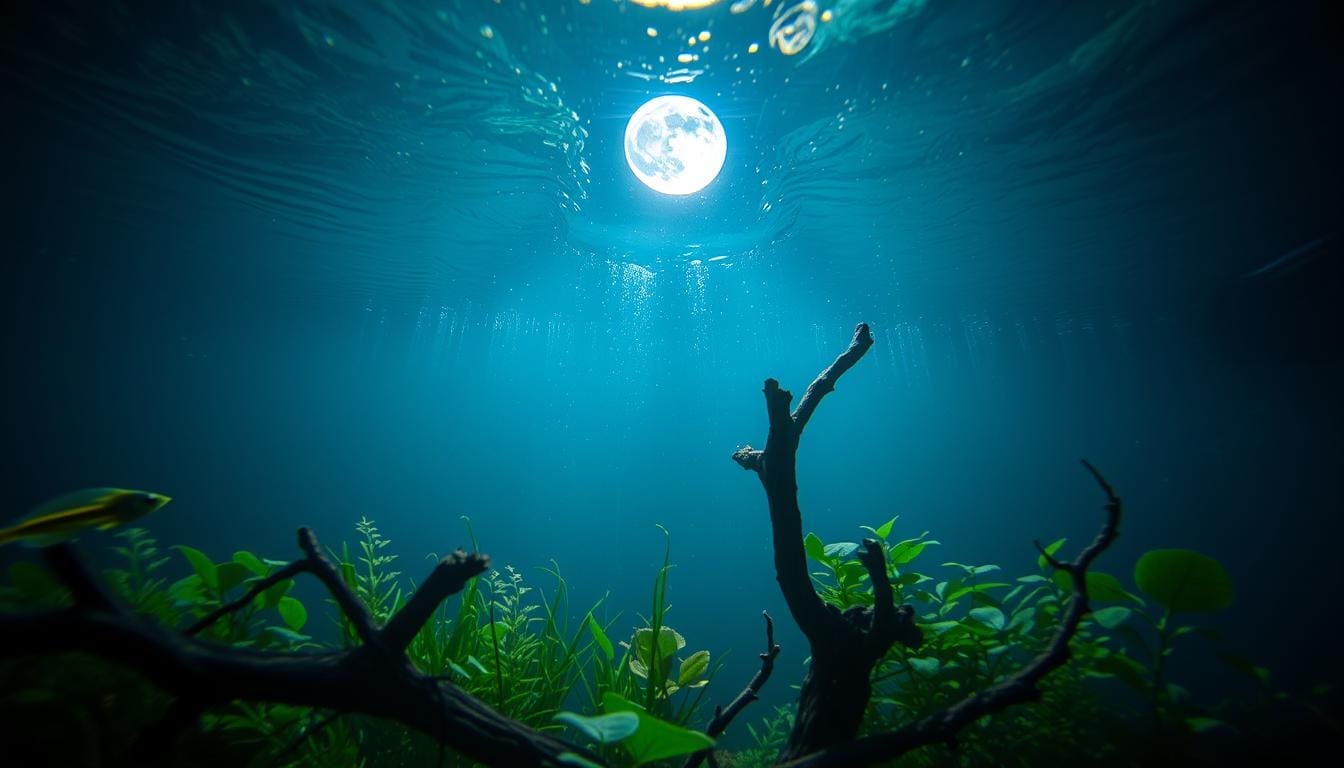
Did you know 30% of coral species synchronize their spawning cycles using lunar light cues? This natural phenomenon isn’t limited to oceans—your home setup can harness similar benefits. With the right approach, you’ll unlock hidden behaviors in your aquatic life while creating stunning visual effects after sunset.
This guide helps you navigate beyond basic tank lighting. You’ll learn how subtle after-dark illumination supports biological rhythms in fish and invertebrates. From boosting coral growth to encouraging natural mating behaviors, these systems do more than just look pretty.
We’ll explore options for every budget and skill level. Simple LED strips can create soft glows for under $20, while programmable systems mimic real lunar phases. You’ll discover how to match lighting intensity to your specific setup—whether nurturing delicate reef ecosystems or showcasing lively freshwater communities.
Safety remains crucial when introducing new elements. Our methods prioritize equipment durability and species compatibility. By the end, you’ll confidently design a system that delights your eyes and supports your tank’s health.
Understanding the Role of Moonlight in Aquariums
Nighttime in your tank isn’t just about darkness—it’s a biological catalyst. Subtle illumination mimics lunar cycles that marine life evolved with over millennia. This dim lighting phase supports critical processes you’d never witness under bright daytime LEDs.
Biological Advantages for Coral and Fish Activity
Corals thrive under gentle nighttime conditions. Some species extend their feeding tentacles during these hours, while others initiate spawning rituals. Your reef’s growth doesn’t pause when daylight fades—it shifts into a different phase of metabolic activity.
Fish behavior transforms dramatically after sunset. Predatory species patrol open waters as smaller creatures retreat to sheltered areas. This natural rhythm reduces stress and promotes balanced ecosystems.
Enhancing Nocturnal Views and Natural Behaviors
LED systems designed for nighttime use let you observe without disrupting your tank’s inhabitants. Unlike harsh white lights, blue-spectrum LEDs reveal stunning fluorescent patterns in certain corals. You’ll see your marine community in a whole new light—literally.
These energy-efficient solutions maintain stable temperatures while operating for hours. Proper timing aligns with your species’ internal clocks, supporting healthier sleep cycles and long-term vitality.
Preparing Your Setup for Moonlight for Aquarium
Assembling your night lighting starts with smart preparation. You’ll need a mix of specialty components and everyday tools to create a system that’s both functional and safe. Let’s break down the essentials into three manageable phases.
Gathering Materials and Essential Tools
Begin with a T-8 fluorescent tube holder ($3) as your base. Pair it with acrylic sheets from Home Depot to diffuse light evenly. You’ll want white LEDs for brightness and UV types to make corals glow. Don’t forget resistors – they’re your circuit’s safety net.
Selecting the Right LED Components and Resistors
Match LEDs to your tank’s needs: 7000mcd white bulbs illuminate wide areas, while blue LEDs create depth. Use 47-ohm resistors with 5v adapters – but check voltage first! A 9v adapter needs recalculations via online tools to prevent burnout.
Planning and Schematic Considerations
Sketch your layout before soldering. Networking cable works best for wiring multiple LEDs in series. Keep spare resistors handy – these tiny parts vanish easily. Organize tools like wire strippers and soldering irons upfront to avoid mid-project scrambles.
Repurpose old phone chargers as power sources if they’re 5v DC. Always test connections with a multimeter before final assembly. With careful planning, you’ll build a system that shines without overwhelming your aquatic friends.
DIY Guide to Assembling Your LED Moonlights
Transform your after-dark viewing experience with hands-on lighting solutions. These techniques let you craft custom fixtures that match your tank’s unique needs while keeping costs low. Follow these steps to build reliable illumination that enhances nocturnal activity without overwhelming delicate ecosystems.

Step-by-Step Assembly and Wiring Techniques
Start by cutting acrylic strips to match your fixture’s interior width (typically 1 3/16″). For a 24″ light, create three 8″ strips. Drill 1/4″ holes spaced evenly—this ensures balanced light spread. Insert LED holders and secure them with hot glue, marking the longer prong as positive (+).
Bend contacts diagonally to align all positives on one side. Connect negative terminals first using extra wire between LEDs, creating a parallel circuit. Add 47-ohm resistors to each positive lead—this prevents overloads. Test connections temporarily with a 5v adapter before finalizing.
Practical Soldering and Safety Tips
Limit soldering iron contact to 2 seconds per joint to protect sensitive components. Use heat-shrink tubing on exposed wires—electrical tape works in a pinch. Our DIY LED moonlight guide recommends aluminum heat sinks for temperature control. Seal end caps with styrofoam plates cut to size.
Always verify polarity before connecting your power source. Mount finished strips securely above water level, ensuring proper ventilation. With careful assembly, your custom LEDs will provide years of gentle nighttime glow.
Wrapping Up Your Aquarium Moonlight Journey
Your aquatic ecosystem thrives when day and night cycles mirror nature’s rhythm. LED fixtures with timers automate the recommended 12-hour daylight period followed by gentle nighttime illumination. This balance supports coral feeding patterns and reduces stress in sensitive species.
Consider a brief dark phase between lighting cycles – many organisms need this transition. Systems like the Coralife Power Center handle these shifts automatically, while advanced controllers replicate actual lunar phases. You’ll witness fascinating behaviors as your tank inhabitants respond to these natural cues.
Modern solutions simplify setup – LED strips now offer plug-and-play functionality. They deliver the same biological benefits as custom builds without complex wiring. For precision, devices like Neptune Systems adjust intensity monthly to potentially trigger spawning events.
Maintain your system by monitoring heat levels and connection points. Consistent lighting schedules improve coral coloration and fish activity over time. Whether managing freshwater setups or intricate reefs, these strategies help create thriving underwater worlds after sunset.
You’re now equipped to enhance both aesthetics and animal welfare through intelligent lighting design. Start small, observe changes, and expand as your confidence grows – your tank’s nocturnal magic awaits!
FAQ
Can I use regular LEDs instead of specialized aquarium ones?
While standard LEDs work temporarily, purpose-built aquarium options like Current USA or NICREW provide optimized color temperatures (450-470nm) that mimic natural lunar cycles without disrupting aquatic life. Always verify waterproof ratings before installation.
How do I prevent light strips from overheating?
Choose low-wattage LEDs (0.5-1W per diode) and attach them to aluminum channels or heat-resistant backing. Maintain at least 1 inch of airspace between fixtures and water surfaces to balance heat dissipation and humidity exposure.
Will blue LEDs disturb my fish at night?
Properly dimmed blue-spectrum lighting (under 0.5 lumens per gallon) maintains natural circadian rhythms. Species like cardinal tetras or clownfish often display increased breeding behaviors under gentle nocturnal glow.
What resistor values work best for DIY setups?
Use online calculators like DigiKey’s LED Resistor Tool. For 12V systems with 20mA 5mm LEDs, 470-680Ω resistors typically prevent burnout. Always test with a multimeter before final installation.
Can moonlighting benefit freshwater planted tanks?
Yes! Low-intensity lighting extends viewing of nocturnal species like kuhli loaches while providing minimal photosynthesis support for plants like anubias. Limit to 4-6 hours post-main-lighting for best results.
How do I waterproof DIY LED connections?
Seal solder joints with marine-grade epoxy or silicone coatings like MG Chemicals 422B. Use waterproof shrink tubing for wire splices, and position all electronics above the tank’s waterline.
Are timer-controlled moon phases necessary?
While optional, programmable controllers like the Kessil H80 Tunable recreate tidal brightness variations. This can stimulate natural behaviors in sensitive species like mandarin dragonets or LPS corals.
Hi, I'm Millie a passionate fish enthusiast and blogger. I loves learning about all kinds of aquatic creatures, from tropical fish to stingrays.