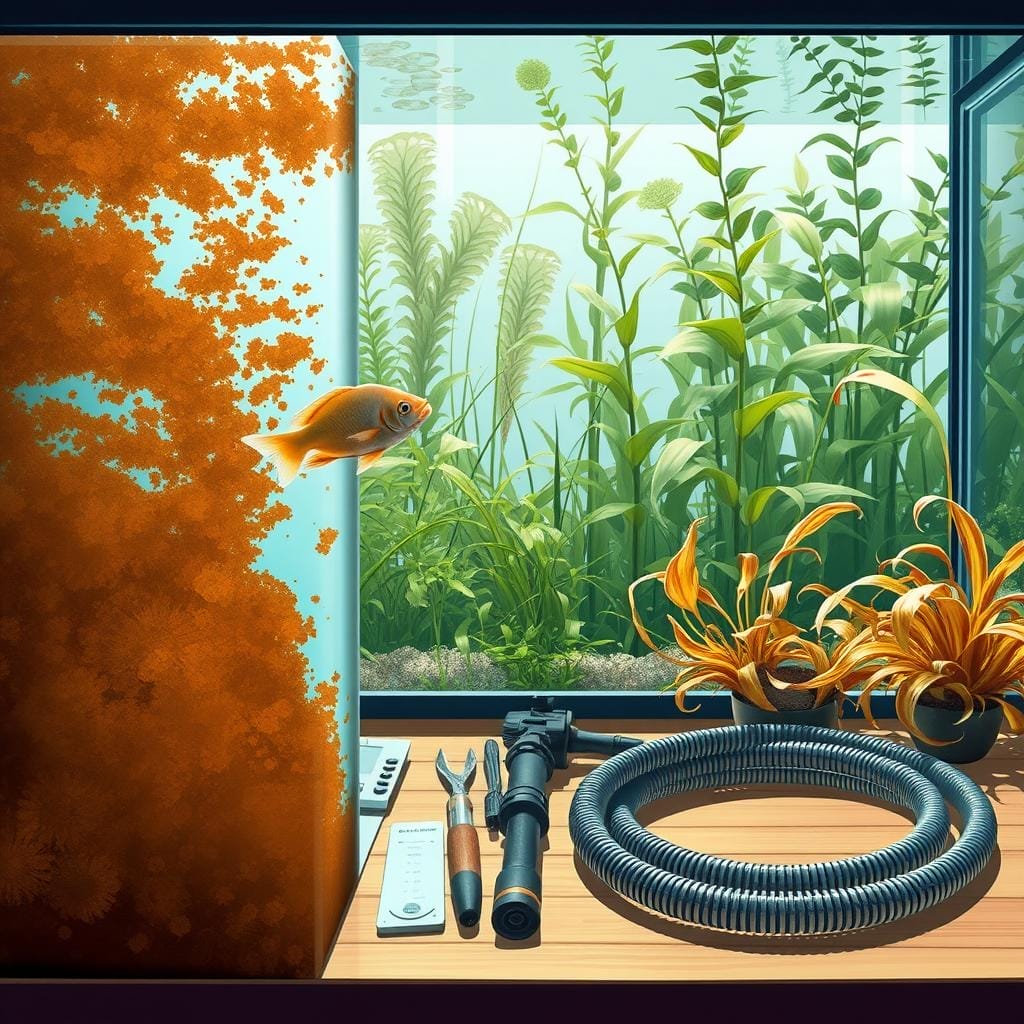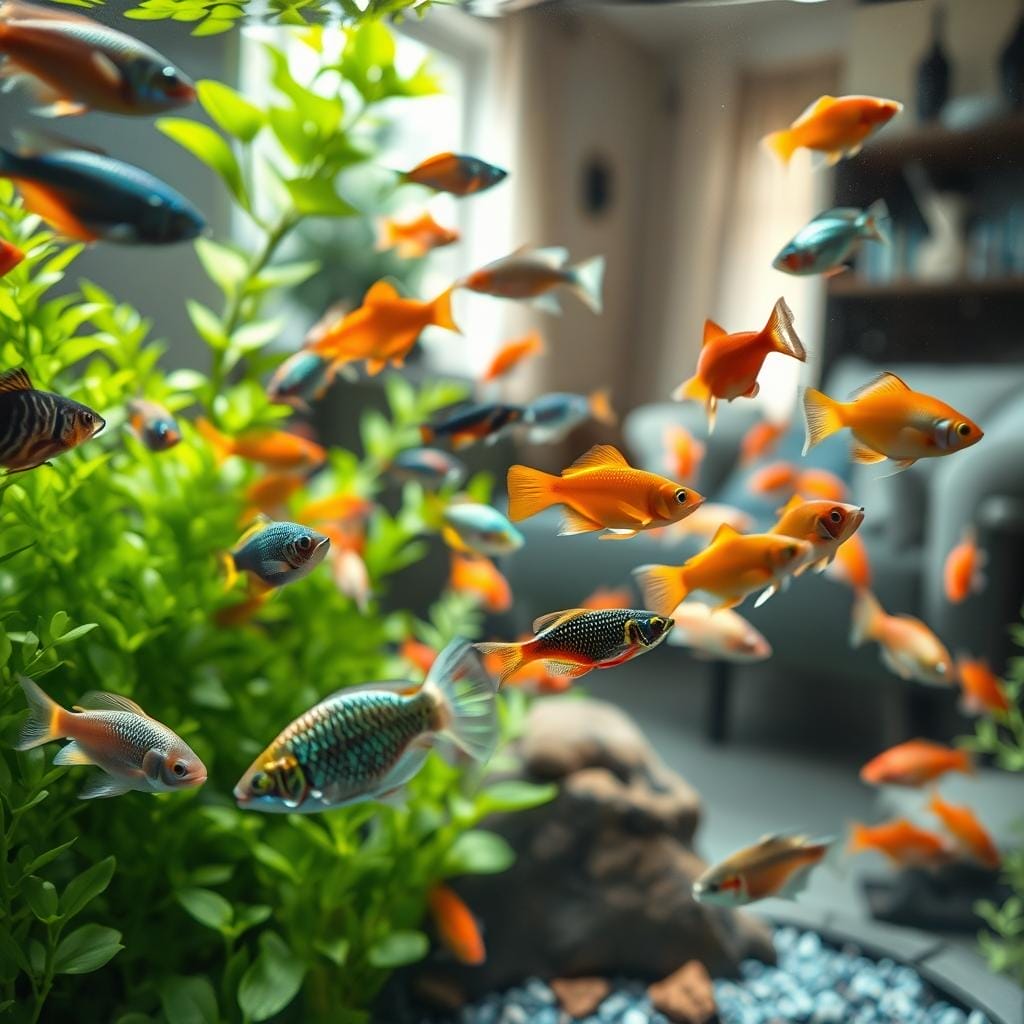

Your Guide to Setting Up Nano Aquariums Successfully
 Millie Douglas
Updated on: July 16, 2025 .
11 min read
Millie Douglas
Updated on: July 16, 2025 .
11 min read
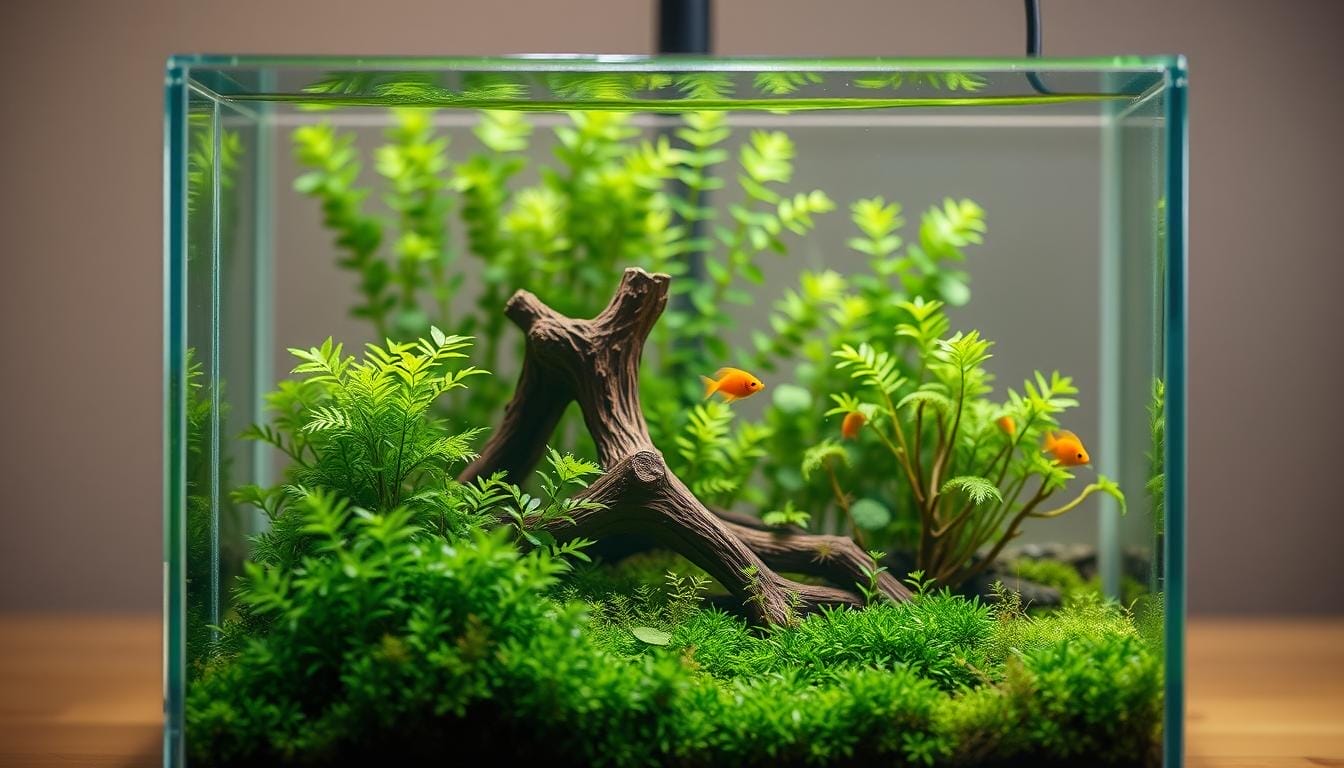
Imagine creating a vibrant underwater world in glass so clear it lets through 91% of light—all in a space smaller than your coffee table. These compact aquatic setups have surged in popularity, with options like Ultum Nature Systems’ sleek designs proving you don’t need a massive tank to enjoy stunning results.
Starting small doesn’t mean sacrificing beauty or creativity. Modern systems under 20 gallons use advanced materials like low-iron glass and precision engineering to deliver crystal-clear views. Many even include specialized leveling mats to ensure stability on any surface.
You’ll love how these pint-sized ecosystems fit seamlessly into apartments, offices, or tight budgets. Maintenance becomes surprisingly manageable, letting you focus on the fun parts—like designing layouts or choosing colorful aquatic life. Contrary to myths, smaller tanks can thrive when set up thoughtfully.
This guide walks you through every detail, from selecting your first tank to avoiding common beginner pitfalls. We’ll help you build confidence through simple steps that prioritize your aquatic pets’ health and happiness. Ready to transform that empty corner into a living work of art?
Understanding Nano Aquariums for Beginners
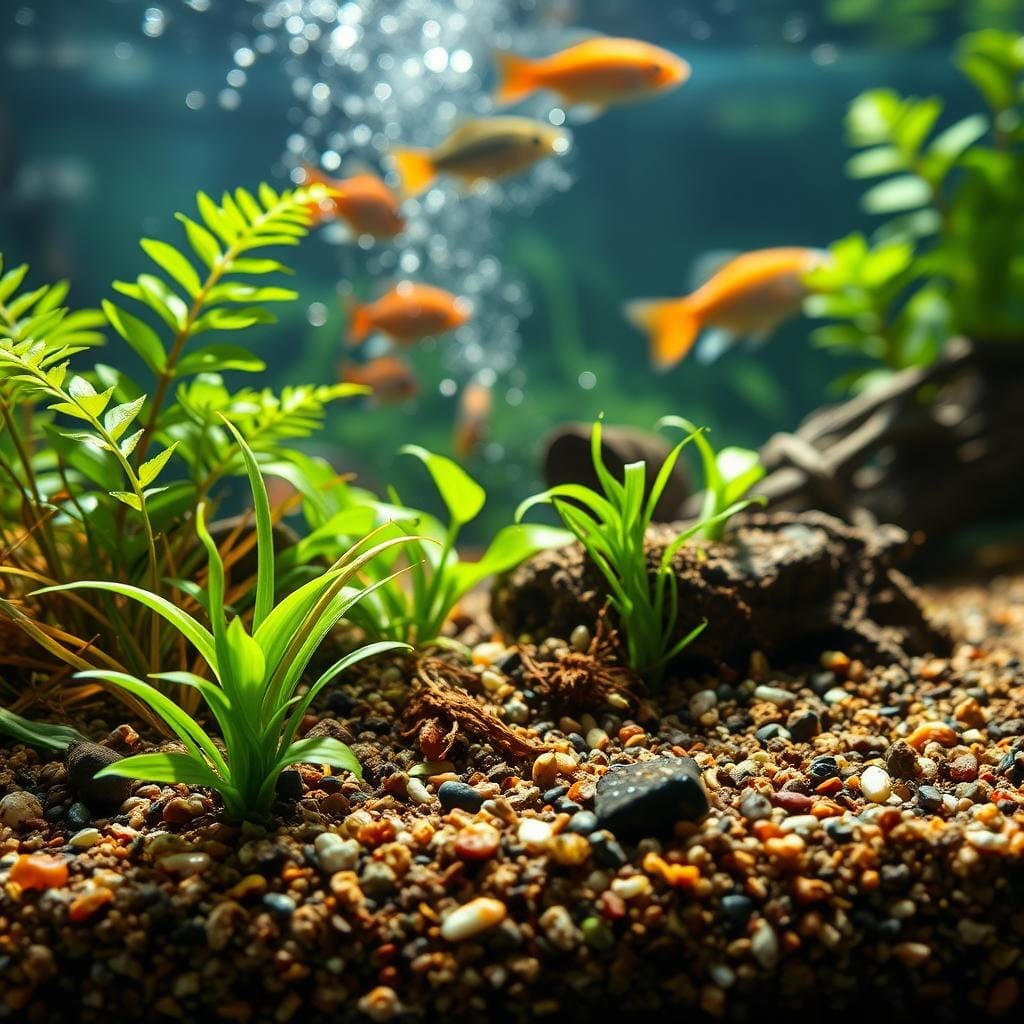
Compact aquatic systems open doors to underwater adventures without demanding large spaces. These setups typically range from 2.5 to 20 gallons, though definitions vary among enthusiasts. Let’s explore what makes these environments special and why they’re perfect for starting your journey.
What Defines a Compact Aquatic System?
Size matters most here. Most experts split these setups into two groups: ultra-compact (under 5 gallons) and mid-sized (5-15 gallons). The smaller group works for single shrimp or snails, while larger volumes allow more creativity. Some even stretch definitions to 30 gallons, but water stability becomes easier beyond 10 gallons.
Why Choose a Petite Setup?
Space-saving designs fit dorm rooms, desks, or studio apartments effortlessly. You’ll spend less on plants, substrate, and decor compared to bigger tanks. Maintenance takes minutes instead of hours—a game-changer for busy schedules.
These systems teach core skills like water testing and algae control through manageable tasks. Many find the smaller scale less intimidating, building confidence before upgrading. Best of all, you’ll discover that vibrant ecosystems thrive in modest spaces when balanced properly.
Choosing the Right Nano Aquarium Setup
Selecting your first compact aquatic system feels like choosing a new home – for both you and your future aquatic friends. The right tank dimensions create harmony between your living space and underwater ecosystem. Balance practicality with your creative vision through smart sizing decisions.
Determining the Appropriate Tank Size
Your system’s capacity directly shapes what creatures can thrive. Volumes under 5 gallons work best for solitary residents like betta fish, while 5-15 gallon setups permit small groups of species like neon tetras. Remember – water volume impacts stability, with 10-gallon tanks offering the ideal middle ground for newcomers.
Three key factors guide your decision:
- Available space: Measure your surface area and consider tank proportions
- Maintenance commitment: Smaller systems need more frequent care
- Stocking goals: Research your preferred species’ needs early
Longer, shallow containers often outperform tall narrow ones, providing better gas exchange and swimming room. While 15-gallon models exist, standard 10-gallon options prove easier to find and equip. If you dream of housing colorful nano fish, prioritize length over height when selecting your setup.
Consider these details when planning: A proper-sized tank saves money long-term and reduces upgrade urges. Start with what you can manage daily – your aquatic pals will thank you!
Essential Equipment for Your Nano Tank
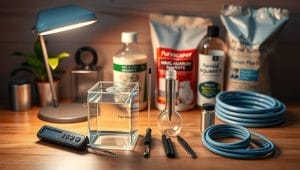
Building your miniature ecosystem starts with choosing tools that match its scale. The right gear keeps water clean, temperatures stable, and plants thriving—without dominating your limited space. Let’s explore solutions designed for smaller environments.
Filters, Heaters, and Lighting Options
Under gravel filters shine in compact setups. They hide beneath your substrate, offering silent biological filtration that’s gentle on shrimp and small fish. Unlike bulky sponge filters in 5-gallon spaces, these systems stay invisible while processing waste efficiently.
Choose heaters with adjustable thermostats to prevent overheating. A 25-watt model often works perfectly for 10-gallon tanks. Pair it with low-profile LED lights that offer adjustable brightness—your plants get needed energy without promoting algae explosions.
Additional Tools for Maintenance
Three essentials simplify care routines:
- Micro nets for safe fish handling
- Magnetic algae scrapers that fit tight corners
- Compact test kits measuring pH and ammonia
Invest in quality equipment early—cheap heaters often lack precision temperature controls. For planted setups, consider DIY air-driven filters using recycled materials. They blend seamlessly while providing surface agitation.
Remember: Smaller volumes demand careful calibration. A filter meant for 30-gallon tanks will create whirlpools in your modest setup. Match every component’s power to your tank’s specific needs for harmonious operation.
Nano Aquariums: Ideal Fish and Plant Choices
Transforming your compact aquatic space into a balanced habitat starts with smart pairing. The right combinations of lively swimmers and lush greenery create visual harmony while supporting ecosystem health. Let’s explore top choices that bring energy and natural beauty to limited spaces.
Low-Maintenance Fish for New Hobbyists
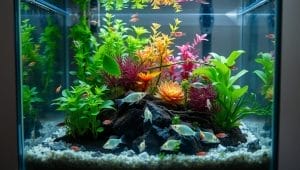
Begin with resilient species that adapt well to smaller environments. Male bettas dazzle with flowing fins and tolerate solo living in 5-gallon setups. For groups, consider Endler livebearers – these 1-inch marvels add bursts of color without overwhelming filtration systems.
Sparkling gouramis offer peaceful personalities and iridescent scales. Need quirky behavior? Tanganyikan shellies claim empty snail shells as homes, creating underwater neighborhoods. Always match fish quantities to your tank’s capacity – six celestial pearl danios thrive in 10-gallon spaces.
Flora That Flourishes in Compact Spaces
Java moss anchors easily to rocks and wood, forming emerald carpets for fish to explore. Dwarf hair grass creates meadow-like floors when given moderate light. For vertical interest, red tiger lotus sends lily pads toward the surface.
Three plant placement tips:
- Use taller species like dwarf sagittaria as background focal points
- Cluster carpeting plants (Monte Carlo) near viewing angles
- Leave open swimming areas near the front glass
Pair flame moss with slow-growing varieties to balance maintenance needs. Remember: thriving plants help filter water naturally, making your mini ecosystem more stable over time.
Water Management and Filtration Essentials
Small aquatic environments demand razor-sharp attention to balance. With limited water volume, even minor changes can spiral quickly—a single uneaten fish snack might trigger an ammonia emergency overnight. This makes consistent care routines non-negotiable for thriving ecosystems.
Mastering the Nitrogen Cycle
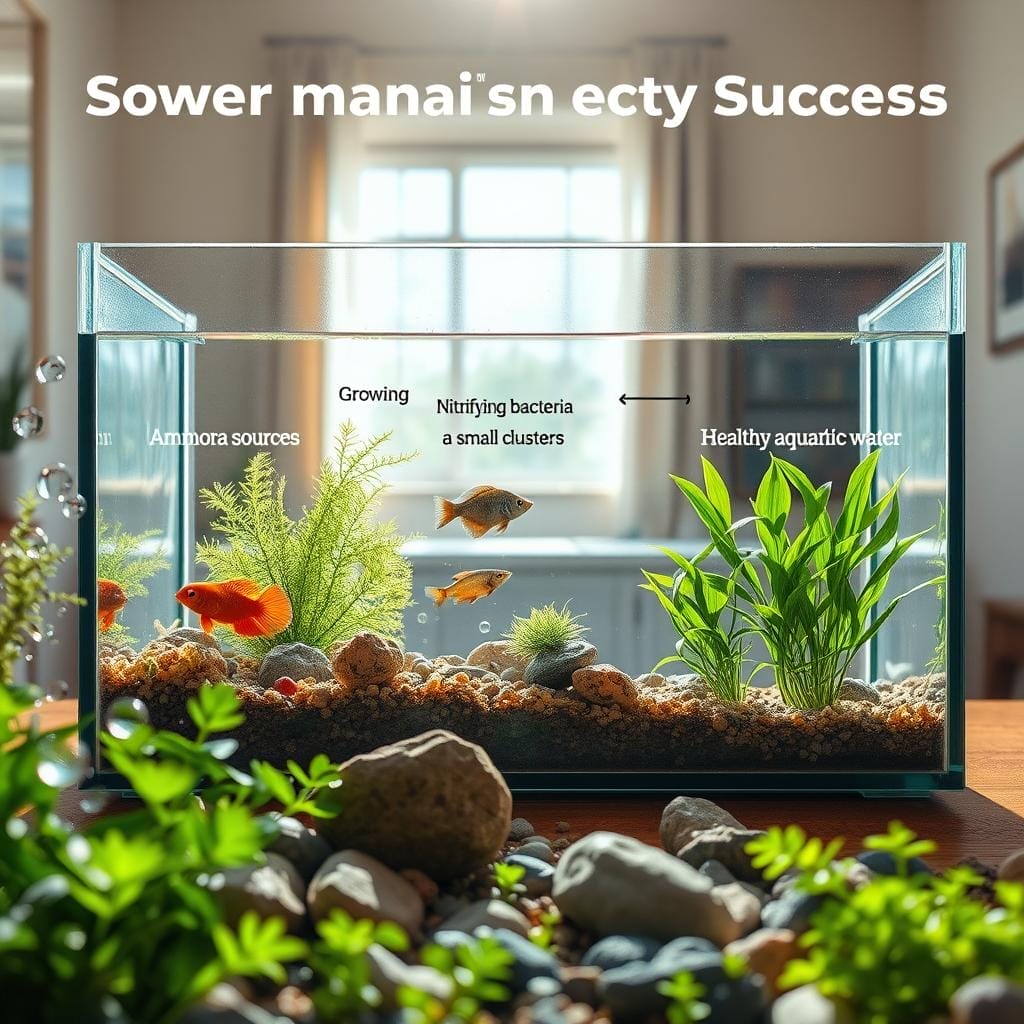
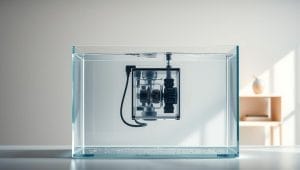
Beneficial bacteria become your invisible allies. These microbes colonize filter media and substrate, converting toxic ammonia into safer nitrates. Start this process by adding a bacterial starter culture and monitoring levels daily for 3-4 weeks. Test kits are essential—check ammonia, nitrites, and nitrates every other day during cycling.
Weekly 25% water changes help stabilize conditions. Use a siphon to remove debris without disturbing your tank’s floor. Always treat new water with dechlorinator before adding it—chlorine kills beneficial bacteria instantly.
Live plants act as natural purifiers. Species like anubias absorb excess nutrients while oxygenating the water. Pair them with sponge filters for mechanical cleaning. This combo reduces algae growth and maintains clarity.
Emergency tips for sudden spikes:
- Keep pre-mixed saltwater or treated freshwater on standby
- Use activated carbon in filters to absorb toxins
- Have a backup heater ready for temperature crashes
Remember: Stability trumps perfection. Gradual adjustments prevent shocking delicate inhabitants. With precise testing and timely interventions, your miniature world will flourish.
Lighting and Planting Considerations in Small Tanks
Brighten your underwater garden with smart lighting strategies tailored for tight spaces. Shallow water depth gives these setups a unique advantage—your light travels just 6-12 inches to reach plants, maintaining intensity that deeper tanks lose. This creates ideal conditions for vibrant growth without expensive equipment.
Optimizing Light for Growth
Choose LED fixtures with adjustable brightness for precise control. For tanks under 10 gallons, 5-10 watts often suffices. Match your light strength to plant needs: low-light species like java fern thrive with 6 hours daily, while carpeting plants may need 8 hours. Use timers to automate schedules and prevent algae outbreaks.
Fertilizers work faster here. Small water volumes let nutrients reach roots quickly—a single dose affects the whole system. Start with half the recommended amount and adjust weekly. Pair this with gentle water flow to distribute resources evenly.
Three rules for balanced environments:
- Position lights centrally to eliminate shadows
- Combine blue and red spectrums for plant health and fish colors
- Test CO2 levels weekly if using injected systems
Discover how proper illumination transforms your aquatic display in this step-by-step setup guide. You’ll learn to enhance red hues in ludwigia plants or make neon tetras glow—all through strategic lighting choices.
Designing and Decorating Your Nano Aquarium
Transform your compact underwater canvas into a living masterpiece through smart design choices. Small-scale aquascaping demands creativity—every inch matters when working with limited space. You’ll balance beauty with practicality, ensuring decorations support both visual harmony and ecosystem health.
Creating an Aesthetic Layout
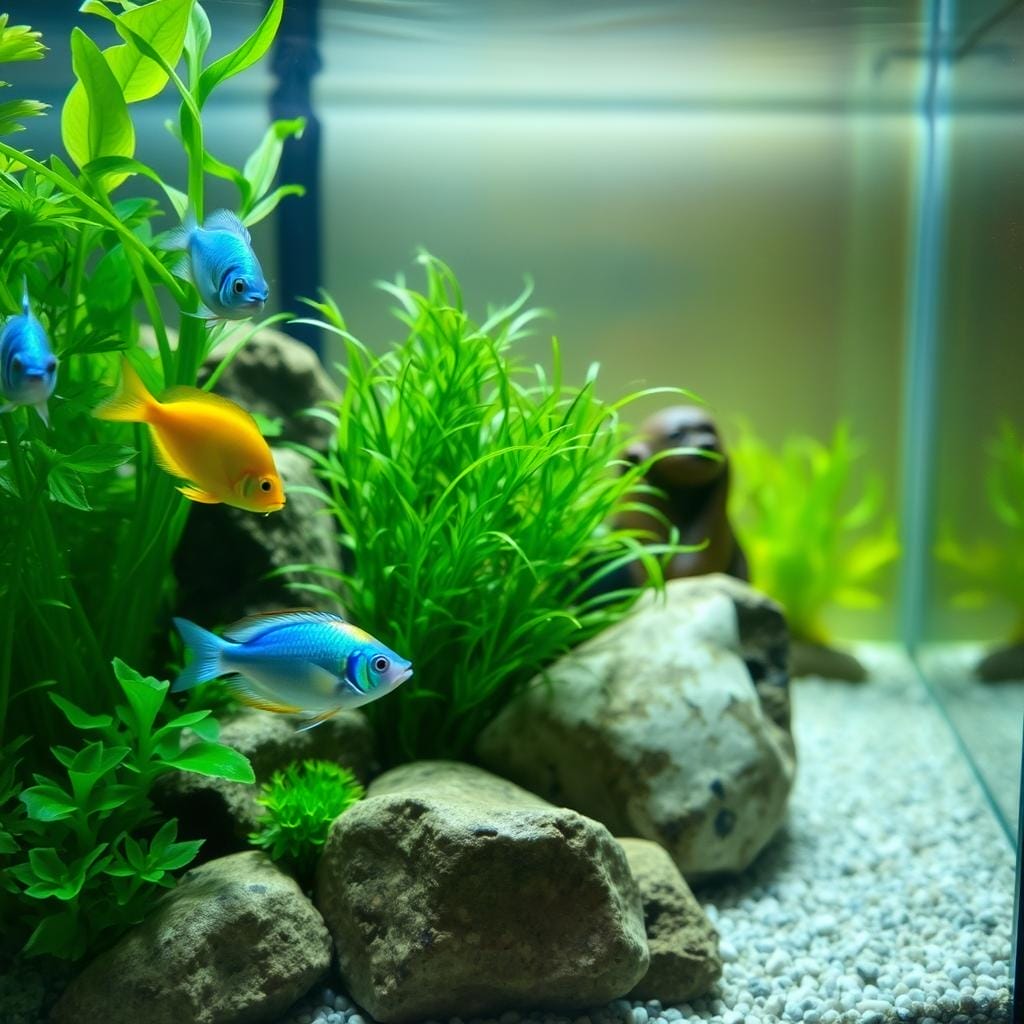
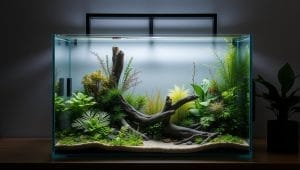
Think vertically when planning your arrangement. In tanks under 10 gallons, plants labeled “foreground” often become midground features. Anubias attached to driftwood can create instant height as background elements. Use contrasting textures—pair feathery mosses with broad-leaf species—to add depth without overcrowding.
Three design principles for tight spaces:
- Place taller hardscape items (like slate) off-center for natural asymmetry
- Use monochromatic substrates to visually expand floor space
- Angle rocks toward the front glass to guide the viewer’s eye
Practical Decor that Enhances Functionality
Choose porous lava rock or cholla wood that hosts beneficial bacteria while creating hiding spots. Miniature clay caves protect shy creatures and double as anchor points for plants. For open swimming areas, position decor along the tank’s edges rather than the center.
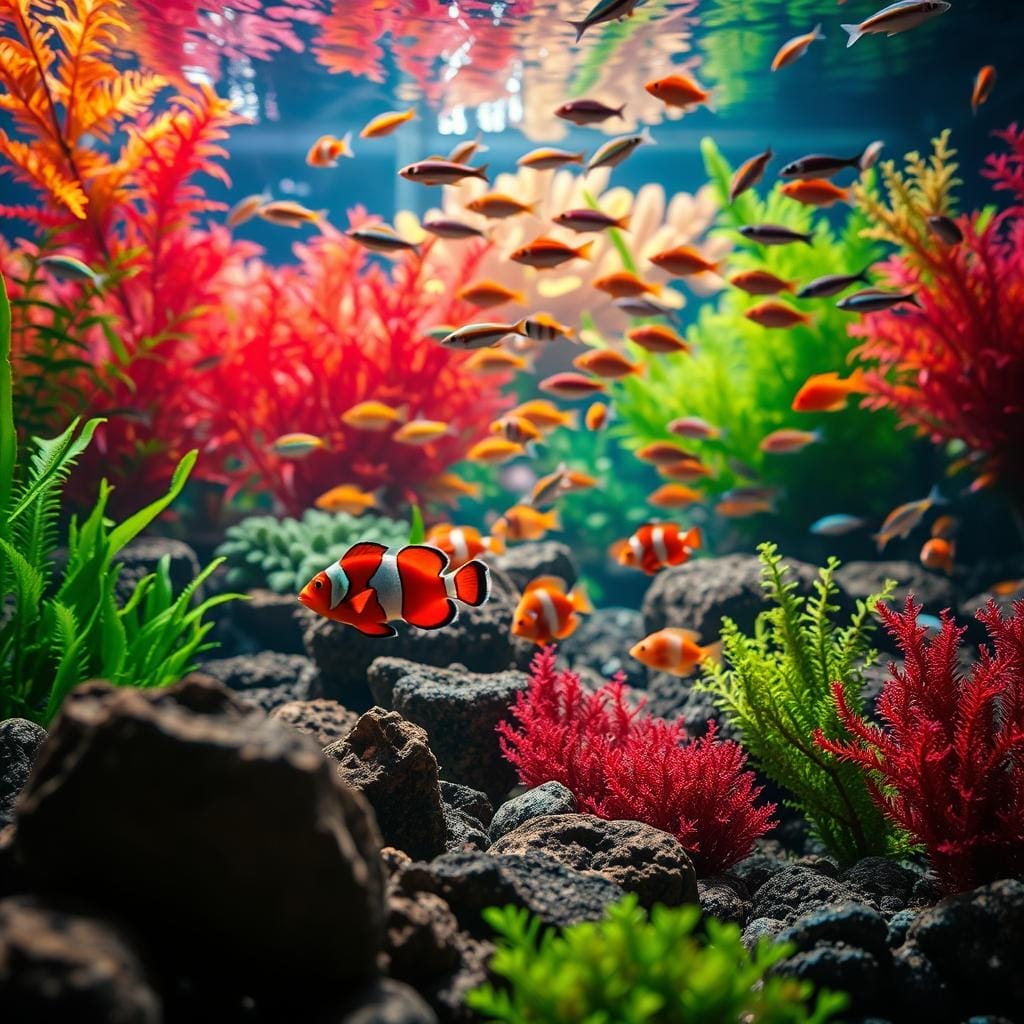
Color theory works wonders here. Cool-toned blues in background plants make spaces feel deeper. Warm red accents near the front draw attention to active fish. Discover more aquascaping techniques that maximize impact through strategic placement.
Remember: Your tank’s size dictates decor proportions. Tiny details like 1-inch river stones or micro ferns maintain balance. Test layouts dry first—arrange elements on a same-size paper template to perfect spacing before adding water.
Budgeting and Cost-Saving Tips for Nano Tank Setup
Diving into aquatic hobbies doesn’t require draining your savings account. Compact systems let you create captivating environments while keeping costs manageable. Starter setups often range from $29 for basic tanks to $160 for premium kits—far less than larger alternatives.
Smart Spending for Lasting Value
Prioritize essentials first. A reliable heater and filter matter more than decorative elements early on. For example, Buce Plant’s 5-gallon bundles include quality glass and filtration under $100. You’ll save a lot by skipping oversized equipment meant for bigger tanks.
Begin with hardy species like cherry shrimp or snails. These low-cost residents teach core care skills without demanding perfect water conditions. Upgrade to pricier fish once your routine stabilizes.
Track ongoing expenses:
– Substrate ($10-$20)
– Test kits ($15)
– Monthly water treatments ($5)
Smart choices today prevent costly fixes tomorrow. Focus on durable gear and gradual upgrades—your wallet and aquatic friends will thrive.
FAQ
How small is too small for a fish tank?
Tanks under 5 gallons require expert care. For beginners, 10-gallon setups offer more stability while keeping a compact footprint. Always match tank size to your chosen fish’s adult length and behavior.
Can bettas thrive in tiny tanks?
While bettas survive in small spaces, they flourish in filtered 5+ gallon setups with gentle flow. Avoid tall tanks—these surface breathers prefer horizontal swimming space and benefit from live plants like anubias.
What’s the easiest fish for a 10-gallon setup?
White Cloud Mountain minnows handle temperature swings well, making them forgiving for new hobbyists. Other hardy choices include celestial pearl danios or shrimp colonies, which add activity without overloading filtration.
Do I need special lights for aquatic plants?
Low-light species like java fern or moss grow well under basic LED fixtures. For carpeting plants, choose adjustable full-spectrum lights—but start with simpler species to avoid algae issues in compact setups.
How often should I clean a 5-gallon tank?
Perform 15-20% weekly water changes using a gravel vacuum. Small volumes demand consistency—test ammonia weekly and avoid overfeeding. Sponge filters help maintain balance between cleanings.
Can I mix fish in limited space?
Focus on one centerpiece species like a betta or dwarf crayfish. Pair with microfauna—neocaridina shrimp or snails add diversity without competition. Always research temperament and space needs first.
Are there affordable heater options?
Preset 25-watt heaters work for 5-10 gallon tanks. Look for adjustable models if keeping tropical species. Place near filter flow for even heat distribution, and always use a thermometer to verify stability.
Also Read: Common Aquarium Problems and How to Fix Them
Hi, I'm Millie a passionate fish enthusiast and blogger. I loves learning about all kinds of aquatic creatures, from tropical fish to stingrays.