
Your Planted Tank Setup: A Step-by-Step Guide Inside
 Millie Douglas
Updated on: July 16, 2025 .
10 min read
Millie Douglas
Updated on: July 16, 2025 .
10 min read
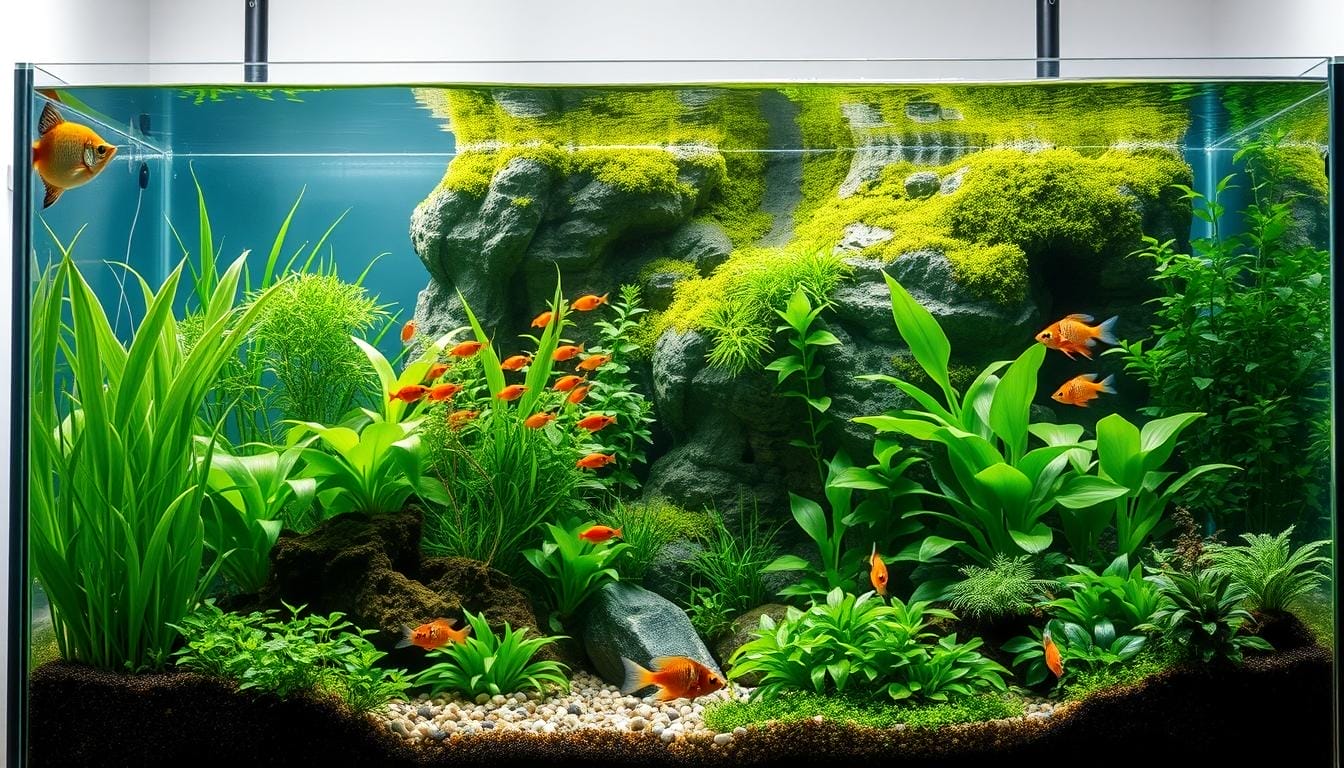
Did you know a single aquatic plant can remove up to 74% of harmful ammonia from water? This natural filtration power turns ordinary fish habitats into vibrant, self-sustaining worlds. Creating your first underwater garden might seem daunting, but with the right approach, you’ll build an ecosystem where plants and fish thrive together.
Live greenery does more than beautify your aquatic space—it actively cleans the water your fish depend on. You’ll save time on maintenance while watching your finned friends explore twisting roots and leafy hideaways. Best of all, you don’t need expensive gear or advanced skills to get started.
This guide breaks down the process into simple, achievable steps. We’ll show you how to choose hardy plants that grow effortlessly, select the perfect substrate, and balance light levels for healthy growth. Imagine your living room glowing with a slice of nature—a place where emerald fronds sway and neon tetras dart through shaded corners.
Whether you’re new to fishkeeping or looking to enhance your current system, our methods prioritize ease and success. You’ll learn to avoid common mistakes and create conditions where both flora and fauna flourish. Ready to transform glass walls into a living masterpiece? Let’s dive in.
Getting Started with Your Planted Tank Setup
Creating a thriving underwater garden begins with smart preparation. You’ll need key tools that support plant growth while keeping your aquatic friends healthy. Let’s explore what really matters for your success.
Essential Materials and Supplies
Start with a standard glass aquarium from your neighborhood pet store—those black rims aren’t just for looks. They help prevent cracks and hide waterline marks. Pair it with a stable stand that can handle 10 pounds per gallon when filled.
Your must-have list includes:
- LED lights designed for growing greenery
- Coarse sand or gravel for root support
- Reliable heater and thermometer
- Water conditioner and test strips
Focus on quality lighting and filtration first—these determine your plants’ health. Basic tools like planting tweezers and algae scrubbers keep maintenance simple. An all-in-one fertilizer simplifies nutrient balance for new hobbyists.
Budget-Friendly Planning Tips
Medium-sized systems (20-40 gallons) offer the best value. They’re easier to manage than tiny bowls but won’t break the bank like large displays. Pro tip: Search for combo deals that include filters and heaters.
Save on decorative elements initially—driftwood and rocks can wait. Use your savings for crucial items like water test kits. Check online marketplaces for gently used equipment from upgrading hobbyists. Remember, patience in planning prevents costly do-overs later.
Choosing the Right Aquarium and Location
Your aquarium’s success hinges on choosing the right size and spot. Let’s explore how to balance practicality with aesthetics while creating a stable environment for aquatic life.
Tank Size Considerations
While 5-gallon systems work for tiny spaces, 20-gallon aquariums offer better stability. Larger water volumes resist temperature swings and chemical fluctuations. Consider your available space and fish species—active swimmers need room to explore, while smaller creatures thrive in compact environments.
Here’s what to remember:
- Bigger systems (40+ gallons) maintain balance longer
- Standard 20-gallon dimensions fit most furniture
- Allow extra width for plant growth and decorations
Ideal Placement and Stand Requirements
Position your aquarium within 3 feet of an electrical outlet and water source. Avoid sunny windowsills—just 2 hours of direct sunlight can trigger algae explosions. Choose low-traffic areas to prevent accidental bumps while maintaining easy viewing access.
Your stand must support 10+ pounds per gallon—a 20-gallon system weighs over 200 pounds when filled. Use only purpose-built stands with reinforced frames. Check floors for levelness, and consider adding rubber padding to absorb vibrations from foot traffic.
Selecting Suitable Equipment and Accessories
The right tools transform your aquatic environment from surviving to thriving. Let’s explore how to pick gear that supports both greenery and finned friends without overwhelming your space.
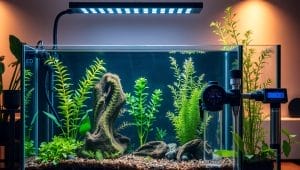
Lighting Choices for Live Plants
LED fixtures outperform other options for growing vibrant greenery. Their adjustable spectrum matches what plants naturally use for photosynthesis. Start with 5-6 hours daily using a timer—consistency prevents algae while encouraging root development.
Filter & Heater Options
Hang-on-back filters work wonders for small to medium systems. Canister models handle larger aquariums with multiple fish. Always choose a filter rated for your water volume—gentle flow protects delicate leaves while processing waste.
Submersible heaters maintain tropical temperatures between 75-80°F. Pair with a digital thermometer for precision. A snug-fitting lid reduces evaporation and keeps curious pets out. Remember: quality equipment means fewer headaches down the road.
Preparing the Substrate and Hardscape
The secret to a thriving aquatic ecosystem lies beneath the surface. Your aquarium’s foundation determines how well greenery grows and how effectively nutrients circulate. Let’s create a stable base that supports both beauty and biology.
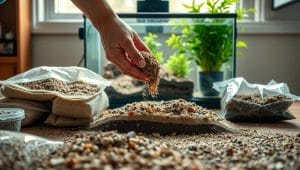
Substrate Preparation Techniques
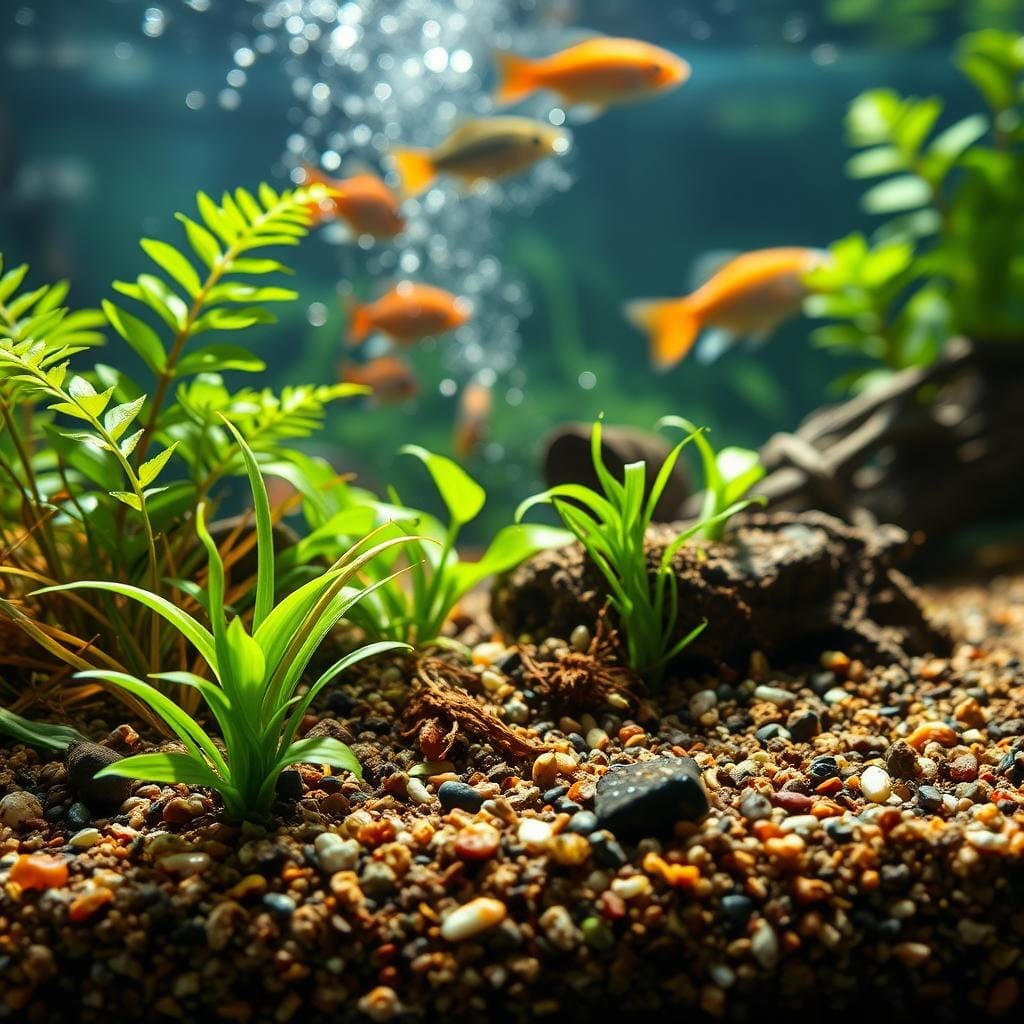
Start with a 2-3 inch layer of aquarium gravel or coarse sand—these inert options keep water chemistry stable for beginners. Rinse materials thoroughly in a colander until water runs clear. Clay-based substrates may need 5-6 rinses to eliminate dust clouds.
Build depth variations for visual interest and plant needs. Slope the substrate higher toward the back wall, creating natural-looking terrain. This design helps taller species anchor securely while improving water flow across the aquarium floor.
- Press root tabs every 6 inches under areas reserved for sword plants or cryptocorynes
- Use a plastic card to smooth surfaces without disturbing settled layers
- Leave 1 inch of space between substrate and glass for cleaning tools
Patience during this process prevents murky water and shifting landscapes. Pro tip: Temporarily place hardscape items like rocks to test layouts before finalizing. Your carefully prepared base will support healthy root systems and crystal-clear water for years.
Step-by-Step Guide to Planting Live Aquarium Plants
Transform your aquatic space into a lush paradise with strategic greenery placement. Start by filling your system halfway with treated water—about 6 inches deep. This shallow layer keeps delicate leaves upright while you work, preventing damage to stems and roots.
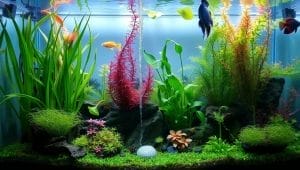
Planting Techniques for Rooted Species
Handle each greenery type differently for best results. Push stem varieties like bacopa 1-2 inches into substrate using tweezers, spacing them 3 fingers apart. For rhizome species like Java fern, attach roots to driftwood with cotton thread instead of burying them. This prevents rot while letting them absorb nutrients from water.
Arranging Plants for Visual Impact
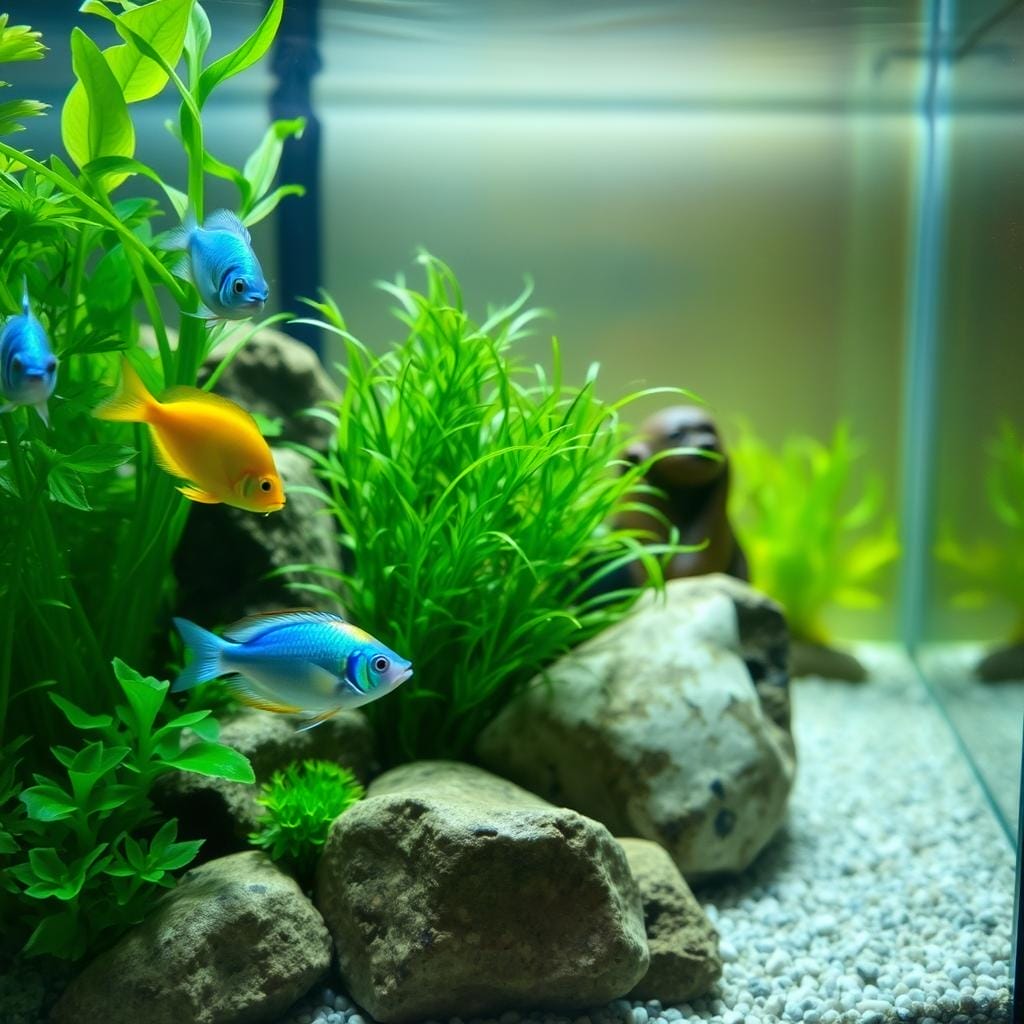
Build depth by layering tall species like Vallisneria at the back. Place mid-sized greenery like crypts in the center, reserving foreground for carpeting plants. Create focal points by grouping colorful species like red ludwigia near hardscape features. Repeat patterns for natural flow while leaving growth space.
Follow these key principles:
- Position light-hungry species directly under LEDs
- Cluster shade-tolerant varieties near decorations
- Secure all greenery firmly during initial placement
Once positioned, avoid rearranging—each move stresses roots and delays growth. For more design strategies, explore our aquatic plant arrangement guide. With careful planning, you’ll create a balanced ecosystem where flora and fauna thrive together.
Maintaining Ideal Water Parameters and Temperature
Your aquatic ecosystem thrives when water conditions stay balanced. Like a delicate dance, chemical levels and heat work together to support vibrant greenery and active fish. Let’s explore how to keep this balance with simple routines.
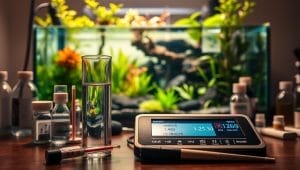
Water Testing and Adjustment Practices
Test weekly using reliable kits—your local pet store carries affordable options. Aim for pH 6.5-7.8 and nitrate levels below 10ppm. Consistency matters more than perfection—small adjustments prevent shocking sensitive species.
If using tap water, always treat it with dechlorinator. For precise control, try reverse osmosis systems with mineral supplements. Track results in a notebook or app to spot trends. Need help interpreting numbers? Our guide to understanding water chemistry breaks it down simply.
Efficient Water Change Methods
Replace 10% weekly or 25% every two weeks using a gravel vacuum. Match new water temperature to your system—sudden shifts stress inhabitants. Always treat replacement water before adding it.
Three steps for success:
- Test water 1 hour before changes
- Use dedicated buckets marked “aquarium only”
- Add liquid fertilizers after refreshing water
Keep heaters clean and fully submerged. Digital thermometers provide accurate readings—check them against room temperature occasionally. With these habits, you’ll maintain crystal-clear water that supports life beautifully.
Implementing a Regular Feeding and Fertilizing Routine
Your aquatic plants thrive when fed like prized garden vegetables—consistently and with purpose. Balanced nutrition fuels vibrant colors and strong roots while preventing algae from hijacking your system. Let’s simplify your approach to plant care.
Smart Fertilizer Selection
All-in-one liquid fertilizers like Easy Green simplify maintenance by delivering essential nutrients in precise ratios. Designed for low-tech systems, they eliminate guesswork while supporting steady growth. Test strips help maintain ideal nitrate levels (25-50 ppm) without complex calculations.
Heavy root feeders like Amazon swords benefit from nutrient-rich tabs pressed into the substrate. For red-leaf varieties showing pale veins, iron supplements restore deep hues. Always dose according to package instructions—overfeeding wastes product and risks algae blooms.
Discover more strategies in our comprehensive fertilizer guide. With the right products and timing, you’ll create a self-sustaining environment where greenery flourishes and fish enjoy cleaner water. Your dedication now pays off in lasting beauty.
FAQ
What materials do I absolutely need to start a freshwater aquarium with live plants?
You’ll need a nutrient-rich substrate, full-spectrum LED lighting, a reliable filter, a heater (for tropical species), aquatic plants, and a water testing kit. Budget-friendly options like pool filter sand or sponge filters work well for beginners.
How do I choose the right aquarium size for my space?
Consider your available space, budget, and goals. A 10–20 gallon aquarium is ideal for beginners—it’s manageable, stable for water parameters, and offers enough room for plants and small fish like tetras or shrimp.
Can I use regular household lights for growing aquatic plants?
Standard bulbs often lack the intensity and spectrum needed. Opt for LED lights designed for freshwater aquariums, with adjustable brightness and a 6–8 hour daily photoperiod to prevent algae.
How deep should my substrate layer be for rooted plants?
Aim for 2–3 inches of substrate. Use nutrient-rich options like Seachem Flourite or layer inert gravel over root tabs. This supports root growth and prevents anaerobic pockets.
How often should I test my water parameters?
Test weekly for ammonia, nitrite, nitrate, pH, and hardness during the first 6–8 weeks. Once stable, monthly checks are sufficient. Adjust with partial water changes or conditioners as needed.
What’s the best fertilizer for a low-maintenance planted aquarium?
Liquid all-in-one fertilizers like Easy Green or root tabs work well. Start with a low dose and adjust based on plant growth and algae signs. Overfeeding can harm fish and water quality.
How do I prevent algae without harming my plants?
Balance light duration (6–8 hours), avoid overfeeding, and maintain consistent water changes. Introduce algae-eating shrimp or snails, and manually remove visible growth during maintenance.
Can I keep fish with delicate plants like carpeting species?
Yes, but choose peaceful fish like ember tetras or otocinclus. Avoid species that dig or nibble, such as goldfish or cichlids. Research compatibility before adding livestock.
How frequently should I perform water changes in a planted aquarium?
Replace 25% of the water weekly to remove excess nutrients and replenish minerals. Use a gravel vacuum to clean debris without disturbing the substrate or plant roots.
What’s the easiest way to create visual depth in my aquascape?
Place taller plants like Vallisneria in the background, mid-sized species like Anubias in the middle, and low-growing plants like Monte Carlo up front. Add driftwood or rocks for contrast.
Aquarium setup guideAquarium tipsAquascape beginnersFreshwater plantsPlanted tank essentialsTank maintenance
Hi, I'm Millie a passionate fish enthusiast and blogger. I loves learning about all kinds of aquatic creatures, from tropical fish to stingrays.