
Reducing Glass Glare: Simple Solutions for Aquarium Owners
 Millie Douglas
Updated on: December 1, 2025 .
11 min read
Millie Douglas
Updated on: December 1, 2025 .
11 min read
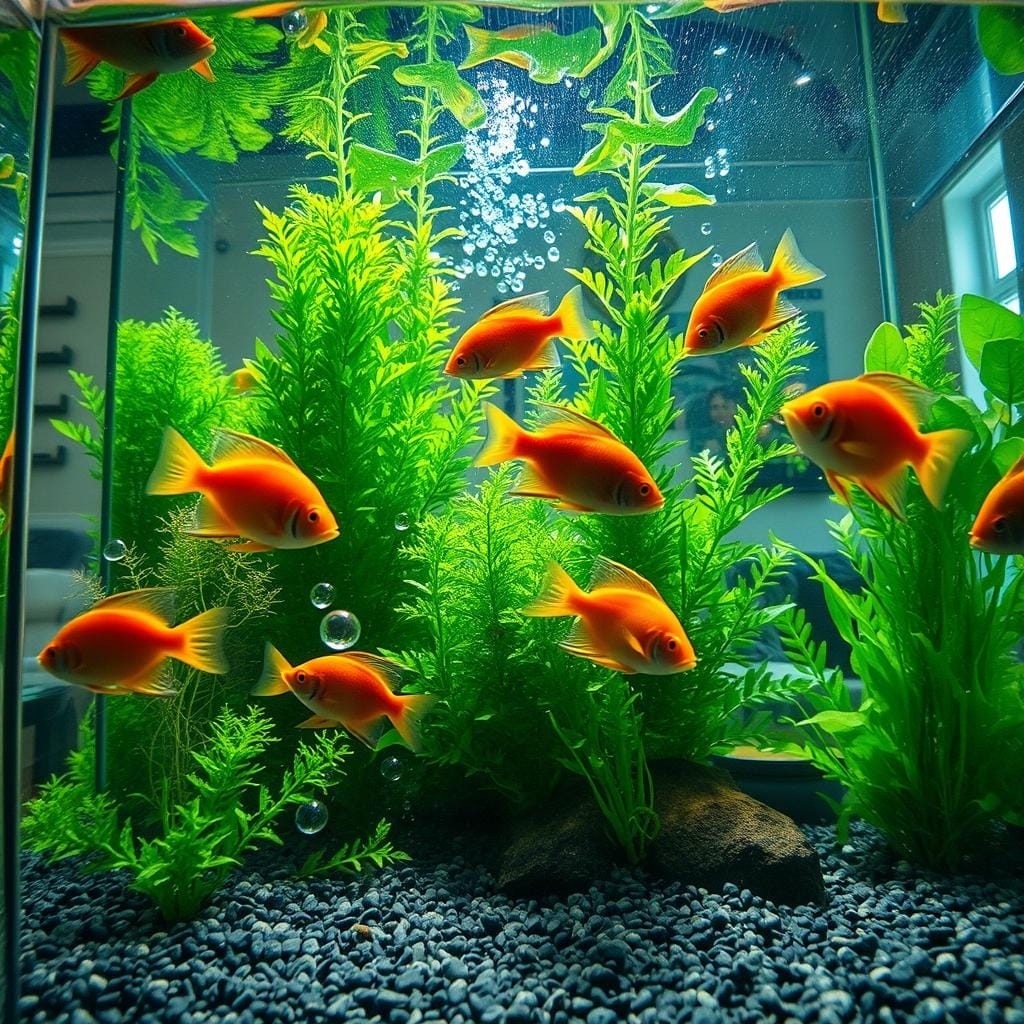
Have you ever spent time creating a beautiful underwater habitat, only to find your own reflection blocking the view? It’s a common frustration that can make enjoying your aquarium feel like a challenge.
We understand how annoying those bright reflections can be. But here’s the good news: achieving a crystal-clear look at your fish is much easier than you think.
This guide is packed with simple, effective strategies. You will learn how room light and tank placement affect the glare. We will explore different options to manage it.
Our tips come from experienced hobbyists and experts. They offer a practical way to solve this problem for any tank size. You can finally enjoy an unobstructed view of your aquatic world.
Let’s transform your viewing experience together. Get ready to see your aquarium in a whole new light!
Understanding Glare in Aquarium Environments
That frustrating mirror effect on your tank isn’t just bad luck—it’s basic physics at work. When you see your reflection instead of your fish, you’re experiencing light reflection. This happens when light bounces off the surface rather than passing through it.
The angle of incoming light makes a huge difference. Light hitting straight on creates more reflection than light approaching from sharper angles. Your tank’s position relative to windows and room lights determines how much glare you’ll see at different times of day.
How Light Reflection Affects Aquarium Views
There are two main types of glare that can bother aquarium owners. Discomfort glare makes viewing difficult but not impossible. Disability glare completely blocks your vision with overwhelming brightness.
Different people have varying sensitivity to these effects. What barely bothers one person might make another struggle to see their fish clearly. If you’re having trouble observing your aquatic friends, it might be time to consider some adjustments for better aquarium fish health monitoring.
The Impact of Glare on Aquatic Life Observation
Your room’s layout and surfaces play important roles too. Walls, furniture, and even the tank glass itself can bounce additional light onto your aquarium. This creates secondary reflection sources that compound the problem.
Understanding these principles helps you pinpoint exactly where your viewing challenges originate. Once you know whether it’s a window placement issue or room surface problem, you can choose the most effective solution for your specific setup.
Adjusting Lighting and Angles for a Clearer View
The secret to crystal-clear aquarium viewing often lies in how you position your lighting sources around the room. Simple adjustments can make a world of difference in how you experience your underwater world.
Think about how art galleries illuminate paintings. They position lighting directly above the artwork. This creates a steep angle that minimizes reflections. You can apply this same principle to your aquarium setup.
Optimal Lighting Placement to Minimize Reflections
One effective way to reduce glare is positioning room lights above and slightly in front of your tank. When light comes from above at a steep angle, it’s less likely to bounce back into your eyes. This simple tip helps reduce those frustrating mirror effects.
Your aquarium’s built-in lighting system should stay contained within the hood. This naturally minimizes external reflections while beautifully illuminating your fish. Even moving floor lamps a bit away from positions directly across from your tank can help.
Consider using adjustable lighting options in your aquarium room. Dimming overhead lights gives you more control. Another great option is noting when sunlight streams through nearby windows. You can adjust your viewing times accordingly.
Experimenting with different arrangements might take a bit of time. But you’ll quickly find the sweet spot where reflections virtually disappear. This practical tip offers an easy way to enjoy your aquarium without visual distractions.
Exploring Glass Options and Protective Coatings
Sometimes the solution to persistent reflections lies in the very materials that make up your aquarium’s viewing surface. When lighting adjustments alone don’t give you the clarity you want, specialized materials and treatments offer powerful alternatives.
Modern aquarium technology provides several excellent choices for improving your viewing experience. Each option addresses reflections differently, giving you flexibility based on your specific needs and budget.
Anti-Reflective Glazing Techniques for Aquariums
Anti-reflective coating works like the treatment on high-quality eyeglass lenses. It allows more light to pass through the surface instead of bouncing back as reflection. This technology can cut surface reflections by up to 90%.
Water white glass is another great option that eliminates the green tint in regular glass. It provides truer colors and better clarity for both everyday viewing and photography. The special coating changes how light interacts with the material.
For existing tanks, anti-reflective film offers a practical tip. It works especially well on rimless designs where you want an unobstructed view. This tip gives you professional results without replacing your entire setup.
Museum-quality materials combine multiple benefits in one solution. They provide anti-reflective properties with UV protection that also helps control algae growth. You’ll find solutions at every price point to match your aquarium needs.
Reducing Glass Glare: Effective How-To Strategies
You’re about to discover straightforward techniques that transform how you see your aquarium. These practical approaches address both positioning and maintenance for optimal viewing clarity.
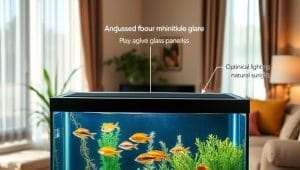
Step-by-Step Adjustments for Glass Positioning
Start by changing your viewing angle. Instead of facing the tank directly where reflections are strongest, try looking from a slight side angle. This simple shift often provides a clearer look at your fish.
If your stand allows adjustment, tilt the entire frame forward just a bit—about 2-3 degrees. This changes how light interacts with the surface. Position lamps behind you rather than behind the tank for backlighting conditions.
For photography enthusiasts, turn off room lights and use only aquarium lighting for your shot. Take multiple photos at different times to find when natural light works best. This approach helps reduce unwanted reflections in your images.
Tips on Cleaning and Maintenance to Enhance Clarity
Regular cleaning is one of the most overlooked tips for improving visibility. Smudges and fingerprints on the outside surface can scatter light and worsen reflections. Clean both inside and outside surfaces weekly.
Use aquarium-safe cleaner for the inside and regular glass cleaner for the outside. If you wear glasses while viewing, keep your lenses clean too. This prevents extra layers of distortion.
For stubborn reflections, hold dark fabric beside the tank to block light from one side. Work through these strategies systematically, giving yourself time to evaluate what makes the biggest difference. Modern glass for glare control solutions can also provide additional support when needed.
Incorporating Technology and Tools for Glare Control
Modern tools and lighting innovations offer powerful ways to manage reflections in your aquatic display. Today’s technology gives you precise control that was once only available to professional aquarium designers.
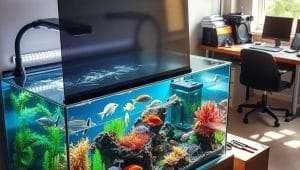
You can now create optimal viewing conditions with equipment designed specifically for clarity. These solutions work beautifully while maintaining the natural beauty of your underwater world.
Using Specialty Lighting and Filters
Adjustable LED lights give you complete command over your aquarium’s illumination. You can position them at angles that eliminate unwanted reflections while showcasing your fish.
Polarizing filters attach directly to your tank’s frame. They function like high-quality glasses with specialized lenses, cutting through reflections for crystal-clear viewing.
Smart lighting systems connect to your phone for remote control. This option lets you adjust brightness throughout the day when light conditions change.
Modern Tools for Monitoring and Reducing Glare
Light meters help you measure exactly how much light hits your tank. This valuable tip takes the guesswork out of positioning your lights.
Anti-glare screen protectors can be custom-fit to your aquarium panels. They work like the protective lenses on expensive glasses, reducing reflections effectively.
Portable studio lights offer flexibility for temporary setups. This smart tip gives you professional results without permanent installation.
With these tools, you’ll spend more quality time enjoying your aquarium. The right technology makes all the difference in your viewing experience.
Expert Insights from Photographers and Framing Professionals
What if you could borrow professional secrets from portrait photographers to solve your aquarium viewing challenges? These experts have spent years perfecting techniques to manage reflections in their work.
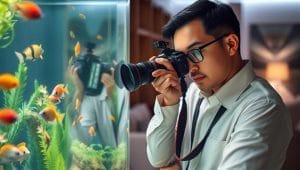
Portrait photographers who work with people who wear glasses face the same issue you do. They need to illuminate their subject’s face while avoiding distracting reflections in the glasses.
Lessons from Portrait Photography Lighting Techniques
The key lesson is simple: tiny changes in angle make enormous differences. When photographers work with subjects who wear glasses, they position the lighting above and slightly behind rather than directly in front.
This breaks the straight line between light source, reflective surface, and viewer’s eye. You can apply this same principle to your aquarium setup.
Professional aquarium photographers often take their best shot with the room dark except for tank lights. They use a single external light source at a calculated angle. This approach minimizes lens reflections while properly illuminating the scene.
Museum professionals use similar techniques with artwork frames. They position specialized lighting at steep angles to ensure clear viewing. These professional photography techniques translate beautifully to aquarium viewing.
Just like adjusting head position for someone wearing glasses, moving your viewing spot a few inches can transform your experience. Small adjustments create big improvements in clarity.
Bringing It All Together for a Brighter Aquarium Experience
You’ve just collected a powerful set of tools to reclaim your aquarium view. From simple angle changes to advanced anti-reflective windows, you can choose what fits your budget. Each strategy helps reduce that frustrating mirror effect.
Remember that combining techniques often works best. Adjust your lighting while maintaining clean surfaces. This teamwork gives you the clearest possible look at your aquatic friends. Don’t feel pressured to do everything at once.
Start with no-cost adjustments and build from there. Your unique setup might need custom tweaks. Trust yourself to experiment and find what works. The effort pays off with daily unobstructed views.
Your aquarium should bring joy, not frustration. Eliminating reflections reconnects you with why you love fishkeeping. With these proven methods, your underwater world takes center stage exactly as it should.
FAQ
How can I quickly reduce reflections on my aquarium glass?
A simple and effective way is to adjust the angle of your room lights or the tank itself. Moving a lamp or shifting your viewing position can make a big difference. Tilting the tank slightly away from direct light sources also helps reduce unwanted reflections immediately.
Are there special coatings I can apply to the glass?
Yes, anti-reflective coatings are a great option for minimizing glare. These thin films, often used on camera lenses and eyeglasses, can be applied to aquarium glass. They work by allowing more light to pass through the surface, which cuts down on the light that bounces back to your eyes.
What’s the best lighting setup to avoid glare?
Positioning your aquarium lights at an angle, rather than directly overhead, is a key tip. Using lights with adjustable arms or mounts gives you the flexibility to find the perfect spot. The goal is to illuminate the aquatic life without creating a bright, reflective surface on the glass.
Can cleaning the glass really help with glare?
Absolutely! Smudges, dust, and water spots on the glass can scatter light and increase reflections. Regular cleaning with a proper aquarium-safe glass cleaner ensures a crystal-clear surface. A clean lens or window always provides a better, less distorted view of your underwater world.
Do photographers have any tricks I can use?
Photographers often use a polarizing filter on their camera lenses to cut through glare and reflections. While you can’t put a filter on your entire tank, the principle is the same: controlling the angle and quality of light. Their techniques for managing light sources and shot composition are very helpful for aquarium viewing.
Also Read: Common Aquarium Problems and How to Fix Them
What if I wear glasses? Does that make it worse?
It can, as your own lenses may pick up additional reflections. An option is to ensure your glasses have an anti-reflective coating. You can also try changing your position relative to the tank lights. Sometimes, just moving your head a little bit can eliminate the glare you see through your frames.
Anti-glare filmAquarium glare solutionsAquarium LightingAquarium maintenance tipsGlare reduction techniquesGlass reflection controlLight diffusion methodsReflective surfaces management
Hi, I'm Millie a passionate fish enthusiast and blogger. I loves learning about all kinds of aquatic creatures, from tropical fish to stingrays.