
Learn How to Share Your Aquarium Photos with Confidence
 Millie Douglas
Updated on: December 1, 2025 .
7 min read
Millie Douglas
Updated on: December 1, 2025 .
7 min read
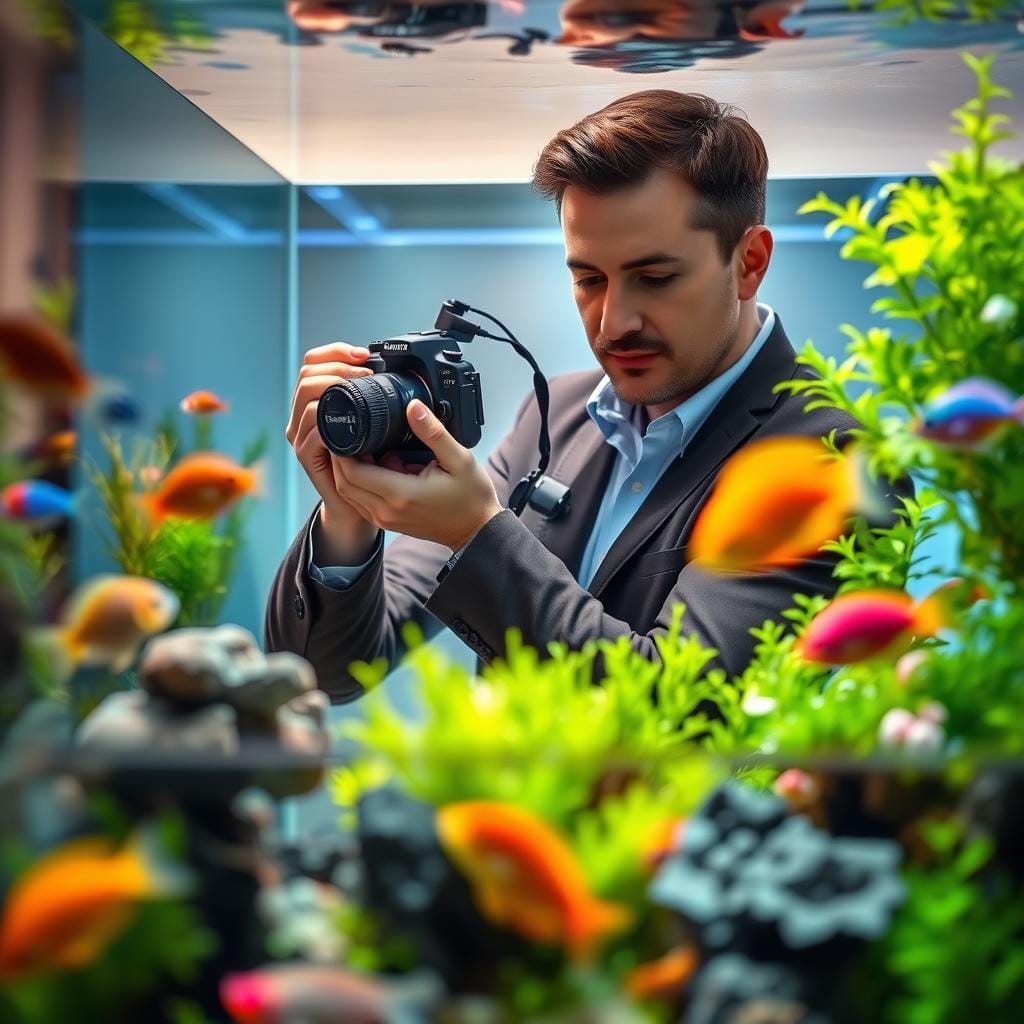
Have you ever wondered why your stunning underwater world looks dull and blurry in your pictures? It’s a common frustration, but the problem isn’t your eye for beauty.
You’ve poured your heart into creating a beautiful aquarium. Your fish glide through carefully arranged plants in a tank that is your personal masterpiece. Capturing that magic with a camera feels like the next natural step.
Taking great pictures through glass in low light is a unique challenge. It requires a specific approach, not just luck. This can be discouraging, even for experienced hobbyists.
This guide is here to change that. We will walk you through simple, effective techniques. You will learn everything from camera settings to creative angles.
Our goal is to give you the knowledge to capture images that truly reflect the vibrant life in your tank. You can finally do justice to your aquatic friends and proudly share your results.
Essential Techniques for Stunning Aquarium Photography
Capturing the vibrant life in your aquatic habitat requires more than just pointing and shooting. The unique challenges of low light and fast movement demand specific camera techniques. Mastering these will transform your results.
Setting the Right Shutter Speed and ISO
Auto mode often creates blurry images in your tank’s dim lighting. Your camera slows the shutter speed too much, causing motion blur. Take control by switching to Shutter Priority or Manual mode.
Start with ISO 3200 on modern cameras. This setting makes your camera sensitive to light without creating grain. Combine this with a shutter speed of 1/125s to freeze your fish’s movement.
These settings balance sharpness with proper exposure. As you practice, you can experiment with slower speeds like 1/60s for calmer subjects.
Mastering Manual Focus and Camera Modes
Glass surfaces confuse autofocus systems. They often target reflections instead of your aquatic friends. Manual focus becomes your most reliable tool for crisp images.
Many cameras offer focus peaking, which highlights sharp areas on your screen. This feature makes manual focusing much easier and more accurate.
Don’t worry if your first attempts aren’t perfect. Capturing that perfect moment takes patience, but the stunning results are worth the practice.
Choosing the Perfect Gear and Accessories
The right equipment can transform your underwater photography from frustrating to fantastic. Your gear choices directly impact your ability to capture clear, vibrant images through glass.
Investing in quality tools makes the technical challenges much easier to overcome. You’ll find yourself capturing moments you previously missed.
Selecting the Ideal Cameras and Lenses
Start with a DSLR or mirrorless camera that offers full manual control. Look for models with excellent high ISO performance for low-light conditions.
Shooting in RAW format gives you greater editing flexibility later. This preserves details that JPEG compression might lose.
Choose lenses with wide apertures like f/2.8. They allow more light for faster shutter speeds. A versatile zoom lens helps frame shots from one side of your tank.
Consider a macro lens for detailed close-ups of smaller species. It reveals intricate patterns and textures you might otherwise miss.
Utilizing Tripods, Monopods, and Stabilization Tools
Stability is crucial for sharp images. While tripods provide excellent support, many facilities restrict their use due to space constraints.
A monopod offers a practical compromise. It provides stabilization from one side without taking up much room. This helps eliminate camera shake for clearer results.
Don’t forget essential accessories. Extra batteries and memory cards ensure you never miss a perfect shot. Keep lens cleaning supplies handy for smudge-free glass shooting.
Creative Angles, Lighting, and Composition Tips
Your most memorable underwater images will come from understanding how to work with light and angles creatively. This is where technical skill meets artistic vision.
Experimenting with Unique Perspectives
Don’t settle for straight-on shots. Try crouching low to shoot upward for dramatic effect. This angle makes your subjects appear more powerful.
Move to different positions around your tank. Side angles create depth and interest in your compositions. You’ll discover new views you never noticed before.
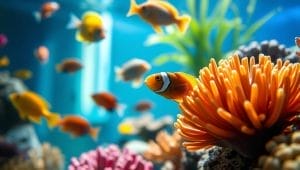
Leveraging Natural and Aquarium Lighting
Light direction transforms your pictures. Side lighting adds drama and makes fish look three-dimensional. Backlighting creates stunning silhouettes against bright backgrounds.
Always turn off your flash before starting. Press your lens hood against the glass to eliminate reflections. This simple step ensures crystal clear results.
Enhancing Images with Thoughtful Editing
After capturing your shots, subtle editing brings out their full potential. Adjust white balance to remove strange color tints. Boost exposure in dark areas while preserving highlight details.
Add clarity to make details pop and increase vibrance for lush colors. Remember to be patient and considerate of others enjoying the views around you.
Expert Tips for Sharing Aquarium Photos
Finding the right community to showcase your photography can transform your hobby into a shared experience with meaningful connections. The feedback and encouragement you receive will boost your confidence and inspire your future work.
Identifying the Best Platforms for Your Work
Dedicated online forums are perfect for sharing your pictures. The people there understand the effort behind maintaining a beautiful setup. They appreciate the technical details and challenges you face.
When you post in a new thread, provide context about your equipment and setup. This helps others learn from your experience. Social media groups reach broader audiences, but forums offer more detailed feedback.
Engaging Your Audience with Captivating Captions
Tell the story behind each image in your captions. Describe the behavior you captured or the challenge you overcame. This creates emotional connections with your audience.
Always check the community rules before posting. Some platforms have specific guidelines about image sizes and posting frequency. Participate in existing threads by offering genuine compliments.
Building relationships through thoughtful comments encourages others to engage with your work. This creates a supportive environment where everyone grows together.
Wrapping Up Your Underwater Photography Journey
With each session at your tank, you’re building not just a portfolio but a deeper connection with your aquatic environment. The skills you’ve developed will continue to grow with practice.
Remember that patience is your greatest asset. Don’t rush through trying to capture every fish in one go. Instead, focus on quality moments and really observe each subject from different angles. Some days will be more productive than others, and that’s perfectly normal.
As you continue, you’ll develop an intuitive sense for the right moment to click the shutter. You’ll know which side offers the clearest views and how to position yourself comfortably. Keep your arms and elbows relaxed for steadier shots. Your growing collection becomes a beautiful record of the life thriving in your setup.
Most importantly, enjoy combining your love for aquatic environments with photography. This rewarding practice brings joy and connects you with others who appreciate underwater beauty. When you’re ready to enhance your images, follow this guide to process underwater photos for stunning final results.
FAQ
What is the most common mistake beginners make when taking tank pictures?
Many people rush the process. The biggest mistake is not turning off the aquarium’s internal pumps first. This creates water movement that blurs your fish. Take a moment to ensure the water is still for the sharpest views of your aquatic life.
I only have a smartphone. Can I still get good results?
A>Absolutely! Modern smartphones have excellent cameras. Use a tripod or rest your elbows on a steady surface to avoid shake. Clean the outside glass thoroughly and get close to minimize reflections. You’ll be surprised by the quality you can achieve.
How can I make my fish look more vibrant in photos?
Lighting is key. If your tank lighting seems dim, try taking pictures during the day with natural light from a window. You can also use basic photo editing apps to slightly increase saturation and contrast, making your fish’s colors truly pop.
Where is the best place to post my aquarium pictures online?
Dedicated forums and social media groups for aquarium enthusiasts are fantastic. Platforms like Instagram and Reddit have active communities where people love to see tank threads. Just be sure to read the specific group rules before you post to ensure your content is a good fit.
My fish always hide when I bring out my camera. What can I do?
Patience is your best tool. Spend time near your tank without the camera so your fish become comfortable with your presence. Try using a camera with a quiet shutter or a zoom lens so you can capture them from a distance without causing stress.
Aquarium community engagementAquarium photography tipsAquatic photography basicsBuilding aquarium photo confidenceFish tank photography techniquesSharing aquatic imagesSocial media aquarium sharing
Hi, I'm Millie a passionate fish enthusiast and blogger. I loves learning about all kinds of aquatic creatures, from tropical fish to stingrays.