
Your Comprehensive Fish Medication Guide
 Millie Douglas
Updated on: July 16, 2025 .
12 min read
Millie Douglas
Updated on: July 16, 2025 .
12 min read
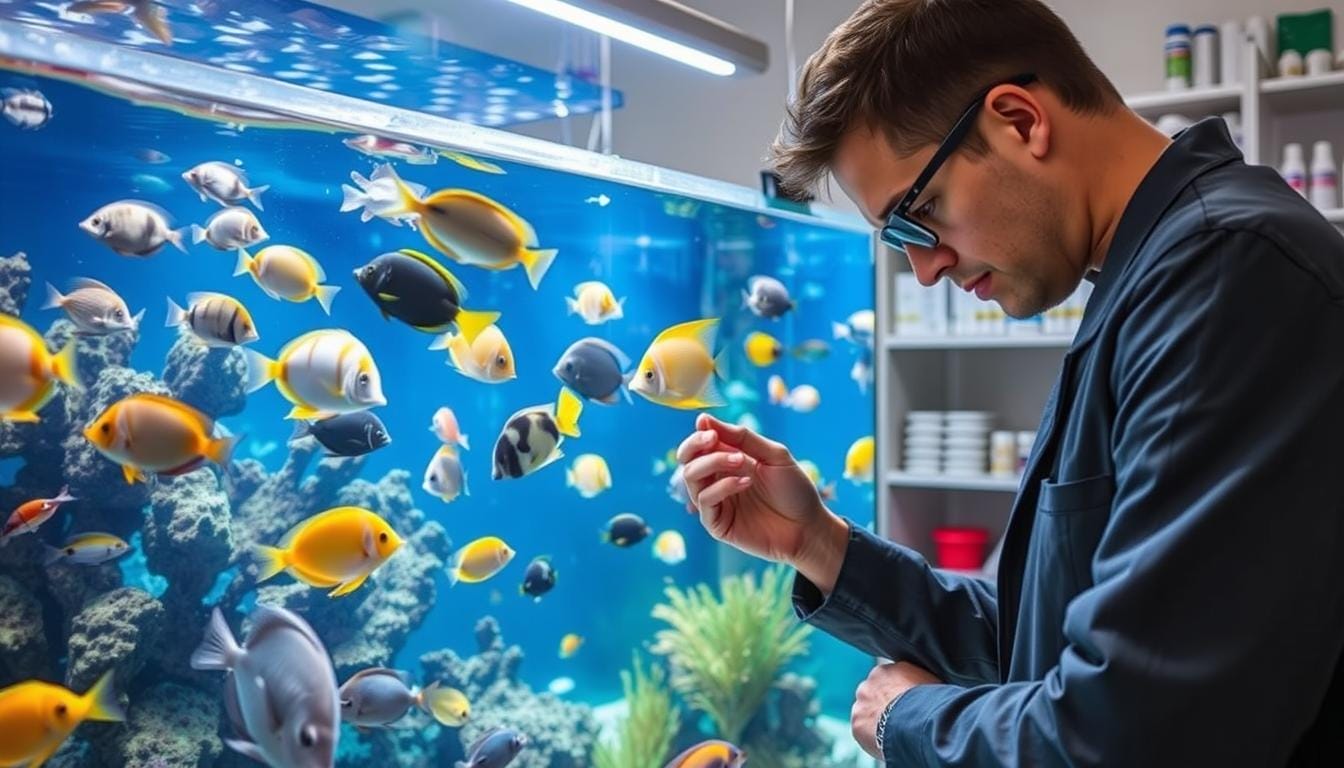
Did you know over 80% of new aquarium additions carry hidden pathogens that don’t show symptoms right away? Even healthy-looking aquatic pets from trusted sources can introduce invisible risks to your tank. Stress from travel, water changes, or new tankmates often weakens their immune systems, letting these dormant threats surface weeks later.
Professional aquarists medicate every new arrival as standard practice. Why? Because prevention is far easier than treating a full-blown outbreak. Your tank’s delicate ecosystem depends on proactive care—spotting issues early saves time, money, and heartache.
This guide helps you create a safety net for your underwater friends. You’ll learn how to:
- Identify subtle signs of stress before illnesses escalate
- Choose treatments that actually work without harming beneficial bacteria
- Build routines that keep your aquatic environment thriving
Whether you’re nurturing your first betta or managing a reef tank, understanding these principles transforms how you protect your aquarium’s wellbeing. Let’s dive into strategies that keep your finned companions vibrant and resilient.
The Essentials of Aquarium Fish Health
Your aquarium’s vitality hinges on recognizing subtle health warnings and managing environmental pressures. Aquatic pets communicate distress through physical and behavioral shifts—clues that become your first line of defense against outbreaks.
Spotting Silent Alarms
Watch for these red flags during daily feedings:
- Unusual hiding or rubbing against decor
- Faded colors or clamped fins
- Rapid gill movements at the surface
Changes in eating habits often appear 3-5 days before visible symptoms. A normally active swimmer hovering near the filter? That’s your cue to test water parameters.
Stress: The Invisible Enemy
New tankmates, fluctuating temperatures, or improper pH levels weaken natural defenses. Chronic stress suppresses immunity similarly in all species—whether furry or finned. Maintain these conditions to support recovery:
- Stable ammonia levels below 0.25 ppm
- Temperature variations under ±2°F daily
- Consistent light/dark cycles
Remember: A stressed aquatic pet isn’t “just adjusting.” Proactive care breaks the infection cycle before it spreads.
Implementing an Effective Fish Medication Guide
What if one simple routine could protect your entire aquatic community? While many owners skip quarantine setups, 85% of disease transmissions occur when introducing new specimens. A structured health plan works equally well for fresh setups and mature environments—here’s why it matters.
Benefits for New and Established Tanks
New aquatic environments lack stable bacteria colonies, making them vulnerable. Established systems face risks from existing inhabitants. A proactive approach:
- Reduces treatment costs by 70% compared to emergency care
- Prevents chain reactions that destabilize water chemistry
- Simplifies identifying sick specimens before issues spread
Many enthusiasts underestimate how quickly pathogens multiply. One untreated case can infect every tankmate within 48 hours. Regular monitoring lets you spot faded colors or erratic swimming early—when remedies work fastest.
Balancing treatments requires understanding your system’s needs. Isolate affected specimens when possible, but use full-tank applications for contagious diseases. Always test ammonia and pH levels before administering solutions, as stressed aquatic life needs optimal conditions to heal.
Investing 10 minutes daily in observation saves hours of crisis management later. Your underwater ecosystem thrives when you combine preventive measures with timely interventions.
Setting Up a Quarantine Tank for New Fish
Creating a safe transition space for aquatic arrivals protects your entire community. A dedicated quarantine system acts like a protective checkpoint, catching hidden issues before they reach your main habitat. This simple practice builds confidence in every addition while keeping established residents secure.
Choosing the Right Equipment and Space
You’ll need a simple setup that mirrors your main aquarium’s conditions. A 10-20 gallon tank works for most species, paired with a basic sponge filter and adjustable heater. Keep these essentials nearby:
- Water testing kit for daily parameter checks
- Separate nets and siphon to prevent cross-contamination
- Adjustable LED light for observing behavior
Place the isolation system in a low-traffic area away from your primary display. Easy access matters—you’ll check on newcomers multiple times daily. Ensure consistent room temperature to avoid sudden fluctuations.
Preventing Disease Outbreaks with Isolation
A bare-bottom tank isn’t just easier to clean—it lets you spot problems instantly. Without substrate or decor, unusual waste or erratic movements stand out immediately. Follow this three-step monitoring process:
- Observe eating patterns during the first 72 hours
- Test ammonia levels every other day
- Check for visual changes under bright light
This approach works like a wellness checkup for pets. By isolating newcomers for 2-4 weeks, you create a buffer against invisible threats. Your main aquarium stays protected while giving each addition time to acclimate stress-free.
Diagnosing Common Fish Diseases
Spotting health issues early starts with knowing what to look for. Aquatic pets show distress through physical changes that demand quick action. Let’s explore how to decode these signals and respond effectively.
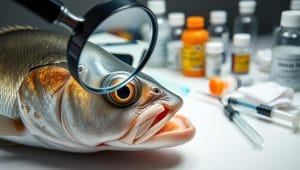
Visible Clues You Can’t Ignore
Watch for these telltale signs during daily checks:
- Cloudy patches or unusual spots on the skin
- Ragged fins that appear torn or discolored
- Labored breathing shown by rapid gill movement
Changes often appear first on the body’s edges. A specimen flashing against surfaces might signal parasites, while clamped fins could indicate bacterial trouble.
Parasites vs Bacterial Challenges
Here’s how to tell them apart:
- Check for visible organisms – white dots suggest parasites
- Note slime coat changes – excess mucus often means bacterial issues
- Observe behavior – scratching points to external invaders
Always test water first. Poor conditions triple parasite risks. Collect skin or gill samples carefully using a clean swab, then examine under magnification if possible.
Document your findings daily. Tracking symptom progression helps choose targeted treatments while protecting your aquatic community’s health.
Step-by-Step Instructions for Treating Sick Fish
Restoring your aquatic pet’s health becomes straightforward when you follow precise protocols. Let’s walk through a proven method that balances effectiveness with safety, ensuring your tank remains stable during recovery.
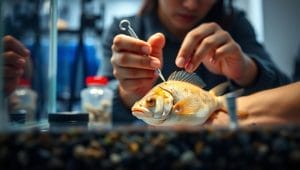
Proper Medication Dosage and Timing
Measure treatments carefully using a syringe or measuring spoon. For a 10-gallon tank:
- Add 1 packet of Maracyn (antibacterial)
- Mix 1 packet of ParaCleanse (parasite control)
- Include 1 teaspoon of Ich-X for fungal issues
Always check labels for exact concentrations—formulas vary by brand. Treatments work best when aquatic life soaks in the solution for 7 days. Resist feeding during this period; digestion uses energy needed for healing.
Managing Water Changes During Treatment
After the initial week, replace 30% of the water using a gravel vacuum. This removes residual medication while maintaining beneficial bacteria. Resume feeding with small, nutrient-rich portions to avoid overwhelming recovering specimens.
Watch for these positive signs:
- Return to normal swimming patterns
- Improved appetite during post-treatment meals
- Brightening of faded colors
Stay consistent with daily observations. Adjustments become easier when you track progress methodically—your attentiveness makes all the difference.
Best Practices for Medication Administration
Administering treatments effectively starts with matching the method to the problem. External infections like fungal growths or parasites often respond best to bath therapies, while internal issues require targeted approaches through food or injections. Your choice impacts recovery speed and minimizes stress on aquatic life.
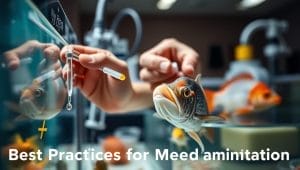
Correct Dosage and Application Methods
Accurate measurements prevent overdosing. For bath treatments:
- Calculate total water volume (length × width × height × 0.00433)
- Mix solutions in a separate container before adding to tanks
- Use approved aquaculture medications with clear dosage guidelines
Medicated foods work best when prepared fresh. Try these steps:
- Combine treatment powder with gelatin-based binders
- Apply mixture to high-quality pellets or flakes
- Feed small portions twice daily to ensure consumption
Avoid mixing products unless explicitly directed. Copper-based treatments and antibiotics often clash, creating toxic residues. Always test water parameters before starting any regimen—stability accelerates healing.
Topical applications suit isolated injuries. Use cotton swabs for precise delivery, and temporarily move specimens to shallow containers during treatment. This focused approach protects tankmates while addressing individual needs.
Optimizing Water Quality and Environmental Conditions
Your aquarium’s health starts with the water your pets live in. Even proven treatments work better when paired with balanced conditions—like giving medicine on an empty stomach versus after a nourishing meal. Simple adjustments create the ideal healing environment for aquatic life.
Testing Before Treating
Always check three parameters first:
- pH levels – Sudden swings stress aquatic systems
- Ammonia spikes – Toxic even in small amounts
- Nitrite buildup – Disrupts oxygen absorption
Testing kits give instant clarity. If levels look risky, try a 25% water change before adding treatments. Many enthusiasts see improved vitality within hours—nature’s own remedy.
Prepare your setup properly:
- Remove chemical filters (like activated carbon)
- Switch off UV sterilizers
- Boost surface agitation with air stones
These steps prevent treatments from losing potency. Extra oxygen flow counters thickened water caused by certain solutions, helping inhabitants breathe easier during recovery.
Remember: Clean water isn’t optional—it’s the foundation of effective care. By mastering these basics, you create conditions where both preventative measures and active treatments succeed.
Preventative Measures to Keep Your Aquarium Healthy
What if most aquarium emergencies could be avoided through simple habits? Building strong routines transforms reactive panic into confident care. By focusing on consistent practices, you’ll protect your aquatic friends while maintaining a balanced ecosystem.
Routine Maintenance and Quarantine Protocols
Weekly water testing catches issues before they escalate. Check these parameters every 7 days:
- Ammonia levels (keep below 0.25 ppm)
- Nitrate concentrations (under 20 ppm)
- pH stability (±0.2 variation max)
Partial water changes remove hidden threats. Replace 15-20% weekly using temperature-matched, treated water. This refreshes minerals while preventing toxin buildup.
New arrivals need isolation time—no exceptions. A 3-week quarantine period lets you:
- Observe eating patterns
- Monitor waste production
- Check for abnormal behaviors
Experts at aquarium disease prevention strategies confirm this practice reduces outbreaks by 90%. Pair isolation with daily visual checks for clamped fins or erratic swimming.
Consistency is your greatest ally. Set phone reminders for maintenance tasks, and keep logs of water test results. Small, regular efforts create lasting health for your underwater world.
Understanding Dosage and Medication Safety
Getting treatments right requires precision—like measuring ingredients for a delicate recipe. Even small dosing errors can turn remedies into risks. Your aquatic companions depend on your careful calculations to heal without added stress.
Mixing Medications: Do’s and Don’ts
Combining treatments often creates toxic cocktails. Most solutions interact unpredictably, especially from different brands. Malachite green and formaldehyde are rare exceptions—some products pair them safely for parasite control. Check labels thoroughly before considering mixes.
Follow these rules for safe use:
- Use one treatment at a time unless formulas specifically allow combinations
- Track expiration dates—old products lose potency or become harmful
- Observe specimens hourly after administering any solution
Overdose signs appear quickly. Gasping at the surface or sudden lethargy means immediate action. Perform a 50% water change and add activated carbon to neutralize the treatment.
Store opened medications in cool, dark places. Transfer powders to airtight containers if original packaging tears. Always wash hands after handling solutions—your safety matters too.
Integrating Expert Recommendations in Fish Care
Mastering aquatic health means blending professional advice with daily habits. When research meets routine, your tank becomes a thriving ecosystem where prevention outweighs crisis management.
Following Manufacturer Guidelines
Labels are lifelines—not suggestions. Measure treatments using the provided scoop or dropper, matching doses precisely to your water volume. Overdosing stresses inhabitants; underdosing lets problems linger.
Also Read: Common Aquarium Problems and How to Fix Them
Note expiration dates on bottles. Chemical breakdowns create ineffective or harmful solutions. Store opened treatments in dark cabinets to preserve potency.
Daily Management Made Simple
Start each morning with a 2-minute observation round. Watch for regular eating patterns and smooth swimming motions. Keep a logbook to track subtle changes over time.
Test water every Thursday and Sunday. Consistent monitoring spots trends before they become emergencies. Pair this with weekly gravel vacuuming to remove hidden waste buildup.
Your aquatic friends thrive when care becomes second nature. Small, informed actions build lasting wellness—one ripple at a time.
FAQ
How do I know if my aquarium needs medication?
Watch for unusual behavior like rubbing against surfaces, rapid gill movement, or loss of appetite. Visible signs like white spots (ich), frayed fins, or cloudy eyes often indicate parasites or bacterial infections. Test water parameters first—poor water quality often mimics disease symptoms.
Can I treat my main tank directly without a quarantine system?
While possible, using a separate tank prevents exposing healthy tankmates to medications. Treatments like copper-based solutions or antibiotics can harm beneficial bacteria, plants, or invertebrates. Always isolate new or sick pets in a simple 10-gallon setup with a basic filter.
What’s the safest way to mix medications?
Never combine treatments unless product labels explicitly approve it. Some formulas neutralize each other or create toxic reactions. For example, avoid pairing erythromycin with nitrofurazone. Complete one full course, perform a 25% water change, and wait 48 hours before switching treatments if needed.
How often should I test water during treatment?
Check ammonia, nitrite, and pH levels daily while using medications. Products like Seachem Prime can detoxify ammonia temporarily, but frequent testing helps prevent spikes caused by disrupted nitrogen cycles. Maintain 0 ppm ammonia and nitrite for optimal recovery conditions.
Why do my fish seem worse after starting treatment?
A> Some medications lower oxygen levels or cause temporary stress. Increase surface agitation with an air stone, ensure proper dosage (overdosing is common), and confirm you’re treating the right illness. Parasites like velvet require different approaches than fungal issues—misdiagnosis delays healing.
Can I use human antibiotics for bacterial infections?
Never—this risks antibiotic resistance and incorrect dosing. Aquarium-specific products like API Fin & Body Cure or Mardel Maracyn are formulated for aquatic species. Human drugs often contain fillers harmful to biofilters and lack proper concentration guidelines for underwater use.
How long should I quarantine new arrivals?
Isolate new pets for 2–4 weeks in a bare tank with daily observations. This covers incubation periods for most parasites and infections. Feed sparingly, and consider preventive treatments like PraziPro for worms if the source is uncertain. Always match temperature and pH to your main tank.
Hi, I'm Millie a passionate fish enthusiast and blogger. I loves learning about all kinds of aquatic creatures, from tropical fish to stingrays.