
The Nitrogen Cycle Explained: How it Works in Your Tank
 Millie Douglas
Updated on: December 1, 2025 .
11 min read
Millie Douglas
Updated on: December 1, 2025 .
11 min read

Have you ever wondered why some aquariums stay crystal clear and healthy for years, while others struggle with murky water and unhappy fish? The secret isn’t just about the filter you buy or how often you clean. It’s about understanding a powerful, natural process happening right in your tank.
This vital cycle is nature’s brilliant cleanup crew. It transforms waste from your fish into safer substances. Tiny, beneficial bacteria are the heroes of this story, working behind the scenes to protect your aquatic pets.
When you learn how this system works, you gain the power to prevent common problems. You can say goodbye to algae blooms and sick fish. This knowledge turns a stressful chore into an enjoyable, successful hobby.
We will guide you through each step in simple terms. You will see exactly what’s happening in your water and why it matters so much for your living ecosystem. Get ready to feel confident and create the beautiful, balanced tank you’ve always wanted.
Understanding the Foundations of the Nitrogen Cycle
Your aquarium’s long-term success depends on a crucial natural filtration process that transforms waste into safety. This system works quietly in the background, protecting your fish day and night.
What Is the Nitrogen Cycle?
This essential process is nature’s way of recycling a vital element through different forms. It moves from the atmosphere as a gas into your tank’s ecosystem. The journey continues through various chemical forms that affect water quality.
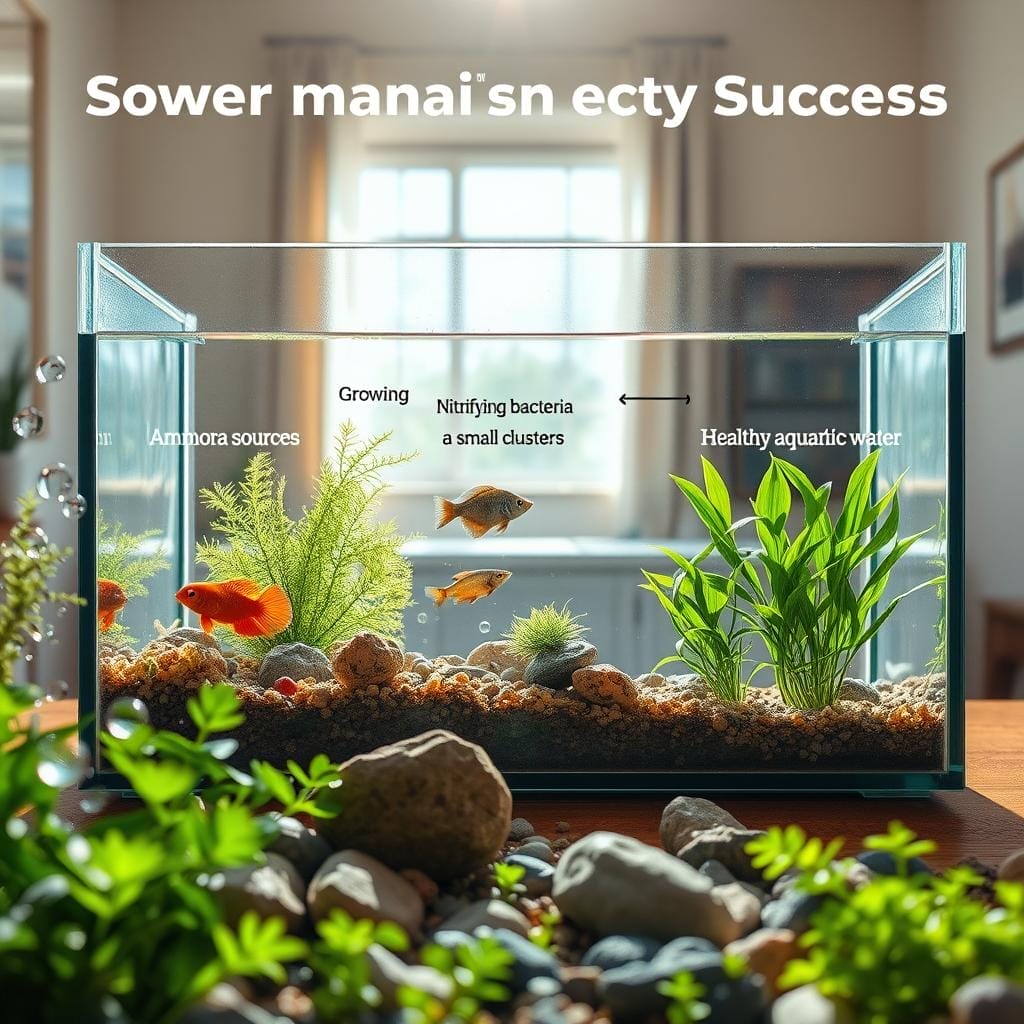
Think of it as your aquarium’s built-in cleaning crew. Different types of helpful bacteria work together in stages. They convert dangerous substances into safer ones automatically.
Key Components and Terminology
You’ll encounter three main terms in this natural system. Ammonia is the initial toxic waste from fish and decaying food. Nitrite is the intermediate product that’s still harmful. Nitrate is the final, much safer substance.
These components work like a relay race. Each bacterial team passes the baton to the next. This gradual transformation keeps your aquatic pets healthy and happy.
When you understand these foundations, you’ll see why patience during tank setup matters so much. You’re growing invisible bacterial communities that will protect your fish for years.
The Role of Nitrogen in Aquarium Health
Imagine your aquarium as a miniature world where every living creature depends on a delicate balance of essential elements. Getting this balance right transforms your tank from a simple container into a thriving ecosystem.
Impact on Water Quality and Plant Life
This essential element plays a dual role in your aquatic environment. It’s both a building block for life and a potential threat when unbalanced.
Your aquarium plants rely on this element to create chlorophyll, which gives them their vibrant green color. They use it to build essential proteins and produce oxygen for your fish.

All living organisms in your tank need this element as a fundamental building block. From the smallest bacteria to your favorite fish, every creature depends on it for growth and health.
When levels are balanced perfectly, you’ll see your plants flourishing with strong growth. Your water stays crystal clear, and your fish display active, healthy behaviors.
Your aquatic plants actually help manage this balance naturally. They absorb nitrates as food, acting as a living filter that reduces maintenance needs.
Understanding this delicate relationship empowers you to create a harmonious environment. You’ll make smarter decisions about feeding and maintenance that keep your aquarium beautiful and healthy.
In-Depth Look: nitrogen cycle explained in Your Tank
Many aquarium owners focus on visible maintenance tasks, but the real magic happens with the microscopic workforce in your filter. This biological system works continuously to protect your aquatic pets.
Why a Proper Cycle Is Vital
A well-established biological filtration system is absolutely essential for your aquarium’s health. It transforms dangerous substances into safer compounds automatically.
When your tank has established microbial colonies, beneficial bacteria live throughout your filter media and substrate. They work constantly to neutralize the ammonia your fish produce.

Without these microscopic helpers, toxic levels would rise quickly. This explains why many beginners lose their first fish when they don’t understand this vital process.
The establishment period requires patience—typically 4-6 weeks for new setups. This investment protects your fish from poisoning and creates a stable, low-maintenance environment.
You’ll know your system works when test kits show zero ammonia, zero nitrite, and some nitrate. This indicates successful waste processing through all stages.
Think of your microbial colonies as invisible employees working around the clock. Maintaining proper biological balance means keeping these workers healthy and active every day.
Understanding why this system is vital helps you appreciate never cleaning all filter media at once. Such actions can disrupt your tank’s natural purification process and endanger your fish.
Nitrogen Fixation: Converting Inert Gas into Usable Forms
The journey of nitrogen in your tank begins with an amazing transformation that turns invisible gas into life-sustaining nutrients. This initial step, called nitrogen fixation, makes atmospheric nitrogen available to your aquatic ecosystem.
Think of it as nature’s way of unlocking the abundant nitrogen gas that surrounds us. While fish food introduces most nitrogen into your aquarium, understanding fixation helps you appreciate the bigger picture.
Biological and Atmospheric Pathways
Specialized bacteria perform the remarkable work of nitrogen fixation. These microscopic helpers have unique enzymes that break apart strong nitrogen gas molecules.

They combine the nitrogen with hydrogen to create ammonia, which plants can use. This biological process happens through different pathways:
- Bacterial fixation: Species like Rhizobium and Azotobacter work in root nodules of plants
- Atmospheric fixation: Lightning strikes can convert atmospheric nitrogen during storms
- Symbiotic relationships: Bacteria partner with plants to provide usable nitrogen forms
In planted tanks, you might notice small nodules on plant roots. These are actually tiny bacterial factories where fixation occurs. The bacteria receive shelter while providing ammonia that plants absorb through their roots.
While more significant in outdoor ponds, this process connects your aquarium to global natural systems. It shows how your tank participates in Earth’s larger nutrient cycles.
The main takeaway for your aquarium care is simple: nitrogen enters primarily through fish food. Once it’s ammonia, your beneficial bacteria take over to continue the purification process.
Exploring Nitrification and Denitrification Processes
Your aquarium’s health depends on two remarkable microbial processes that work like a well-trained cleanup crew. These essential transformations keep your water safe and balanced.
The Role of Bacteria in Converting Ammonia
Nitrification is your tank’s primary defense system. It happens in two stages, each handled by different beneficial bacteria. First, Nitrosomonas bacteria convert toxic ammonia into nitrite.
Then Nitrobacter takes over, transforming nitrite into much safer nitrate. Both stages require plenty of oxygen, which is why good water circulation matters so much.

Returning Nitrogen to the Atmosphere
Denitrification completes the circle by converting nitrate back into nitrogen gas. This amazing process happens in low-oxygen areas like deep substrate beds.
Specialized bacteria like Pseudomonas break down nitrate compounds and release harmless gas into the atmosphere. This natural reduction means fewer water changes for you.
Understanding these microbial processes helps you create the perfect environment for your invisible helpers to thrive.
Assimilation and Ammonification: From Organic Matter to Nutrients
Your live plants do more than just decorate your aquarium—they actively participate in a vital nutrient exchange process. This beautiful partnership between flora and microscopic helpers creates a self-sustaining system.
How Plants and Microbes Utilize Nitrogen
Assimilation occurs when your aquatic plants absorb essential compounds through their roots and leaves. They convert ammonium and nitrate into proteins and amino acids needed for vibrant growth. This natural filtration removes excess nutrients from your water.

Ammonification completes the circle through decomposition. When organic matter like fish waste or dead leaves breaks down, beneficial bacteria convert it back to ammonium. This microbial process releases energy while recycling nutrients.
Together, these processes create balance. Your plants consume nutrients for growth while bacteria recycle waste. This reduces maintenance and creates a healthier environment for all aquarium organisms.
Monitoring and Managing Nitrogen Levels in Your Tank
The key to long-term aquarium success lies in regular monitoring of invisible water parameters. Testing gives you a window into your tank’s health that your eyes alone can’t provide.
Practical Tips and Maintenance Strategies
Invest in a reliable test kit that measures ammonia, nitrite, and nitrate. Test weekly during your tank’s establishment period, then every two weeks once stable.

Regular water changes are your best defense against nitrate buildup. Aim for 20-30% weekly to remove excess compounds. This simple routine keeps your water fresh and balanced.
Be mindful of feeding habits and stocking levels. Overfeeding creates extra waste, while overcrowding overwhelms your beneficial bacteria. Follow the one-inch-per-gallon guideline when setting up your freshwater aquarium.
Never replace all filter media at once. Your bacteria colonies live there, working constantly to process ammonia. Disturbing them can crash your entire system.
Live plants provide natural filtration by absorbing nitrate directly from the water. They reduce maintenance while creating a beautiful, balanced environment.
If ammonia or nitrite readings appear in an established tank, act quickly. Perform a water change and investigate the cause. Your consistent monitoring will catch issues before they harm your fish.
Environmental Impacts and the Risk of Disruption
What begins as a nutrient boost for your aquatic plants can quickly spiral into an environmental crisis within your aquarium. When natural processes become unbalanced, the consequences ripple through your entire ecosystem.
Eutrophication and Algal Blooms Explained
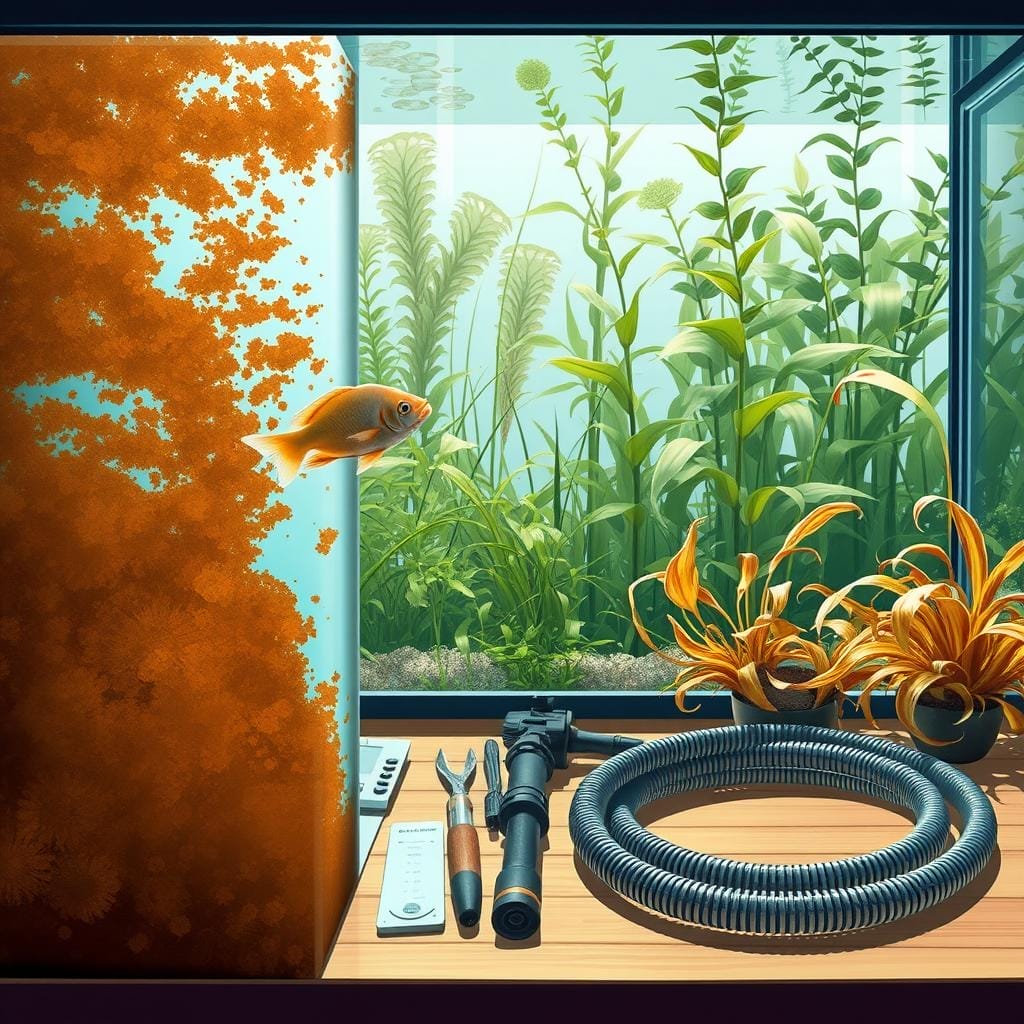
Eutrophication occurs when excess nutrients overwhelm your tank’s natural balance. This environmental problem transforms clear water into a murky green soup as algae species multiply rapidly.

In your aquarium, overfeeding or poor maintenance can trigger this cascade. Algal blooms block sunlight, preventing your plants from performing essential photosynthesis. The real danger emerges when these blooms die off.
Decomposing bacteria then consume oxygen while breaking down dead algae. This creates low-oxygen conditions that stress your fish and other living organisms. The same processes occur in natural water bodies.
Also Read: Common Aquarium Problems and How to Fix Them
Nitrogen compounds from agricultural soils wash into rivers during rainstorms. Lightning strikes and atmospheric processes also contribute to nutrient overload in larger ecosystems.
Your healthy aquarium plants normally consume these nutrients. But when levels spike, nuisance algae win the competition. Maintaining balanced nutrient forms prevents this destructive chain reaction.
The bacteria in your substrate and filter media process these compounds before they reach dangerous levels. Regular water changes and proper feeding keep your microbial helpers working effectively.
Final Reflections on Building a Thriving Tank Ecosystem
Your journey through understanding aquarium chemistry has brought you to the most rewarding part—seeing everything work together. You now hold the knowledge to create a living ecosystem where fish, plants, and beneficial bacteria exist in beautiful harmony.
This natural balance transforms routine care into a partnership with nature. Your plants perform essential photosynthesis while consuming excess nutrients. The microscopic processes you’ve learned about work continuously to protect your aquatic animals.
Remember that proper tank establishment creates this stability. With patience and consistent care, you’ll maintain water conditions where all living organisms can thrive. Your aquarium will become a self-sustaining world that brings joy for years to come.
FAQ
What is the main purpose of the nitrogen cycle in my aquarium?
The main purpose is to protect your fish and plants from toxic waste. It uses beneficial bacteria in your filter and substrate to convert harmful ammonia from fish waste and decomposing organic matter into safer nitrate, which plants can use or you remove through water changes.
How long does it take to establish this beneficial process in a new tank?
This process, often called “cycling,” typically takes 4 to 8 weeks. The timeline depends on factors like temperature and the source of the initial bacteria. You’ll know it’s complete when tests show zero ammonia and zero nitrite, with some nitrate present.
What are the signs that my tank’s cycle has crashed or is struggling?
Watch for cloudy water, fish gasping at the surface, or lethargic behavior. A sudden spike in ammonia or nitrite levels on your test kit is the clearest warning sign. This often happens after cleaning your filter too thoroughly or using medications that harm the essential bacteria.
Can I add fish while the cycle is establishing?
It’s best to wait until the process is fully complete to avoid exposing your pets to dangerous toxins. If you need to add fish sooner, research a “fish-in cycle,” which requires very close monitoring and frequent, small water changes to keep them safe.
How do live plants affect the nitrogen cycle?
Live plants are fantastic helpers! They absorb ammonium and nitrate directly from the water, using it as food for growth. This naturally reduces the nutrient load that can lead to problematic algal blooms, making your ecosystem more stable and beautiful.
What is the connection between this process and algal blooms?
When the cycle is disrupted or overloaded, excess nutrients like nitrate and phosphate can accumulate. This nutrient pollution, a form of eutrophication, fuels the rapid growth of algae, turning your water green and competing with your plants for resources.
Hi, I'm Millie a passionate fish enthusiast and blogger. I loves learning about all kinds of aquatic creatures, from tropical fish to stingrays.