
Red Tailed Black Shark Facts and Care Tips
 Millie Douglas
Updated on: September 3, 2024 .
7 min read
Millie Douglas
Updated on: September 3, 2024 .
7 min read
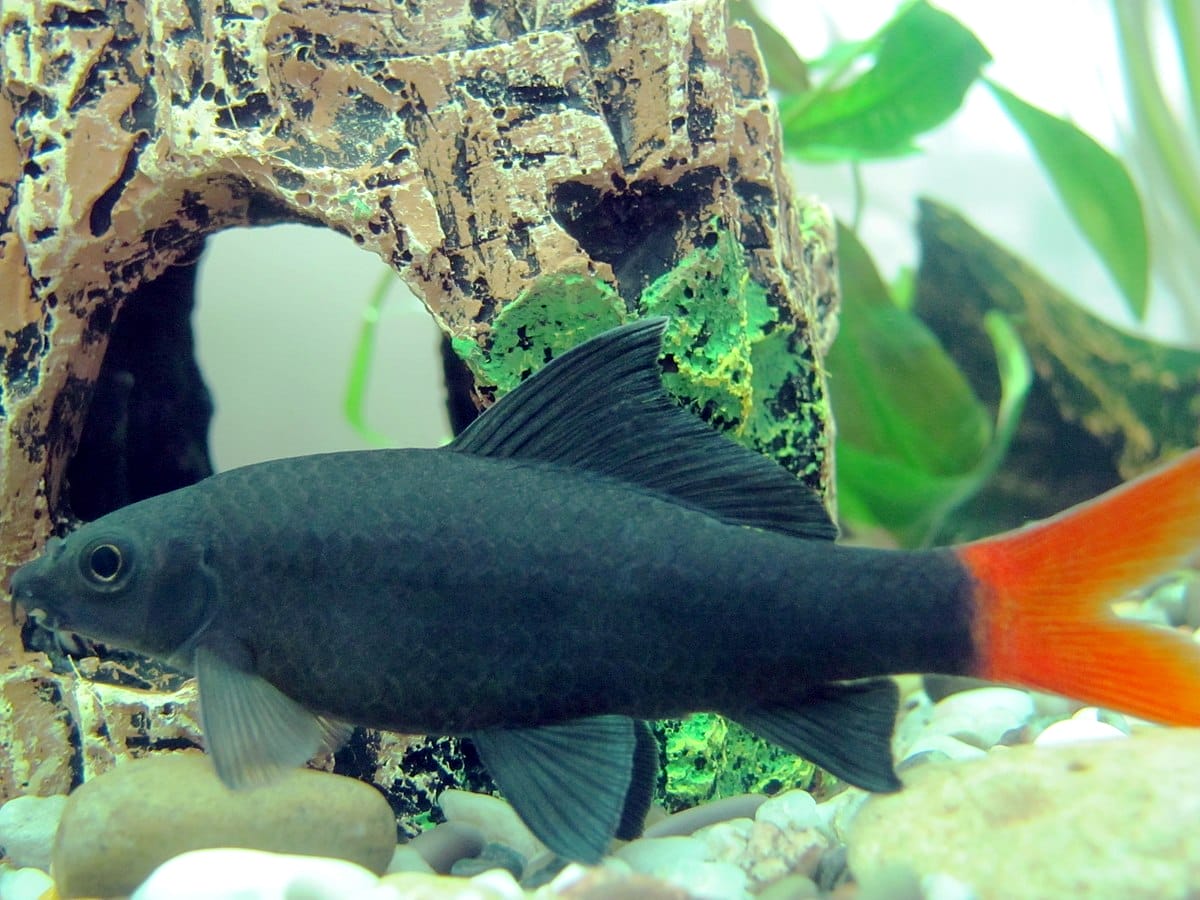
The red-tailed shark is a favorite for many fish lovers. This colorful tropical fish stands out with its black body and bright red tail. This guide will help you learn all about them, from where they come from to how to set up a great aquarium for them. We will also discuss what they eat, their health, and answer some common questions.

Read More : https://realacas.com/the-most-aggressive-freshwater-fish/
Understanding the Red Tailed Black Shark
The red-tailed shark, or Labeo bicolor, is a freshwater fish that looks very nice. Its most eye-catching feature is its bright red tail. This tail stands out against its smooth black body.
People often call it a “shark” because of its shape. It has a torpedo-like body and a look similar to a shark. However, the red-tailed shark is not a true shark. It is part of the carp family and is related to minnows and barbs.
Origin and Habitat
Originating from the clean, fast rivers and streams in Thailand, these freshwater tropical fish need special environments to thrive. They like places with lots of plants, rocky spots for shelter, and sandy bottoms.
Sadly, even though they are popular in the aquarium trade, red-tailed sharks are now classified as critically endangered in the wild. This mainly happens because of loss of their homes and pollution. However, you can still find them easily in the aquarium hobby. They are bred in fish farms all around the world.
This means that the red-tailed sharks you put in your home aquarium are healthy and sourced in a way that helps protect this lovely species.
Physical Characteristics and Behavior
Red-tailed sharks have a unique body shape that looks like a torpedo. They also have a noticeable dorsal fin. When they are young, their colors are bright and lively. They have a soft black body that stands out next to their bright red tail.
As they grow up, their black color may change to a dark gray, but their red tail usually stays bright. In an aquarium, they can grow to about 6 inches long, making them hard to miss.
Even though red-tailed sharks are calm by nature, they can become territorial as they get older. They might be aggressive towards other red-tailed sharks or fish that look similar or have the same colors.

Setting Up the Perfect Aquarium
Creating a good space for your red tailed shark is very important for their health. These active fish need enough room to swim, so a larger gallon tank is always best. You should also include many hiding places to help them feel safe.
Adding items like caves, rocks, driftwood, and thick plants is important. These things create spots for hiding and copy their natural home. It’s all about having enough open areas for swimming and private spots for rest.
Tank Size and Water Conditions
Red tail sharks aren’t small fish, and while they start as juveniles, their adult size necessitates a spacious tank. Aim for a minimum of a 40-gallon tank for a single Red Tailed Black Shark, increasing the size by 10 gallons for each additional shark. Adequate tank size is crucial for their well-being and to prevent territorial issues.
These fish prefer well-oxygenated water with a good flow rate. Invest in a powerful filter to keep the water pristine and promote oxygenation.
| Parameter | Ideal Range |
| Water Temperature | 72-78°F (22-26°C) |
| pH Level | 6.5-7.5 |
| Water Hardness | 5-12 dGH |
Decor and Plant Recommendations
Red tail sharks will like an aquarium that looks like their home. Adding driftwood is a great idea. It gives them hiding places and makes the tank feel more natural.
Live plants are also good for the aquarium. They help keep the water clean and provide more hiding places. Here are some plants you can use:
- Java Fern: This strong plant grows well in low light. You don’t need to plant it in the substrate.
- Anubias: These are easy to care for and can grow on rocks or driftwood.
- Java Moss: This plant gives good cover and is easy to spread.
Make sure to pick strong plants. Red tail sharks might nibble on fragile ones. Good hiding places are important for keeping stress low and stopping fighting.

Diet and Nutrition
Red tail sharks are omnivores, but they prefer to eat more meat. A diverse diet is important for keeping your red tail shark healthy and strong.
They like high-quality flake food as their main meal. However, you should also give them different meaty treats. Try to mimic their natural feeding habits by providing both plant foods and protein-rich foods.
Feeding Schedule and Diet Types
Feeding your red tail shark once or twice a day is usually enough. The amount you give them depends on their size and how active they are. Be careful not to overfeed, as this can cause obesity and problems with water quality.
Their main diet should be high-quality sinking pellets or flakes made for tropical fish. You can also include live or frozen foods like bloodworms, brine shrimp, and daphnia a few times a week.
Also Read: Discover the World of Goldfish
Sometimes, you can add blanched veggies like zucchini or spinach to their meals. Keep an eye on how your red tail shark eats. Adjust the portion sizes to avoid overfeeding and keep the water quality good.
Foods to Avoid
While red tail sharks eat many types of food, there are some you should not give them. For example, do not feed them feeder fish like goldfish or rosy red minnows. These fish can have parasites or diseases that can harm your red tail shark.
Also, do not keep red tail sharks with small fish like neon tetras. The sharks may see them as food. A good rule to remember is that if a fish can fit in their mouth, they might eat it. It’s important to pick tank mates that won’t be treated as snacks.
Finally, avoid putting them with fish that are known to nip fins, such as some barbs. This can make your red tail shark stressed and can cause injuries.

Health and Wellness
Like all aquarium fish, red tail sharks can face health problems. Knowing about common issues and focusing on prevention can help your fish live a long, healthy life.
If you understand their needs, you can create a safe environment. This will reduce the chance of diseases and help your red tail black shark thrive in your aquarium.
Common Health Issues
One common problem is Ich (Ichthythyophthirius multifiliis). This is a type of parasitic infection that gives white spots on the body and fins. You can treat it with medications that you can buy in stores.
Redtail sharks can also get bacterial infections. This may show up as fin rot, ulcers, or tiredness. Keeping the water clean and giving a good diet can help lower the chance of these infections.
Pay attention to how your redtail shark behaves. Look for signs of sickness like not eating, being tired, or any color changes. Quick treatment for health issues is very important to help them recover. If you notice any concerning behavior from your redtail shark, it’s important to act quickly to address any health issues. In addition to monitoring their behavior, it’s crucial to maintain a clean and stable environment for the fish. Regular water changes and proper tank maintenance can help prevent sickness and promote overall health. For more tips on caring for redtail sharks and other tropical fish, be sure to research tiger barb care tips for additional guidance on creating a healthy and thriving aquarium environment.
Preventative Care Tips
Prevention is better than curing problems. Changing the water often is key to keeping your fish healthy. Try to change 25% of the water every two weeks. Use a gravel vacuum to clean the bottom of the tank.
Also Read: Purple Firefish Goby Care Tips and Tricks
Qurantining new fish for two to four weeks before adding them to your main tank can stop diseases from spreading. Keep the water temperature stable and avoid too many fish in one tank. These things can help your red tail shark stay healthy.
A calm environment with enough swimming space and hiding places will help keep your fish free from many health issues. Remember, taking care of your fish this way leads to a healthier and happier red tail shark.
Hi, I'm Millie a passionate fish enthusiast and blogger. I loves learning about all kinds of aquatic creatures, from tropical fish to stingrays.