
Discover Fish Mating Behavior and Breeding Success Tips
 Millie Douglas
Updated on: December 1, 2025 .
11 min read
Millie Douglas
Updated on: December 1, 2025 .
11 min read
Have you ever wondered what really goes on beneath the water’s surface when your aquatic pets prepare to start a family?
You’re about to enter the fascinating world of underwater reproduction. This complex process ensures the continuation of thousands of aquatic species in both nature and your home aquarium.
Understanding these natural patterns isn’t just interesting—it’s the key to creating the perfect environment for breeding success. With over 32,000 different species worldwide, you’ll discover an incredible diversity of reproductive strategies.
These underwater creatures have been perfecting their approaches for millions of years. This makes them some of the most successful animals on our planet.
We’ll walk you through everything from basic anatomy to creating optimal conditions. Our guidance always keeps your success and your pets’ wellbeing at heart.
Whether you’re hoping to breed your first batch of fry or simply want to understand your aquarium residents better, you’ll find practical tips throughout this article. We break down the science into simple, easy-to-understand concepts that build your confidence as an aquarium keeper.
Understanding Fish Reproductive Anatomy
Let’s dive into the physical differences that distinguish male and female aquatic pets. Knowing these details helps you identify genders and create optimal conditions for reproduction.
Male reproductive organs typically include two testes that produce sperm. This process, called spermatogenesis, occurs in specialized structures that vary by species. Some males have seasonal sperm production cycles.
Male Reproductive Organs and Spermatogenesis
You’ll discover fascinating variations in male biology. While most species have paired testes, some like sharks show asymmetry. The sperm develops in either seminiferous tubules or spherical ampullae structures.
These seasonal organs release sperm during breeding periods. Some males even possess modified fins called gonopodia for internal fertilization.
Female Ovaries and Egg Development
Female organs feature ovaries that can contain hundreds to millions of eggs. New eggs develop continuously throughout their lives. The ovary type determines how eggs travel outward.
Understanding these reproductive systems helps you master aquarium fish breeding techniques. Recognizing male-female anatomical differences becomes your first step toward breeding success.
This knowledge empowers you to create the perfect environment for your aquatic pets’ reproductive needs. You’ll confidently identify breeding readiness and support natural processes.
Exploring Fish Mating Behavior: Tactics and Environmental Influences
Your tank inhabitants reveal incredible adaptability through their reproductive strategies. These aquatic creatures adjust their approaches based on their surroundings and social dynamics.

When many females gather together, males may switch to different tactics entirely. This flexibility ensures reproductive success across various conditions.
Spawning Rituals and Courtship Displays
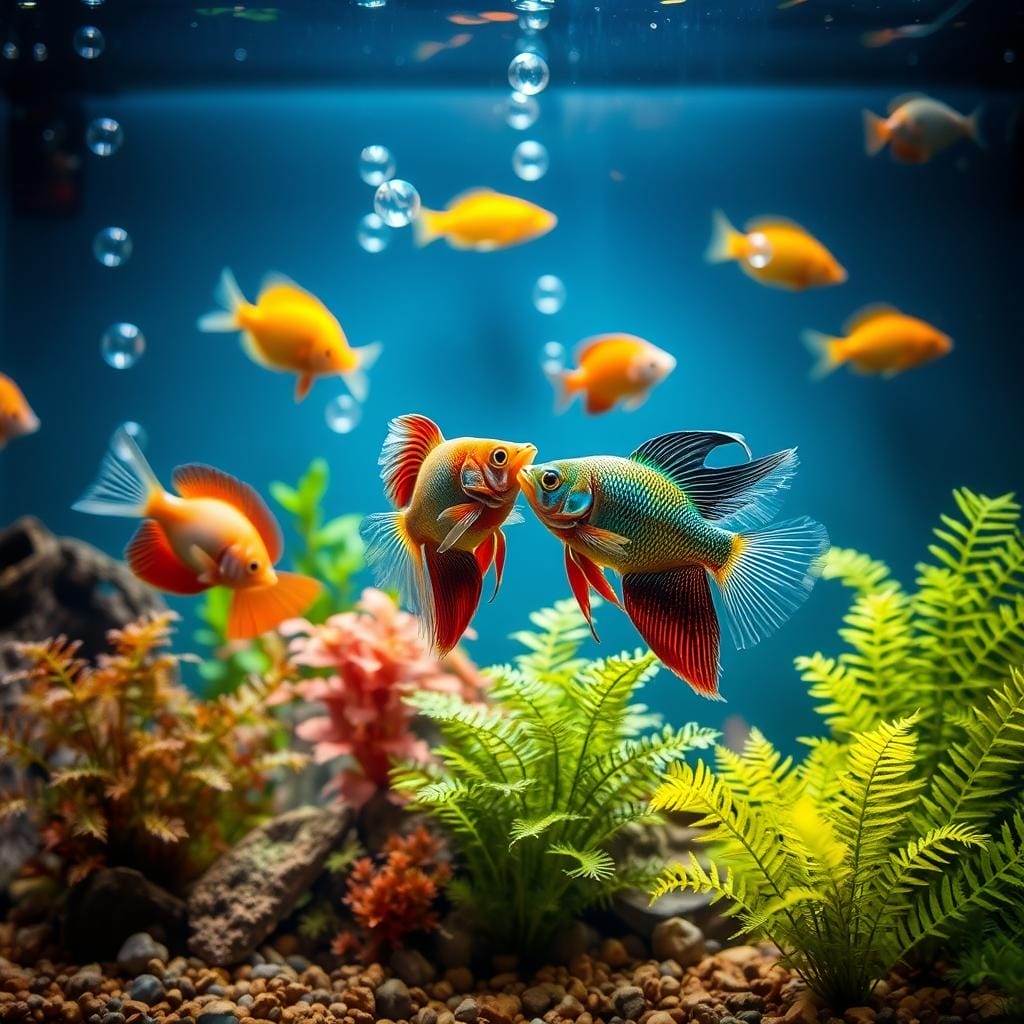
You’ll witness breathtaking rituals in your aquarium. Males perform elaborate dances and color changes to attract partners.
Some species create intricate structures to impress potential mates. The Japanese Pufferfish spends days crafting perfect sand patterns.
Water quality and temperature strongly influence when spawning occurs. Your aquarium setup plays a crucial role in triggering natural reproductive behavior.
Male residents often establish specific territories to attract females. This territorial behavior indicates healthy, natural instincts in your aquatic community.
Understanding these patterns helps you recognize breeding readiness. Your observations provide valuable insights into your pets’ wellbeing and happiness.
Enhancing Breeding Success in Your Aquarium
Creating the perfect setup for aquatic reproduction starts with understanding environmental triggers. Your careful attention to details makes all the difference between attempts and actual success.

You can significantly boost your results by mimicking natural spawning conditions. Research your specific species’ needs for temperature, pH, and water hardness.
Creating the Optimal Breeding Environment
Temperature plays a crucial role in the reproductive process. For example, carp species typically breed best between 24-31°C.
Light duration matters more than you might think. Adjusting day length stimulates maturation in many aquatic creatures.
Consider simulating natural changes like slight temperature fluctuations. Increased water flow can replicate wild breeding triggers effectively.
Selecting Suitable Fish Species
Choose species that match your experience level and available care. Some residents need specific environmental cues like water changes simulating rainfall.
Create designated spawning areas with appropriate substrate or plants. Your patience and observation become valuable tools for success.
Watch how your aquatic pets respond to changes and adjust conditions accordingly. This careful approach ensures healthy reproduction cycles.
Reproductive Strategies and Courtship Displays in Fish
The variety of courtship displays and breeding tactics in your tank reflects nature’s ingenious solutions to reproductive challenges. You’ll discover aquatic creatures employ remarkably diverse approaches to ensure their species continues.

These strategies range from exclusive pair bonds to complex arrangements involving multiple partners. Understanding these patterns helps you create the perfect environment for breeding success.
Pair Spawning vs. School-Courtship Techniques
Pair spawning represents one common approach where a male and female form temporary bonds. The male typically establishes and defends a specific territory, then performs elaborate displays to attract a partner.
School-courtship offers a fascinating alternative strategy. Larger, more dominant males leave their territories to court multiple females simultaneously. This high-reward approach comes with increased competition from other males.
The size of your aquatic residents often determines which strategy they’ll use. Bigger males can afford the energy cost of defending territories while courting several partners.
Unique Adaptations in Courtship Behavior
You might observe intense competition between males during breeding seasons. Territorial disputes and aggressive behaviors represent normal parts of the reproductive process for many species.
Some aquatic creatures form monogamous pairs, while others practice polygyny where one male mates with several females he protects. These different strategies have evolved over millions of years to maximize reproductive success.
Recognizing these patterns helps you plan your breeding setup effectively. Pair spawners need separate territories, while school spawners benefit from larger group arrangements.
The Role of Environmental Factors in Fish Reproduction
Your aquarium’s physical conditions serve as powerful triggers that tell your aquatic residents when breeding season has arrived. These environmental cues have evolved over millions of years to ensure successful reproduction at the right time and place.

Water temperature stands out as perhaps the most critical factor. Each species has an optimal range where spawning occurs most successfully. Warm conditions generally stimulate gonad maturation in most aquatic creatures.
The photoperiod—your lighting schedule—acts as nature’s calendar. It signals the right time of year for reproduction. You can manipulate day length to encourage spawning at different times than would occur naturally.
Strategic water changes that mimic rainfall can be particularly effective. The sudden change in water chemistry replicates natural triggers like monsoon rains. This signals to your aquatic pets that conditions are perfect for reproduction.
Research your specific species’ needs for the best results. Different creatures have evolved in various environments, so the combination of factors that triggers spawning varies. Your careful attention to these details makes breeding success much more likely.
Internal and External Fertilization Methods
Understanding how fertilization occurs is key to supporting successful breeding in your tank. Aquatic species use different approaches to bring new life into your aquarium.

These methods range from external processes to more complex internal systems. Knowing which approach your species uses helps you create the perfect environment.
Ovuliparity and Oviparity Explained
In ovuliparity, females release unfertilized eggs into the water. Males then release sperm to fertilize them externally. Popular species like salmon and goldfish use this method.
Oviparity involves internal fertilization before egg release. The male delivers sperm inside the female’s body. She then sheds already-fertilized eggs into the water.
Over 97% of known aquatic species are oviparous. This includes certain sharks that use claspers for internal fertilization.
Ovoviviparity and Viviparity Insights
Ovoviviparous species retain eggs inside the female’s body. The developing offspring rely on yolk for nutrition. Guppies in your aquarium demonstrate this approach.
Viviparity takes parental investment further. Embryos receive direct nourishment from the mother. This occurs through placenta-like structures in some species.
Each method requires different care strategies for breeding success. External spawners need egg protection, while livebearers need shelter for newborns.
Specialized Reproductive Adaptations and Variations
Nature’s creativity truly shines through the remarkable reproductive adaptations found in aquatic species. You’ll discover some of the most fascinating biological strategies that ensure survival across diverse environments.

Hermaphroditism represents one extraordinary strategy where individuals possess both male and female organs or can change sex. In coral reef species like groupers and wrasses, removing the dominant male triggers the largest female to transform into a male within days.
Some deep-sea anglerfish practice sexual parasitism—tiny males permanently attach to larger females. This ensures mating partners are always available in the vast ocean darkness.
Mouthbrooding demonstrates incredible parental care where females protect eggs in their mouths for weeks. They refuse food to safeguard their developing offspring.
Shark biology includes startling variations like intrauterine cannibalism. The first sand tiger shark to hatch consumes its siblings and unfertilized eggs. Some shark species even reproduce through parthenogenesis without male contribution.
Also Read: Common Aquarium Problems and How to Fix Them
These specialized adaptations show how aquatic life has evolved countless solutions for reproductive success. Understanding these varied reproduction processes helps you appreciate the incredible diversity in your aquarium.
Human Impacts on Fish Reproduction and Mating Success
Your aquarium hobby connects you to a much larger aquatic world. Human activities in the wild have a direct effect on the natural cycles you observe in your tank.
Understanding these impacts helps you become a more responsible keeper. You can make choices that support healthy populations everywhere.

Overfishing, Habitat Disturbance, and Population Shifts
Constant harvesting of the largest individuals prevents them from reaching full maturity. This leads to a decrease in the average size of wild populations over time.
Smaller creatures produce fewer and smaller eggs. This results in declining numbers and potentially weaker future generations.
Research shows fishing pressure can eliminate unique aquarium fish behavior. One study saw a 50% decline in a pristine spawning ground’s peak numbers in just three years. An entire courtship display disappeared forever.
Some specialized tactics only occur when large groups gather. Overfishing prevents these essential aggregations from forming.
Habitat disturbance from coastal development and pollution disrupts spawning cycles. These cycles were refined over millions of years.
You can help by choosing pets from sustainable sources. Support conservation efforts and educate others. Your care extends beyond your tank to protecting wild populations and the time they need to reproduce successfully.
Final Reflections on Advancing Fish Breeding Success
Your journey into the world of aquatic reproduction has equipped you with powerful knowledge. You now understand the delicate balance between science and observation needed for breeding success.
Remember, these creatures have perfected their strategies over millions of years. Your role is to recreate the key conditions they need. Patience and careful attention to your specific species’ needs are your greatest tools.
Every attempt teaches you something valuable. Embrace the learning process. The offspring you raise represent a personal achievement and a contribution to the hobby.
Continue learning about their needs, from specialized food to water parameters. Modern science, including advanced hormonal spawning induction, shows how deeply we can support natural processes.
Keep observing, keep learning, and enjoy discovering nature’s wonders in your aquarium. Your dedication ensures healthy populations for years to come.
FAQ
How can I tell if my aquarium fish are ready to breed?
You might notice changes in their appearance and actions. Males often become more colorful and may chase females. Females can look fuller as their bodies develop eggs. Watching for specific courtship rituals, like special dances or fin displays, is a great sign that conditions are right.
What is the difference between livebearers and egg-layers?
This is a key distinction! Livebearers, like guppies and mollies, give birth to free-swimming young. Egg-layers, such as tetras and angelfish, release eggs that are fertilized externally. The eggs then hatch outside the female’s body. Your care strategy will depend greatly on which type you have.
What water conditions are best for encouraging reproduction?
Excellent water quality is essential. This means stable temperature, proper pH, and very low levels of ammonia and nitrites. For many species, simulating seasonal changes—like a slight temperature increase or a larger, cooler water change—can trigger their natural spawning instincts.
Do I need a separate tank for breeding?
A dedicated breeding tank is highly recommended. It protects the eggs or newborn offspring from being eaten by other tank inhabitants, including the parents. You can also control the environment more precisely to meet the specific needs of the fry, especially their first foods.
Why is my male fish being so aggressive during breeding time?
This is common behavior. Males can become territorial and competitive when trying to attract a partner. Ensuring your aquarium has plenty of plants, caves, and visual barriers gives females a place to retreat and reduces stress, leading to a safer environment for everyone.
Hi, I'm Millie a passionate fish enthusiast and blogger. I loves learning about all kinds of aquatic creatures, from tropical fish to stingrays.