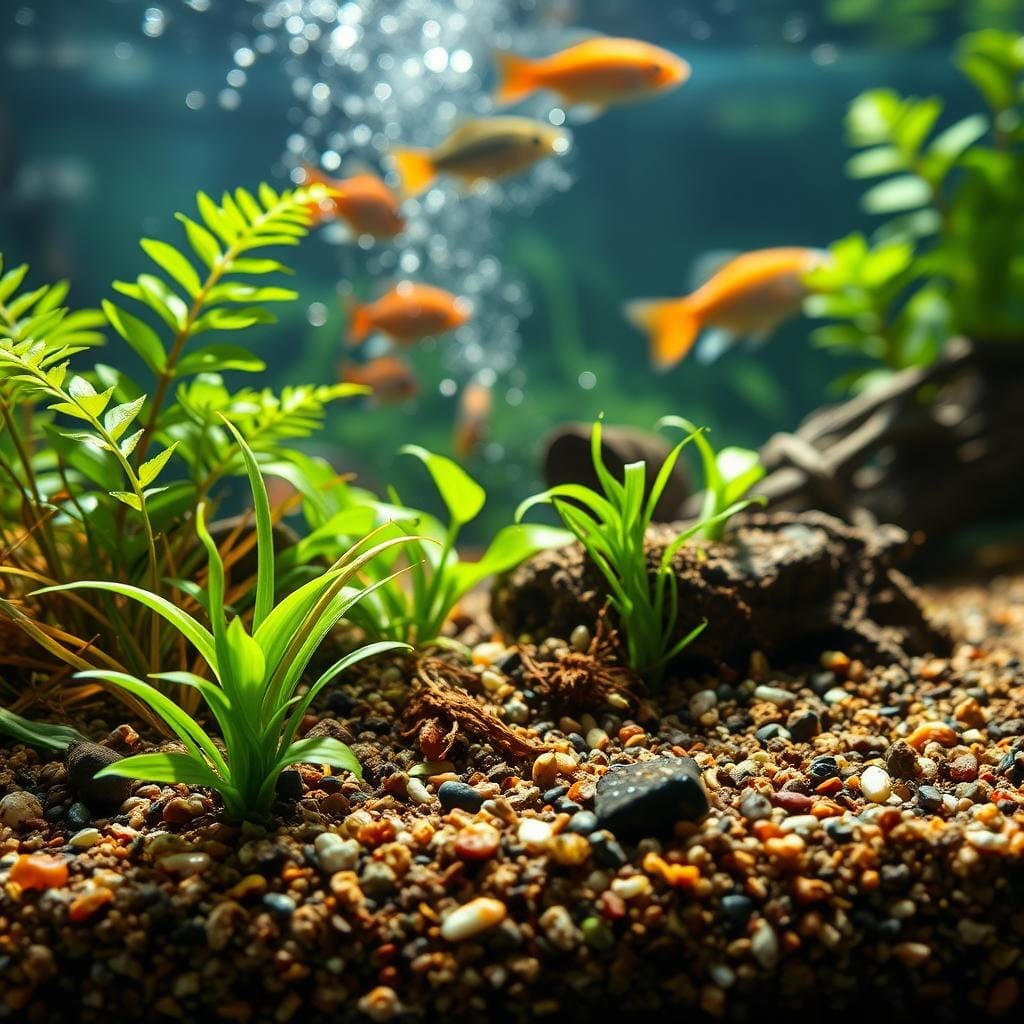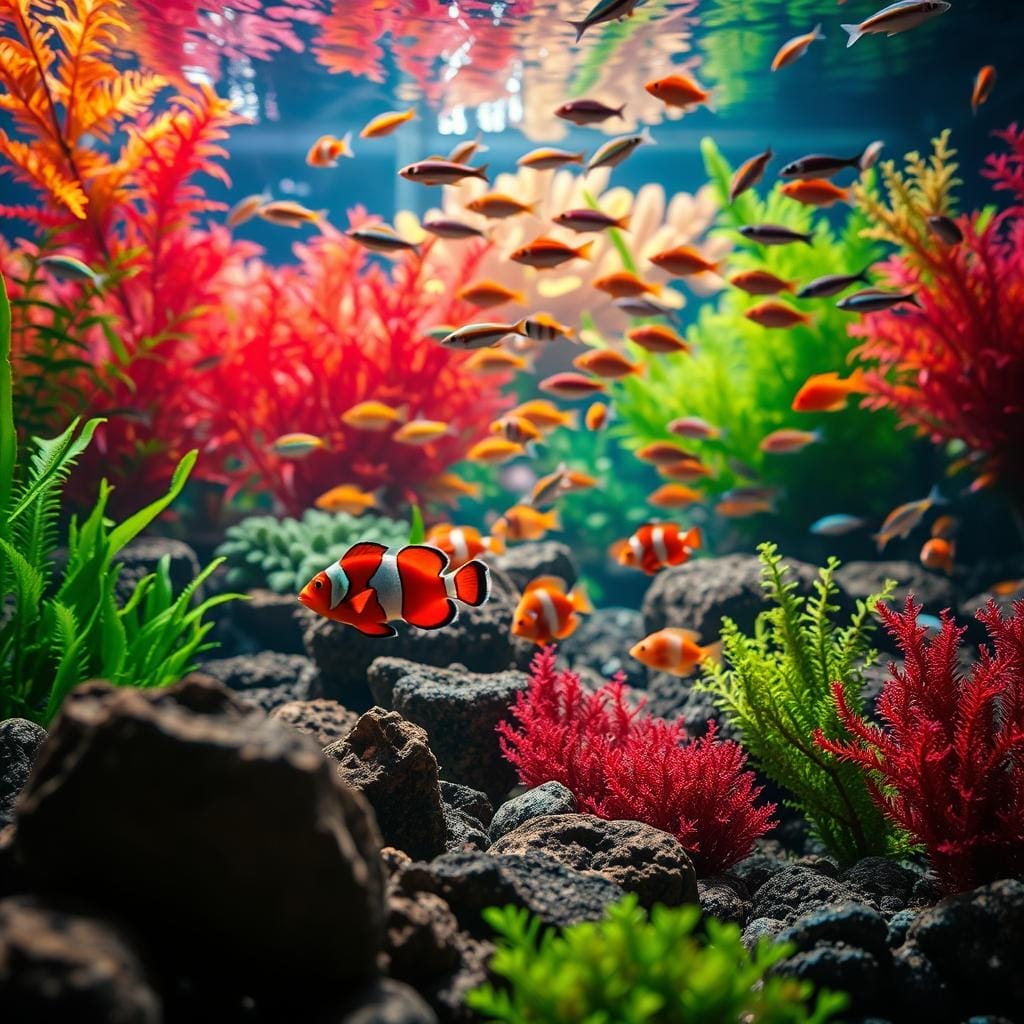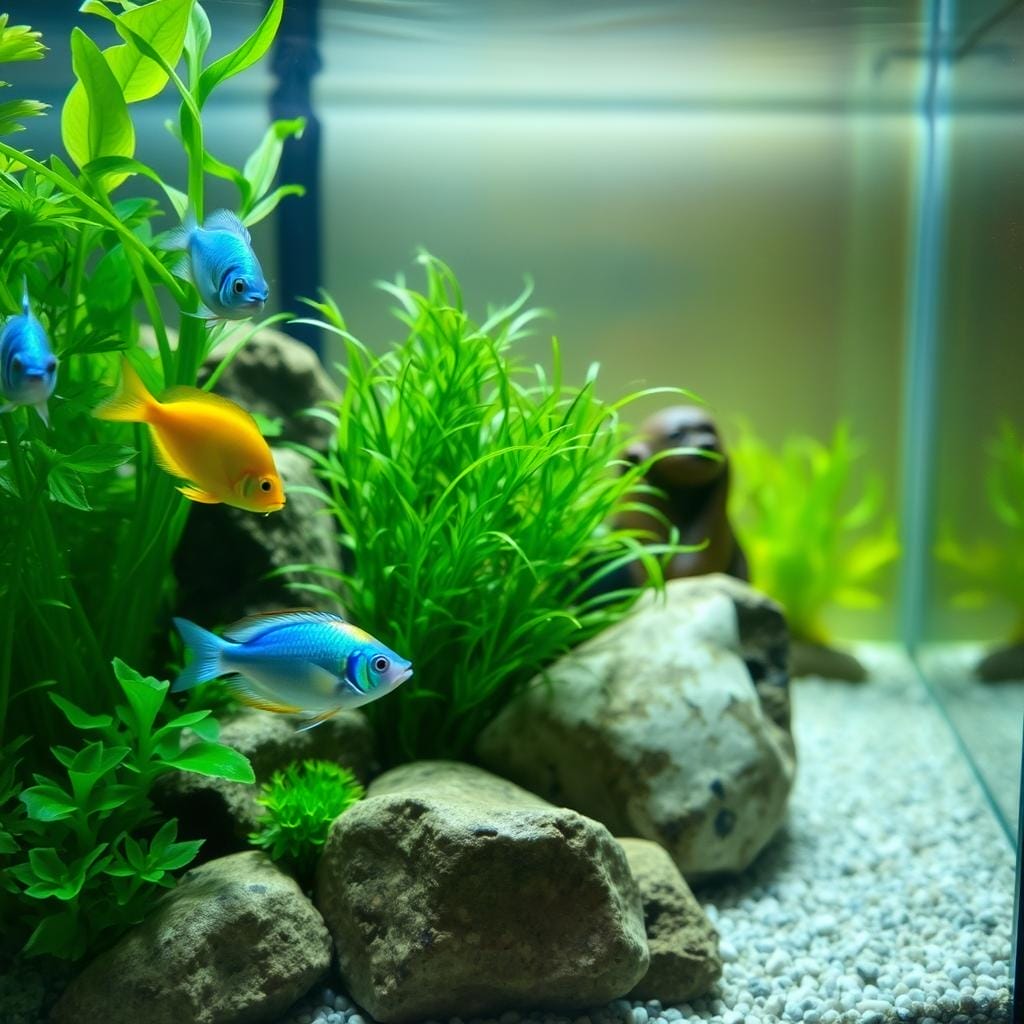

Expert Fish Photography Tips for Your Home Aquarium
 Millie Douglas
Updated on: December 1, 2025 .
13 min read
Millie Douglas
Updated on: December 1, 2025 .
13 min read
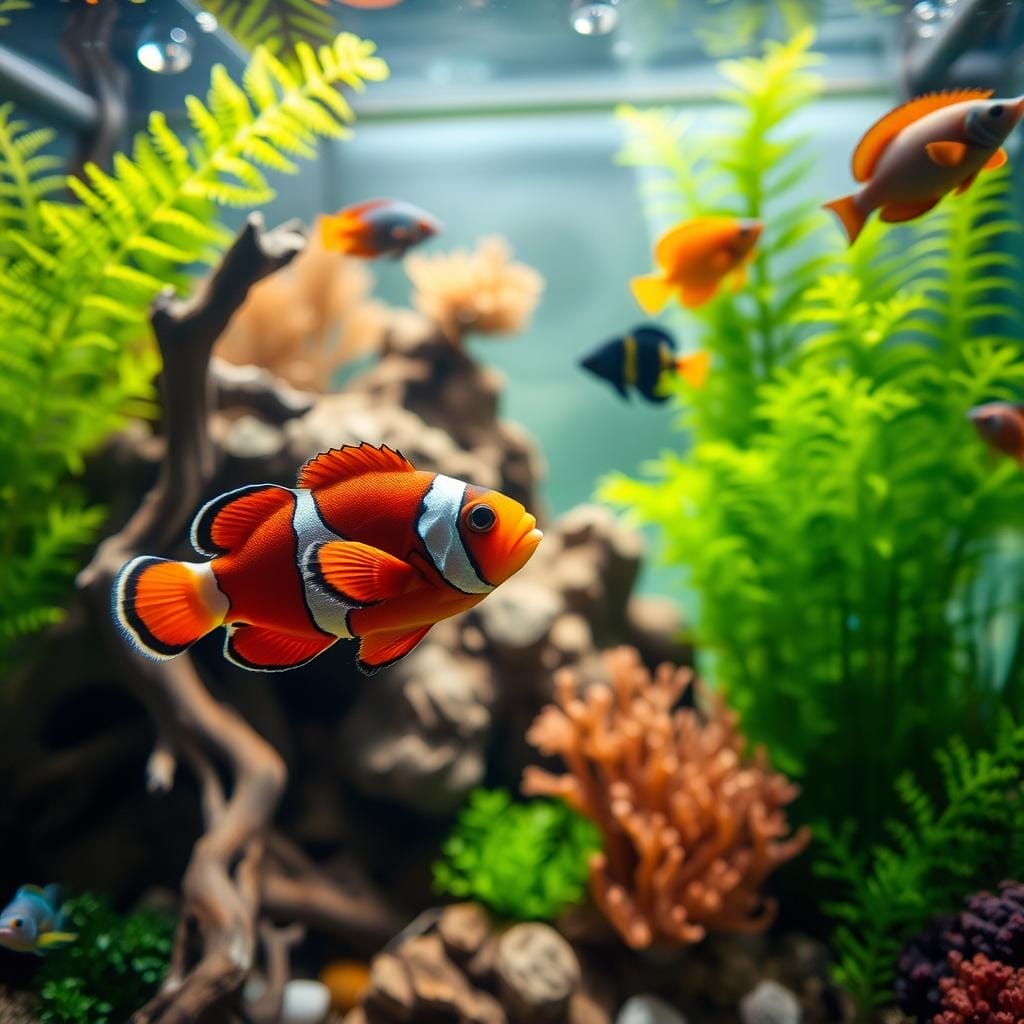
Have you ever wondered why your snapshots of your aquatic pets never quite capture their true beauty? That vibrant blue that dances in your tank becomes a dull gray in your pictures. It’s a common frustration, but the solution is closer than you think.
Great aquarium photography isn’t about having the most expensive gear. It’s about understanding a few key techniques. This guide will share essential methods to transform your images from blurry disappointments into stunning portraits.
We’ll walk through the unique challenges of shooting through glass and water. You’ll learn how to work with light and movement to get that perfect shot. Whether you use a smartphone or a DSLR, these principles will help you succeed.
This article is your friendly companion on the journey to capturing your underwater world. Get ready to see your aquarium in a whole new light—through your lens!
Understanding the Basics of Aquarium Fish Photography
Getting that perfect shot of your aquarium residents starts with mastering a few fundamental principles. The most important rule in aquatic photography is simple: always focus on the eye. When the eye appears sharp and clear in your final images, viewers will naturally accept other elements that might be slightly soft.
Light behaves differently when passing through water and glass. This affects how your camera captures colors and details. Understanding this will help you create more vibrant photos that truly represent your underwater world.
Patience is your greatest asset. Your aquatic friends move on their own schedule. Rushing will only lead to blurry, disappointing results. Instead, spend time observing their behavior patterns before you start shooting.
Watch how they swim and when they display their brightest colors. This knowledge helps you anticipate movements and capture those perfect moments. Different species require different approaches—active swimmers need different techniques than slow-moving bottom dwellers.
Create a calm environment for your sessions. Stressed subjects won’t show their natural beauty. Practice regularly with your camera settings, even without taking actual photos. This prepares you for when that perfect opportunity arises.
Remember, every skilled photographer started as a beginner. Your abilities will grow with each session as you learn what works best for your specific setup.
Essential Equipment for Stunning Fish Photos
Your equipment choices play a crucial role in how well you capture the vibrant life in your tank. Many people worry they need expensive professional gear, but that’s not true. You can create beautiful images with the equipment you already own.
Choosing the Right Camera and Lens
Whether you use a smartphone or a DSLR, your current camera can produce excellent results. The key is understanding its capabilities. A wide-angle lens helps capture more of your aquarium scene. For close-up details, consider a macro lens.
Experiment with your existing equipment before buying anything new. This helps you identify what truly matters for your specific setup. Simple accessories like lens hoods reduce glare effectively.
Optimizing Lighting Conditions
Light transforms your images dramatically. Evaluate your current aquarium lighting first. Sometimes, small adjustments bring out amazing colors. Bright, direct light striking the side of your subject often works best.
Natural window light creates beautiful effects. Supplementary lights can enhance your results without stressing your aquatic friends. A tripod keeps your camera steady for clearer shots.
Remember, the goal is to work with what you have. Understanding your equipment’s potential leads to smarter choices and better images over time.
Essential fish photography tips for Capturing Natural Movement
To truly capture the life within your aquarium, your perspective is everything. Moving beyond a simple top-down view opens up a world of dynamic and engaging images. This approach helps you tell a more compelling story about your underwater community.
Great shots come from understanding how your subjects interact with their environment. It’s about anticipating action and being ready for that perfect instant.
Mastering Angles and Perspectives
Getting low, down to your subject’s eye level, is a game-changer. This angle minimizes glare on the glass and creates a powerful, intimate connection in your final image. You see your aquatic friends as they see each other.
Experiment with different views. A profile shot beautifully displays body shape and fin structure. A head-on view can capture amazing personality. The most dynamic composition often comes from a three-quarter angle.
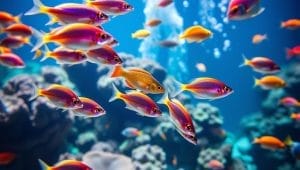
Spending quality time observing is the key to success. Understanding their normal behavior patterns allows you to predict where they will be. This patience dramatically increases your chances of getting a stunning photo.
Adapting to Water Dynamics
The water in your tank is never perfectly still. Filters create current, and air stones add bubbles. Instead of fighting these elements, learn to work with them. A gentle current can add a sense of graceful motion to your shot.
Be ready for the decisive moment when your subject’s position, the light, and the background all align. This often requires you to take multiple photos in rapid succession. Your goal is to freeze a natural, relaxed behavior, not a stressed reaction.
Your dedication to identifying your aquatic subjects and learning their habits pays off here. This knowledge lets you anticipate their swimming paths, ensuring you get a sharp, clear image full of life.
Setting Up Your Aquarium for Perfect Shots
Creating stunning images of your aquarium begins with preparing the environment itself. A little preparation goes a long way in transforming ordinary snapshots into professional-looking captures.
Managing Background and Reflections
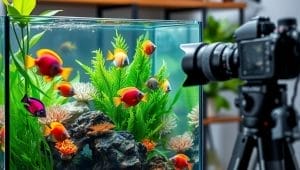
Start with a thorough cleaning of your tank glass, both inside and out. Remove any smudges, algae, or water spots that could ruin your shot. Position yourself strategically to use plants, rocks, or dark areas as pleasing backdrops.
Minimizing reflections is crucial for clear images. Turn off room lights and close curtains to reduce glare. You can also use a black cloth around your lens to block external light sources.
Creating a Photogenic Habitat
The cleanliness of your water directly affects photo quality. Particles floating in the water will show up as distracting spots in your images. Arrange your décor to create natural swimming spaces where your aquatic friends naturally pause.
Consider using negative space—empty water areas around your subject—to make your photos more powerful and focused. Small adjustments to your aquarium’s layout can make enormous differences in the final look.
Think about your setup from a photographer’s perspective. What photographs well may differ from what simply looks good to your eye. This thoughtful approach ensures every shot captures the true beauty of your underwater world.
Mastering Fish Posing Without Causing Stress
Creating stress-free photography sessions transforms your approach from intrusive observer to trusted presence. The key is working with your aquatic companions’ natural behaviors rather than forcing unnatural poses.
Gentle Handling and Supporting the Fish
For home aquarium photography, you should never remove your subjects from the water. All your work happens through the glass to ensure safety. This approach protects their delicate protective coating.
When guiding your subjects, think of yourself as a patient observer. Learn to recognize signs of stress like clamped fins or rapid breathing. These cues tell you when it’s time to pause your session.
Techniques for Natural Posing
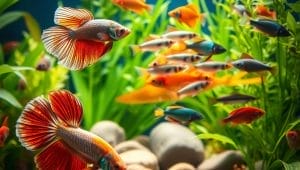
Natural posing means encouraging your subjects to display their authentic behaviors. Use feeding time as an opportunity when they’re most active and colorful. Target training with food can guide them to ideal positions.
Keep sessions short and positive. Different species have varying tolerance levels. Curious types may enjoy the attention, while shy ones need more patience.
Building trust over time creates the best results. Your subjects become comfortable with your presence, leading to more relaxed and genuine images. This way, every photo captures their true personality.
Adjusting Techniques for Varying Light Conditions
Light transforms your aquarium from a simple habitat into a living canvas for your camera. Understanding how to work with different lighting situations will dramatically improve your results. Each type of light brings unique qualities to your images.
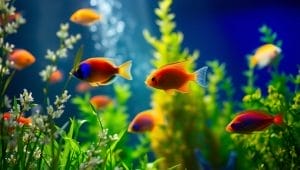
Natural window light creates soft, beautiful shadows that add depth to your shots. Morning light tends to be gentle and warm, while midday sun can be harsh. Evening glow brings out rich, golden tones in your photographs.
Using Natural vs. Artificial Light
Your aquarium’s built-in lights provide consistent illumination for daily shooting. When bright and direct, position the light to strike the side of your subject facing the camera. This technique highlights colors and textures beautifully.
Supplemental lighting can enhance specific areas without stressing your aquatic friends. Always test different angles to avoid unwanted reflections on the glass. Adjust your camera settings for each light level to ensure proper exposure.
The “golden hour” applies to aquarium work too. Those times when natural light creates warm, flattering tones can yield stunning results. Experiment with different setups during your sessions to discover what works best for your specific tank.
For more advanced techniques on working with aquarium lighting, explore this comprehensive guide on taking clear creative photos at aquariums. Remember that patience and practice will help you master any light condition.
Optimizing Camera Settings for Action and Detail
The magic behind sharp, well-exposed aquarium images lies in understanding three key camera controls working together. Shutter speed, aperture, and ISO form the foundation of every great shot you’ll capture.
Your shutter speed determines how motion appears in your photos. For active swimmers, use faster speeds like 1/250th of a second to freeze movement completely. Calmer subjects allow slower settings around 1/100th.
Aperture controls depth of field—how much of your scene stays in focus. A wider aperture (lower f-number) creates beautiful background blur that makes your subject stand out. Smaller apertures keep more of the aquarium sharp.
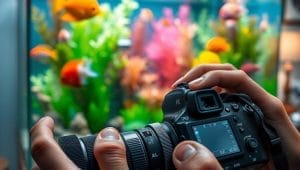
ISO handles your camera’s sensitivity to light. Start low (100-400) in good lighting conditions to avoid grain. Increase ISO only when necessary to maintain proper exposure without sacrificing shutter speed.
Use single-point autofocus aimed at your subject’s eye for the sharpest results. Your camera’s burst mode takes multiple shots quickly, dramatically increasing your chances of capturing that perfect moment.
Experiment with manual or aperture priority modes rather than full auto. This gives you creative control over how your final images turn out. Always check your histogram after test shots to ensure proper exposure before continuing your session.
Incorporating Creative Composition in Your Shots
Creative arrangement within your viewfinder separates memorable captures from simple documentation. Your composition choices tell a story beyond the basic subject matter.
Start with the rule of thirds. Imagine your frame divided into a grid. Position your aquatic friend along these lines for more dynamic results.
Framing and Perspective Choices
Use natural elements in your tank as leading lines. Plant stems or driftwood can guide the viewer’s eye toward your main subject. This creates visual flow.
Try shooting through decorations or foliage. This technique adds depth and context to your work. It frames your subject naturally.
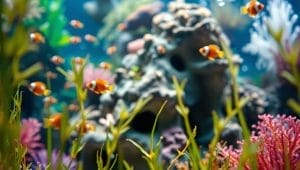
Negative space gives your subject room to breathe. Empty areas around your aquatic companion draw attention to them. This creates powerful focus.
Also Read: Common Aquarium Problems and How to Fix Them
Change your perspective to change the story. Eye-level shots feel intimate. Elevated angles show more environment. Close-ups reveal fascinating details.
For dramatic impact, consider filling the frame with your subject. Use your lens to zoom in close. This eliminates distractions completely.
Once you master these basics, feel free to break the rules. Experiment with unconventional angles. Your unique vision as a photographer will shine through.
Ethical Considerations When Photographing Aquarium Fish
The most rewarding images come from a place of deep respect for your aquatic companions. Your pet’s health and welfare must always be your top priority, far more important than any single picture. This mindset is the foundation of responsible and ethical practice.
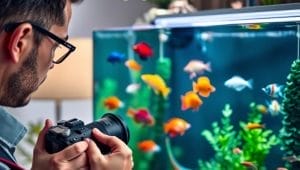
It’s crucial to understand the effects of your actions. Research into the impacts of flash photography on aquatic helps inform better choices. Always prioritize minimizing stress.
Respecting Your Fish’s Well-Being
Learn to recognize signs of distress in your pet. Rapid gill movement, color fading, or hiding are clear signals to stop immediately. Keeping sessions short, around 10-15 minutes, gives your companion necessary recovery time.
Applying the Keep ‘Em Wet Principles
This conservation principle is deceptively simple: your subject should stay in the water. Air exposure is incredibly stressful, as they essentially hold their breath. A safe, low-stress routine is part of excellent care.
The goal is to capture your pet’s natural beauty in a comfortable, healthy state. This respectful approach ensures your hobby supports their long-term well-being. It’s a rewarding part of being a conscientious keeper.
Final Reflections on Your Fish Photography Journey
Your photographic adventure with your aquarium companions has been about more than just taking pictures—it’s been about building connections. Each session brings you closer to understanding their unique personalities and behaviors.
Remember that these techniques are starting points. Your personal style will naturally evolve as you practice. Review your favorite images regularly to see what works at both technical and artistic levels.
Every shot teaches you something valuable, even the ones that don’t turn out perfectly. Consider joining online communities where you can share your work and get constructive feedback from fellow enthusiasts.
As you advance, you might explore more complex challenges like photographing reflective species. Always keep your aquatic friends’ well-being at the heart of every decision.
Return to this guide whenever you need inspiration. With patience and practice, you’ll continue capturing stunning images that showcase the true beauty of your underwater world.
FAQ
What is the single most important piece of equipment for taking great aquarium pictures?
A fast lens is your best friend. A lens with a wide aperture, like an f/2.8, lets in more light, allowing you to use faster shutter speeds to freeze your pet’s movement without a harsh flash. This helps you capture sharp, well-lit images.
How can I reduce annoying reflections on the glass?
Get as close to the tank as possible with your camera lens. You can also use a lens hood or cup your hands around the end of the lens to block ambient room light from bouncing off the glass, resulting in a much clearer shot.
My photos often look blurry. How can I fix this?
Blur is usually caused by a slow shutter speed. Set your camera to Shutter Priority mode and choose a speed of at least 1/250th of a second. Increasing your ISO can help maintain proper exposure when you use these faster settings.
Is it okay to use the camera’s flash?
It’s best to avoid the built-in flash. The sudden bright light can startle your aquatic friends and often creates a harsh, unflattering look. Instead, rely on your tank’s lights and a lens that performs well in low-light conditions.
How do I get my fish to pose or stay still for a picture?
Patience is key. Never try to handle or restrain your pet. Instead, learn their patterns. Often, gently tapping on the glass or placing food in a specific spot can grab their attention for a brief moment, giving you the perfect opportunity to snap a photo.
What camera settings should I start with for a beginner?
Begin with Aperture Priority mode. Set your aperture to its widest setting (the smallest f-number) to let in the most light. Then, set your ISO to Auto. This gives you control over depth of field while the camera adjusts for movement and brightness.
Aquarium photographyArtistic aquarium shotsCapturing fish behaviorCreative fish tank photographyFish photo techniquesFish portrait photographyHome aquarium photography guideNatural lighting for fish photographyUnderwater photography tips
Hi, I'm Millie a passionate fish enthusiast and blogger. I loves learning about all kinds of aquatic creatures, from tropical fish to stingrays.