
Tropical Fish Food: Choosing the Right Nutrition for Your Fish
 Millie Douglas
Updated on: December 1, 2025 .
11 min read
Millie Douglas
Updated on: December 1, 2025 .
11 min read

Have you ever wondered if the colorful flakes you sprinkle into the water are truly meeting all your aquatic pet’s needs?
Many aquarium owners believe feeding their pets is a simple task. But the truth is far more interesting. Providing the right nourishment is the cornerstone of a vibrant, healthy underwater world.
This guide is your friendly companion on the journey to understanding aquatic nutrition. We will help you move beyond basic feeding. You will learn to select quality ingredients that support brilliant colors and long-term wellness.
We will walk you through the essentials of a proper diet. You will gain the confidence to make the best choices for your unique aquarium community. Let’s ensure your underwater friends not only survive but truly thrive.
Understanding Aquarium Nutrition Basics
Your feeding decisions hold more power than you might realize when it comes to creating a thriving underwater ecosystem. Getting the foundation right from day one makes all the difference for your aquatic companions.
Let’s explore how proper nourishment works in your tank. This knowledge will help you make confident choices.
The Role of Diet in Fish Health and Coloration
What your pets eat directly affects their entire wellbeing. A balanced diet supports strong immune systems and brilliant colors.
Quality nourishment should focus on proteins and fats. These are the primary energy sources your aquatic species evolved to use efficiently.
You’ll love seeing how proper nutrition enhances natural beauty. Nutrients like beta carotene boost immune function while creating spectacular coloration.
How Nutrients are Absorbed Underwater
Your pets process nourishment differently than land animals. Living in water changes how they absorb essential elements.
They can take in some nutrients directly through their skin and gills. Their digestive systems are specially designed for aquatic environments.
Understanding this absorption process helps you choose formulations with maximum nutritional value. This minimizes waste that could affect your tank’s water quality.
Essential Ingredients for High-Quality Fish Diets
Learning to read ingredient labels is your first step toward providing optimal nutrition for your aquatic companions. The components listed first make up the bulk of what your pets consume daily.
Focus on premium sources that match what your species would naturally eat. This approach ensures better digestion and overall health.
Proteins from Insect and Crustacean-Based Meals
Look for soldier fly larvae or other insect-based meals in your chosen nourishment. These protein sources are biologically appropriate for most aquarium species.
Insect meals offer sustainable advantages over traditional options. They’re more eco-friendly and often more affordable without sacrificing nutritional value.
Your pets naturally consume insects and invertebrates in the wild. Choosing foods with these ingredients aligns perfectly with their evolutionary needs.
Incorporating Algae, Vegetables, and Essential Carotenoids
Don’t overlook the importance of plant-based components. Algae like spirulina and kelp provide vital nutrients for immune support.
These vegetable sources contain beta carotene and other carotenoids. They help enhance natural coloration while supporting overall wellness.
Crustacean ingredients like shrimp deliver astaxanthin. This powerful carotenoid brings out stunning reds, oranges, and yellows in your aquarium community.
When evaluating different options, prioritize these premium ingredients at the top of the list. Cereal components should appear lower since they’re mainly for manufacturing.
Evaluating Different Food Formats for Your Aquarium
Choosing the right format for your underwater community’s meals ensures every member gets their fair share. The physical form of nourishment matters as much as the ingredients inside.
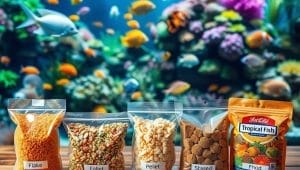
Different formats serve different feeding behaviors in your tank. You’ll want to match each option to where your pets naturally dine.
Flakes, Pellets, Wafers: What Works Best
Surface feeders thrive with floating options like Xtreme Community Crave Flakes. These delicate flakes stay on top for easy access.
Pellets offer more flexibility with various sinking speeds. The Easy Community Floating Pellets work well for mid-water swimmers.
Bottom dwellers need dense options like Xtreme Bottom Wafers. These sink quickly and hold shape on the substrate.
How Food Texture Relates to Fish Species
The texture directly matches natural feeding habits. Each species has evolved to eat certain types of meals.
Remember that all dry formats require some complex carbohydrates for manufacturing. Don’t worry when you see cereal ingredients on the list—just ensure they’re lower down.
Keeping a variety of formats ensures all your aquatic pets get proper nutrition. Rotate between options to meet everyone’s needs.
Comparing Leading Brands and Product Options
Navigating the vast selection of aquarium nourishment can feel overwhelming. Knowing which brands to trust makes the choice much simpler.
You’ll find a few names consistently praised for their quality and results. Let’s explore your best options.
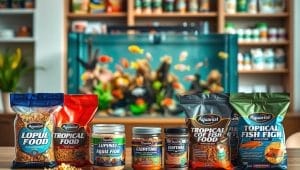
Insights from Trusted Sources and Top-Rated Products
Aquarium Co-Op and Xtreme are two brands that top the list for many enthusiasts. Their products are known for excellent ingredients.
Aquarium Co-Op offers premium supplemental foods like Freeze-Dried Brine Shrimp. Your aquatic pets will go wild for these tasty treats.
The Xtreme brand provides a great list of staple foods. Their Community Crave Flakes and Krill Flakes are fantastic for daily feeding.
Don’t forget the Easy line for specialized needs. Their Community Floating Pellets are a wonderful one-stop option for many community tanks.
Important note: North American labeling gives you a clearer view of ingredients. This helps you better judge the quality of the foods you buy.
Innovations in Feeding Technology
Great nutrition isn’t just about the products themselves. Technology now helps you maintain perfect feeding schedules.
Items like the Aquarium Co-Op Auto Feeder are game-changers. They ensure your fish never miss a meal, even when you’re away.
This consistency is key to keeping your aquatic friends healthy and happy. It’s a simple innovation that offers huge peace of mind.
Nutritional Science: Balancing Proteins, Fats, and Carbohydrates
The ingredient list tells a story, but the nutritional content reveals the truth about quality. Understanding this science helps you select meals that support vibrant health rather than just filling bellies.
Your aquatic pets are designed to use protein and fats as their primary energy sources. Complex carbohydrates, like those from cereal ingredients, should be low on the list.
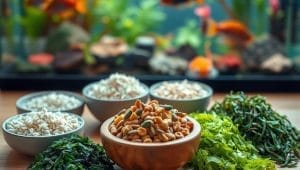
When a meal has high cereal content, it forces your pets’ systems to process nutrients they didn’t evolve to handle. Any caloric excess from carbs gets stored as fat, which can lead to obesity and health problems over time.
Why Low Complex Carbohydrates are Essential
Prioritizing meals with high protein and fat content is crucial. This macronutrient balance aligns with their natural biology.
Look for these key features in a quality product:
- Protein sources like insect or crustacean meal listed first.
- Complex carbohydrates appearing much lower on the ingredient list.
- Healthy fat content to support energy and organ function.
This approach ensures your pets get the right fuel for a long, healthy life.
The Importance of Antioxidants and Natural Additives
The quality of a protein meal also depends on how it’s preserved. Ingredients require antioxidants to stay fresh and safe.
While some North American products may still use Ethoxyquin, European regulations have banned it. Natural alternatives like rosemary extract are a much better, safer choice for your aquarium’s water environment.
Choosing meals with these natural additives is a simple way to boost the overall quality and safety of the foods you provide. For a deeper dive into this topic, explore the research on fish food science.
tropical fish food: Choosing the Right Nutrition for Your Aquarium
The products bundled with your new tank setup often lead to important questions about dietary compatibility. Many beginners wonder if goldfish nourishment works for their warm-water aquatic community.
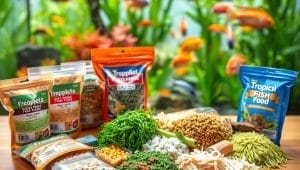
Goldfish and tropical species have different biological needs. Coldwater goldfish require less protein and different nutrient ratios than warm-water aquatic pets.
While goldfish flakes won’t harm your tropical residents immediately, they’re not the ideal long-term solution. Your warm-water companions need higher protein levels to support their faster metabolism.
The best nourishment for your aquarium community is specifically formulated for their requirements. Investing in proper tropical fish food ensures your pets receive the right balance of nutrients.
You’ll notice significant improvements in energy, coloration, and overall health within weeks of switching. A quality selection accommodates the diverse needs of surface feeders, bottom dwellers, and everything in between.
Explore the different nourishment formats available to create the perfect feeding routine. Your aquatic companions deserve meals tailored to their unique biology.
Practical Feeding Strategies and Supplementing with Live Food
Turning nutritional knowledge into daily practice is the final step toward a thriving aquarium. A thoughtful routine balances what’s ideal with what’s practical for your lifestyle.
Also Read: Common Aquarium Problems and How to Fix Them

Many enthusiasts dream of offering a diet based largely on live or frozen options. This approach mirrors what your pets would find in nature. Using manufactured items as a supplement is a fantastic goal.
For most people, this isn’t a practical everyday solution. If high-quality dry nourishment forms your staple, you are still providing excellent care. The key is intelligent supplementation.
Balancing Dry Foods with Live or Prey-Based Options
You can dramatically enhance your pets’ diet by adding variety. Occasional live or freeze-dried items provide protein-rich excitement they instinctively love.
Consider options like brine shrimp or bloodworms as special treats. Remember that worms are high in fat. They are excellent for raising young but can lead to weight gain in adult animals if overused.
Species like Dario and Badis are particularly prone to obesity from too many bloodworms. Offer these items once or twice a week for optimal health. This variety ensures a broad spectrum of nutrients.
Feeding Frequency and Portion Control
Your feeding schedule is crucial for maintaining water quality and animal health. Most communities do well with one or two meals per day.
Portion control matters tremendously. Offer only what your aquatic community can consume in two to three minutes. Watch them eat and adjust amounts so nothing sinks uneaten.
This prevents waste from degrading your tank’s environment. For a deeper dive into establishing a perfect routine, our complete practical guide to aquatic nutrition has more detailed tips.
- Staple Diet: Use a high-quality dry product most days.
- Weekly Treats: Add live or frozen shrimp and worms 1-2 times weekly.
- Watch Closely: Adjust portions based on what is eaten immediately.
Wrapping Up Your Tropical Fish Nutrition Journey
Your commitment to understanding proper nourishment has now prepared you to make confident choices that benefit your entire aquatic community. You’ve transformed from an uncertain beginner into an informed keeper who recognizes quality ingredients and appropriate formats.
Remember that selecting the best food isn’t about finding one perfect product. It’s about understanding nutritional needs and providing variety that mimics natural diets. Your success comes from applying what you’ve learned about protein priorities and ingredient lists.
The investment in premium nourishment pays dividends every day through vibrant colors and active behavior. For deeper insights into specific formulations, explore this comprehensive guide to premium flakes.
Continue learning about your specific species’ needs and stay open to trying new quality products. Your aquatic pets depend on you for their complete nutritional foundation. Monitor their health closely with resources like this aquarium health guide to ensure long, colorful lives in your care.
FAQ
What should I look for in high-quality aquarium nutrition?
Look for products with high-quality proteins like shrimp or insect meal as the first ingredients. Good brands also include algae or spirulina for plant-based nutrients and natural sources for color enhancement. Avoid foods with lots of fillers like wheat or soy.
How often should I feed my aquatic pets?
For most species, feeding small amounts once or twice a day is ideal. A good rule is to offer only what they can consume in about two minutes. Overfeeding can dirty your tank’s water and harm their health.
Are flakes or pellets better for my tank?
It depends on your pets! Flakes are great for surface feeders, while pellets or wafers sink for bottom dwellers. Many enthusiasts use a variety of formats to ensure all their aquatic friends get a proper meal.
Can I supplement dry foods with other options?
Absolutely! Supplementing with live or frozen items like bloodworms or brine shrimp provides enrichment and extra nutrients. This variety mimics a more natural diet and can boost vitality and coloration.
Why is the ingredient list on my pet’s food so important?
The ingredient list tells you exactly what’s in the meal. High-quality items will have specific protein sources and beneficial additives listed first. This helps you choose a diet that supports long-term wellness.
How does nutrition affect my pet’s color?
A> Excellent nutrition is key for vibrant colors. Ingredients rich in carotenoids, like those found in krill or certain algae, naturally enhance pigmentation. A balanced diet ensures they look their best.
Hi, I'm Millie a passionate fish enthusiast and blogger. I loves learning about all kinds of aquatic creatures, from tropical fish to stingrays.