
Encouraging Schooling Behavior in Your Aquarium Fish
 Millie Douglas
Updated on: December 1, 2025 .
16 min read
Millie Douglas
Updated on: December 1, 2025 .
16 min read
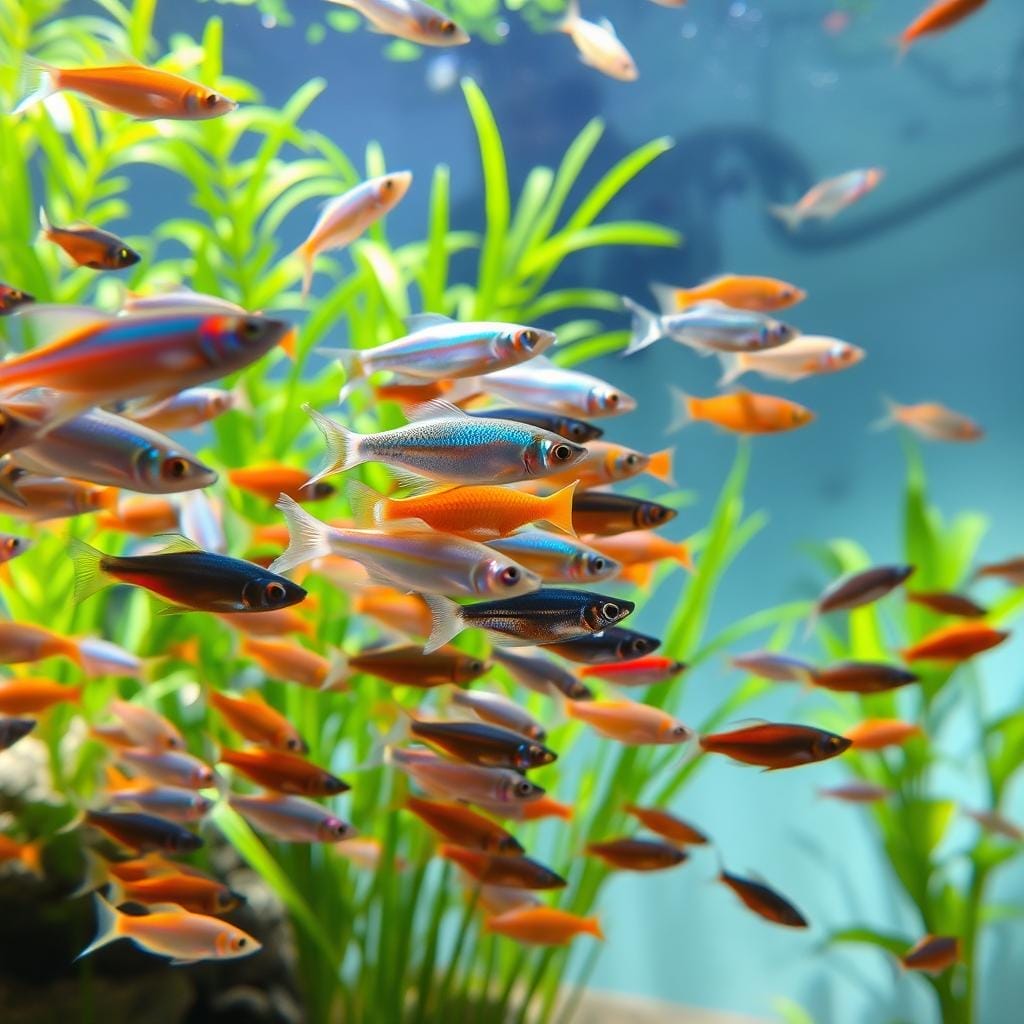
Have you ever wondered why some fish swim together in perfect harmony while others seem to go their own way? This natural instinct isn’t just random—it’s a fascinating display of group dynamics that can transform your aquarium into a living work of art.
Welcome to the captivating world where your aquatic pets display their most natural instincts. Watching multiple fish move as one creates a mesmerizing display that brings your underwater ecosystem to life. This synchronized swimming isn’t just beautiful to observe—it’s essential for the health and wellbeing of many popular species.
In this guide, you’ll discover how to create an environment that encourages your fish to feel secure enough to display their natural group tendencies. Whether you’re new to aquarium keeping or have years of experience, you’ll find practical steps that make a real difference.
We’ll explore the science behind why fish swim together, help you choose the best species for your tank, and show you how to optimize your setup. You’ll gain valuable insights that help your aquatic community thrive while creating a stunning visual display.
The result? A happier, healthier aquarium where your fish feel safe enough to show their most natural behaviors. Let’s dive in and help you create the perfect environment for your swimming companions.
The Science Behind Schooling Behavior
When you watch your aquarium, you might notice fish gathering in fascinating patterns. Understanding these group formations helps you create a better environment for your aquatic friends.
Understanding Shoaling vs. Schooling
Fish socialize in two main ways. Shoaling describes fish hanging out together in loose groups. They might be different species or various sizes swimming somewhat independently.
True schooling is more coordinated. All fish move in the same direction at identical speeds. This synchronized movement usually involves a single species.
About one quarter of fish species shoal throughout their lives. Another half shoal during certain life stages. This knowledge helps you understand which fish need constant companions.
Biological Benefits of Group Living
Your fish gain significant advantages from group living. Predator protection tops the list. Many eyes detect threats faster, reducing individual capture risk.
Groups also enhance foraging success. Many mouths working together find food more efficiently than solitary individuals. This natural cooperation makes feeding time more productive.
Reproduction success improves in schools. Fish find mates more easily and fertilize eggs effectively. This is especially valuable for species without parental care.
Hydrodynamic efficiency represents another key benefit. Fish conserve energy by swimming in formation, much like cyclists drafting behind each other.
You’ll notice these patterns change throughout the day. Schooling fish often break formation when feeding, temporarily becoming shoals. Recognizing these natural shifts helps you appreciate your fish’s complex social world.
Key Factors Influencing Fish School Formation
The beautiful dance of your fish moving together comes from a complex network of sensory communication. Understanding these mechanisms helps you appreciate the precision behind their synchronized swimming.

Social Cues and Sensory Mechanisms
Your fish use multiple senses working together to maintain perfect coordination. Vision serves as the primary guide, but they also rely on smell and specialized systems.
The lateral line system plays a crucial role in detecting water movements. This sensory organ helps fish sense pressure changes from their neighbors. They can maintain proper distance even without direct sight.
There’s no leader directing the school’s movements. Each fish stays connected to its immediate neighbors through constant communication. When one individual turns or changes speed, others react instantly.
Scientists have discovered two important zones around each fish. The “zone of repulsion” prevents collisions by maintaining equal distance. The “zone of orientation” allows fish to match their neighbors’ actions.
This coordinated movement creates sensory confusion for predators. The lateral line organ and electrosensory systems of hunting fish become overwhelmed. Your aquarium community gains protection through this natural defense mechanism.
Creating a Thriving Aquatic Ecosystem for Schooling Fish
Your aquarium’s layout plays a crucial role in how comfortably your fish can display their natural group tendencies. The right environment makes your aquatic pets feel secure enough to swim together confidently.

Tank Environment and Layout
Choosing the correct tank dimensions significantly impacts your fish’s comfort. Long, wide aquariums provide essential horizontal swimming space that tall, narrow tanks cannot offer.
Different species have varying space requirements. All group-oriented fish benefit from generous swimming room to move as a coordinated unit. Consider tank dimensions carefully before selecting your aquatic community.
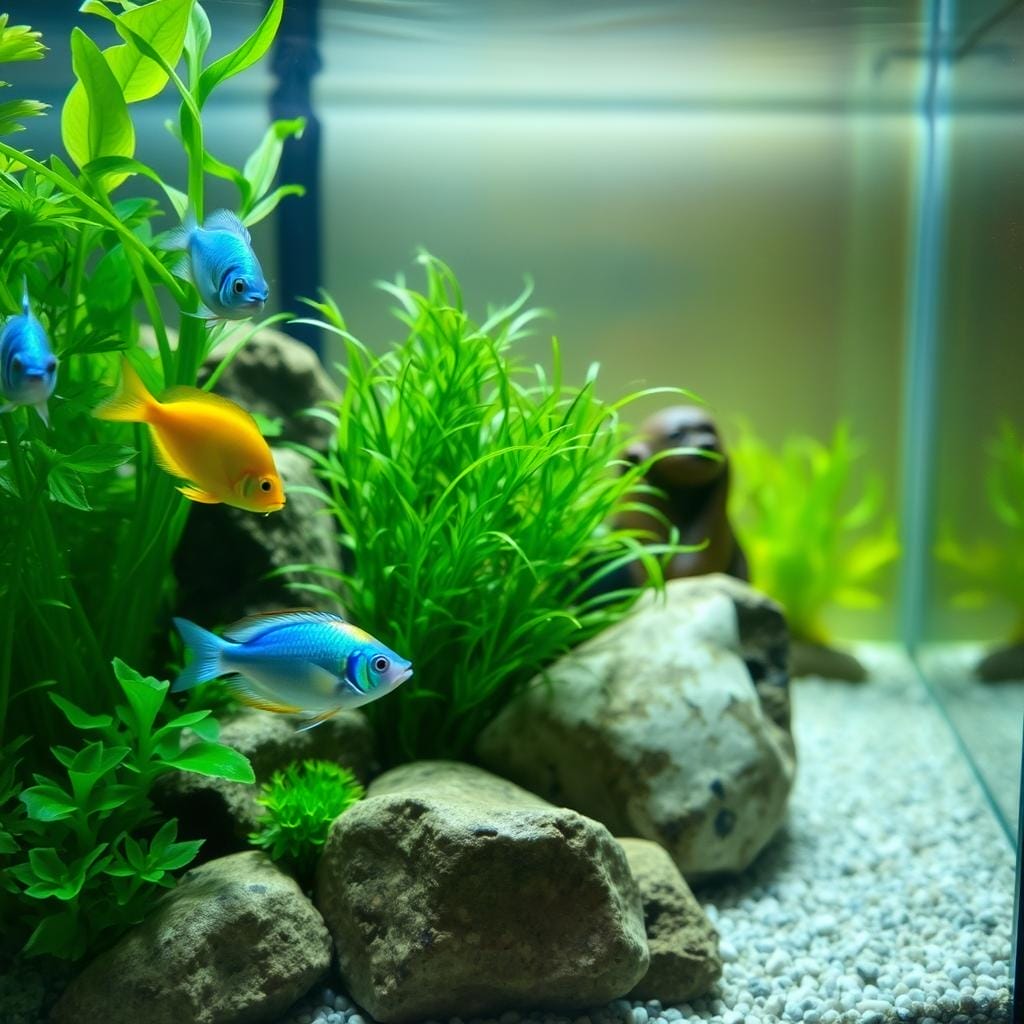
Create open swimming areas in the middle and front sections of your aquarium. Use plants and decorations along the back and sides to provide security while maintaining clear pathways.
Optimal Water Conditions
Maintaining stable water parameters keeps your fish healthy and active. Match temperature, pH, and hardness to your chosen species’ natural habitat.
Fluctuations in water quality can cause stress that disrupts group dynamics. Regular testing and water changes ensure consistent conditions that support natural swimming patterns.
Proper filtration maintains excellent water quality for your aquatic community. Consistent care helps your fish remain comfortable and display their most natural movements.
Ideal Species for Aquarium Schooling Behavior
Your journey to creating a stunning synchronized aquarium begins with selecting the perfect fish species for group living. Some fish naturally thrive in communities, while others prefer solitary lives. Choosing the right individuals makes all the difference in achieving those beautiful coordinated movements.

Popular Schooling Fish Varieties
Tetras rank among the most beloved choices for home aquariums. Neon Tetras, Cardinal Tetras, and Rummy Nose Tetras create dazzling visual displays with their vibrant colors and tight formations. These small fish bring constant activity to your tank.
Barbs like Tiger Barbs and Cherry Barbs add energetic movement to your aquatic community. Danios and rasboras offer hardy options that adapt well to various conditions. They maintain impressive group coordination even in changing environments.
Rainbow fish grow slightly larger but create spectacular schools in spacious tanks. For bottom-dwelling activity, consider certain loaches and Corydoras catfish. These species school along the substrate, adding life to your aquarium’s lower levels.
Always purchase these fish in groups of at least six individuals. Larger groups of ten to fifteen work even better when tank size permits. Some species are obligate schoolers that need constant companionship, while facultative schoolers group together only at certain times.
Research each species’ adult size and care requirements before making your selection. This ensures you can provide appropriate long-term housing for your entire aquatic community.
Practical Tips to Encourage Natural Schooling
Simple adjustments to your tank setup can transform how your fish interact with each other. These proven strategies help your aquatic community feel secure enough to display their most natural movements consistently.

Simulating Natural Environments
Research shows that individual fish removed from their group show higher breathing rates due to stress. Being with companions has a genuine calming effect on your aquatic pets.
Start by purchasing adequate numbers of fish. Your aquatic friends prefer larger groups, so resist buying just one or two. Aim for at least six individuals of the same species.
Mixed species rarely form tight schools and may cause stress. Select fish that are similar in size and appearance. The “oddity effect” means any fish that stands out may become stressed or targeted.
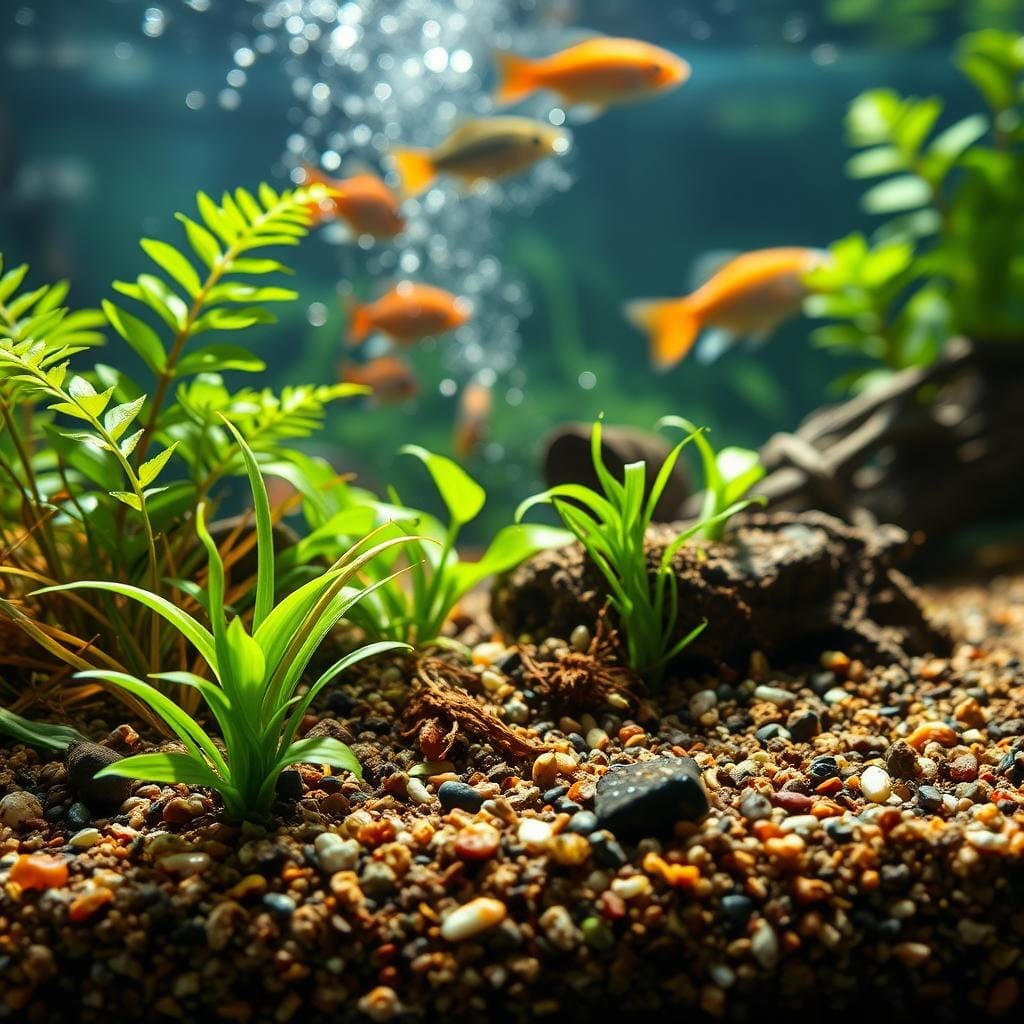
Recreate conditions from your species’ wild habitat. Use appropriate substrate, plants, and decorations that match their natural environment. This helps your fish feel secure enough to school confidently.
Proper lighting that mimics natural day/night cycles establishes normal routines. Observe your fish’s patterns and adjust your setup if they’re hiding or showing stress signs. Small changes make big differences in group dynamics.
Optimizing Aquarium Space for Group Dynamics
Your tank’s physical layout directly influences how confidently your aquatic community moves as one. Understanding how fish organize themselves helps you create the perfect environment for natural group formations.

When your fish are swimming together, each individual matches its neighbor’s movements. This requires adequate horizontal space for smooth coordination. Fast-moving groups often form wedge shapes that need clear swimming paths.
Stationary groups stay close together for security. Your tank needs comfortable resting areas where the entire group can gather peacefully. Feeding time creates circular formations that require spreading-out space.
Plan your stocking levels based on adult fish size, not the smaller juveniles you purchase. This prevents overcrowding as your aquatic pets grow. Proper spacing ensures healthy aquarium fish behavior and reduces stress.
Arrange decorations to create open swimming corridors while providing visual security barriers. Observe how your specific group uses the available space. Adjust your layout if certain areas cause congestion or remain unused.
Traveling schools form various shapes including lines, squares, or ovals. Your tank design should accommodate these natural patterns. The right space planning supports your fish’s instinctive movements and social needs.
Understanding the Role of Predators in Schooling Behavior
Your aquarium fish carry ancient survival instincts that keep them safe in groups. Even without actual predators in your tank, these deeply ingrained patterns continue to guide their movements.
When fish separate from their group, they face significantly greater danger. This explains why they maintain such tight formations. Several clever mechanisms make schooling an effective defense strategy.
Predator Avoidance Mechanisms
The predator confusion effect occurs when multiple moving targets overwhelm a hunter’s visual system. Predators struggle to focus on one fish when many identical bodies twist and flash together.
Larger groups provide better protection through the many eyes hypothesis. More individuals scanning for threats means higher vigilance with less effort per fish. Everyone benefits from shared watchfulness.
The encounter dilution effect improves survival odds in bigger schools. A predator attack consumes a smaller percentage of a large group compared to a small one. Each individual’s risk decreases as the group grows.
Some aquarists keep peaceful “dither fish” swimming in open water. These confident swimmers help shy species feel secure enough to venture out. Understanding these natural defenses helps you create an environment where your fish feel safe.
Feeding and Foraging Dynamics in Fish Schools
Your fish’s feeding habits transform dramatically when they work together as a coordinated team. Watching them cooperate during mealtime reveals fascinating natural instincts that benefit your entire aquatic community.

Research demonstrates that larger groups find food patches significantly faster than individuals. This cooperative advantage comes from many eyes searching simultaneously. When one member discovers food, others quickly notice and join the feast.
Enhanced Foraging Efficiency
Your aquatic pets share information by monitoring each other’s movements closely. Feeding behavior in one fish stimulates immediate food-searching in others. This creates a beneficial cascade effect throughout the group.
Also Read: Common Aquarium Problems and How to Fix Them
A fascinating example comes from herring schools that use “ram feeding” when hunting copepods. These fish swim with mouths wide open in synchronized grids. They position themselves at precise distances matching their prey’s jump length.
You can support this natural cooperation by distributing food across different tank areas. This ensures all group members participate equally. Feed smaller amounts multiple times daily rather than one large meal.
This approach mimics natural foraging patterns and prevents dominant individuals from monopolizing resources. Observe whether all your fish receive adequate nutrition during feeding sessions.
Behavioral Benefits of Group Living in Aquatic Species
When your fish move as one coordinated unit, they’re actually boosting their physical and mental wellbeing in surprising ways. Beyond the stunning visual display, group living provides essential advantages that keep your aquatic pets healthy and content.

Stress Reduction and Social Interaction
Your fish experience genuine comfort when surrounded by companions. Research shows that isolated individuals display higher breathing rates, indicating significant anxiety. Being with their own kind has a powerful calming effect.
This social connection serves as strong motivation for your aquatic pets to stay together. The mental stimulation and enrichment from group interactions contribute to their overall wellbeing. You’re supporting both physical and psychological health by maintaining proper group sizes.
Increased Hydrodynamic Efficiency
Your fish conserve precious energy by swimming in formation. Recent studies demonstrate that groups can reduce swimming costs by up to 20% compared to solitary individuals. This efficiency gain comes from water movements created by neighbors.
Think of it like cyclists drafting behind each other or geese flying in V-formations. The energy savings allow your fish to allocate more resources to growth, reproduction, and immune function. These benefits create a healthier, more vibrant aquatic community in your care.
Maintaining Fish Health in a School Environment
A thriving school of fish is a beautiful sight, but it also creates specific care challenges you need to manage. Group living offers many benefits, yet it concentrates waste and increases oxygen demands within your tank. Your consistent care is the key to balancing these factors for long-term vitality.

Water Quality and Regular Care
Excellent water quality is non-negotiable for a healthy group. More fish naturally produce more waste, which can quickly affect your aquatic environment. Performing regular partial water changes—about 25-30% weekly—is your best defense.
This routine prevents harmful excretion buildup and keeps parameters stable. Test your water often for ammonia, nitrite, and nitrate to catch issues early.
Your filter must work harder too. Choose a system rated for 1.5 to 2 times your tank’s volume. Good surface agitation or an air stone ensures proper oxygenation for the entire group.
Always quarantine new arrivals before introducing them to your established community. This simple step prevents disease from spreading. Observe your fish daily for any signs of stress or illness; early detection makes treatment easier.
With dedicated time and attention, you can create a successful community aquarium where every member thrives.
Human Impacts on Natural Schooling Patterns
The safety-in-numbers strategy that has protected fish for millennia is now being challenged by human fishing technologies. Modern industrial fishing practices can actually decrease fish tendencies to form large groups in the wild.

Technologies like purse-seining and trawling deploy enormous nets that capture entire large schools of thousands of fish at once. This creates evolutionary pressure where fish in large groups become more vulnerable to human predators than solitary individuals.
Research from UC Santa Barbara, the Santa Fe Institute, and the University of Washington shows these changes can shift entire species‘ preferences over time. Instead of forming massive schools, fish may evolve toward smaller group sizes or more solitary lifestyles.
These behavioral changes impact natural predators like seabirds and marine mammals that evolved hunting strategies based on large schools. If wild schooling patterns continue to decline, fisheries themselves become vulnerable as catching dispersed fish requires more resources.
While your aquarium fish aren’t directly affected by fishing pressure, many species‘ wild populations face these challenges. You can support sustainable fishing practices and conservation efforts that protect natural fish behavior in their ocean homes.
Key Scientific Observations on Fish Schooling
The sheer scale of natural fish schools in the wild demonstrates the incredible complexity of group coordination. Scientific observations reveal astonishing facts that will change how you view your aquarium community.
Researchers have documented phenomena that showcase nature’s remarkable engineering. These findings help us appreciate the sophisticated systems your fish naturally follow.
Research Insights and Data Analysis
Radakov’s research estimated herring schools in the North Atlantic can occupy up to 4.8 cubic kilometers. This massive space contains approximately three billion fish moving as one coordinated unit.
Scientists observed mullet migration chains stretching one hundred kilometers long in the Caspian Sea. Herring schools maintain precise arrangements allowing constant cruising speeds over extended time periods.
Remarkably, herrings keep specific distances from threats like scuba divers or killer whales. They form vacuoles resembling doughnuts when viewed from above. Experiments clearly demonstrate the predator confusion effect.
Research confirms fish use multiple sensory systems including vision, smell, and the lateral line. This article shares how these scientific observations help you better understand your aquarium’s natural dynamics.
Final Thoughts: Cultivating a Vibrant Aquarium Community
Your aquarium’s true potential emerges when you prioritize quality over quantity in species selection. Many beginners understandably want variety, purchasing one or two individuals of many different types. However, this approach doesn’t serve group-oriented fish well.
Fish from schooling species thrive when you buy them in proper numbers. They become happier, healthier, and display more vibrant colors. You’ll notice they’re less skittish and spend more time swimming confidently in open water.
Instead of buying two or three neon tetras, consider getting a dozen or more if your tank allows. Watching a large group move as one living organism creates a spectacular wall of color flowing through your aquarium. This breathtaking sight will become the centerpiece of any room.
Choose one or two favorite species and stock them properly. Your investment in creating the right social environment pays off with a vibrant, natural aquarium where your fish truly flourish. Thank you for learning about these fascinating group dynamics!
FAQ
What is the difference between shoaling and schooling?
Shoaling is when fish loosely hang out together in a group. Schooling is a more coordinated version where they swim in sync, often changing direction as one unit. Many popular aquarium fish are natural shoalers that will school when they feel the need, like when startled.
Why do my fish sometimes school and other times spread out?
This is perfectly normal! Your fish will often group tightly when they feel threatened, are exploring a new tank, or during feeding time. When they feel safe and relaxed in their environment, they’ll spread out to explore and rest individually.
How many fish do I need to see schooling behavior?
For most species, a group of at least six individuals is the minimum to encourage natural group dynamics. However, larger groups of eight to twelve or more will create a much more vibrant and confident display, making the schooling more pronounced.
Can different species of fish school together?
Typically, no. Fish school with members of their own kind. They rely on specific visual cues, body size, and swimming patterns from their own species to coordinate movements effectively. Mixing species usually results in separate groups within the tank.
What tank setup is best for encouraging my fish to school?
A longer tank, rather than a tall one, gives them the horizontal swimming space they need. Place decorations and plants around the sides and back of the aquarium, leaving a large, open area in the center for them to move through as a group.
Does water quality affect schooling behavior?
Absolutely. Poor water conditions are a major source of stress. Stressed fish are more likely to hide erratically than swim together calmly. Maintaining excellent water quality is one of the most important things you can do to help your fish feel secure enough to exhibit their natural behaviors.
Aquarium fish behaviorBehavioral enrichment for fishCreating fish schoolsEncouraging social behaviorFish schooling techniquesSchooling behavior in fish
Hi, I'm Millie a passionate fish enthusiast and blogger. I loves learning about all kinds of aquatic creatures, from tropical fish to stingrays.