
Creating a Harmonious Tank with Tropical Community Fish
 Millie Douglas
Updated on: December 1, 2025 .
15 min read
Millie Douglas
Updated on: December 1, 2025 .
15 min read
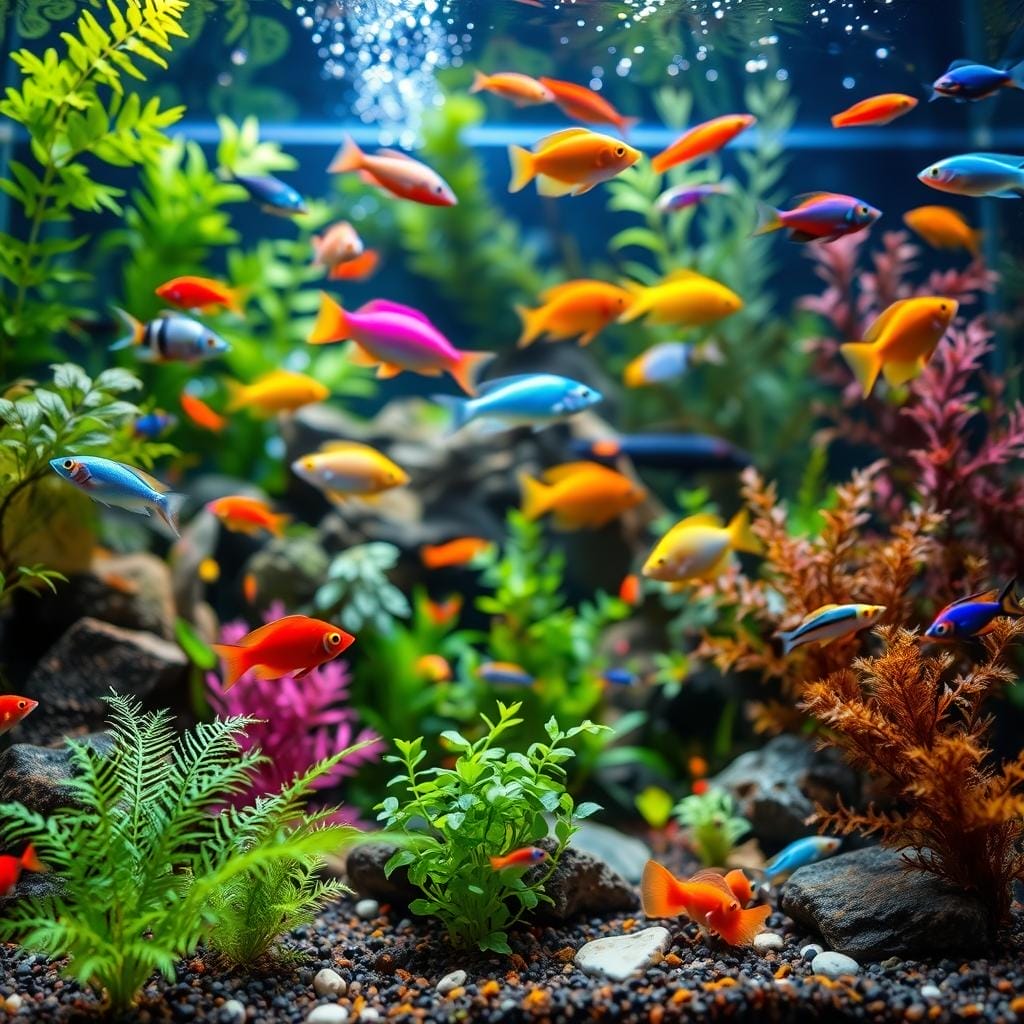
Have you ever wondered if it’s truly possible to create a peaceful underwater world where different species live together in perfect balance?
The answer is a resounding yes, and the journey is incredibly rewarding. Building a thriving home aquarium is an exciting project. You are about to discover how to create a beautiful, living ecosystem.
This guide will walk you through every step. We focus on selecting peaceful, colorful species that coexist well. You will learn the secrets to a successful and balanced aquatic environment.
Our supportive advice is tailored for everyone. Whether you are new to the hobby or expanding your current setup, we provide clear, actionable steps. Your path to a stunning, healthy aquatic display starts right here.
Understanding the Fundamentals of Community Aquariums
The secret to a harmonious underwater world lies in selecting the right combination of aquatic residents. Your success begins with understanding what makes certain species ideal neighbors. This foundation ensures your aquarium becomes a thriving ecosystem rather than a stressful environment.
Defining a Successful Community Tank Environment
A well-balanced setup depends on choosing inhabitants that share similar needs. Look for species that adapt to various water conditions without constant adjustments. This flexibility makes maintaining stable parameters much easier for you.
Moderate-sized inhabitants work best in multi-species setups. They avoid being seen as prey while reducing bullying tendencies. Your selection should focus on active, curious swimmers rather than territorial ones.
Characteristics of Peaceful Aquarium Fish
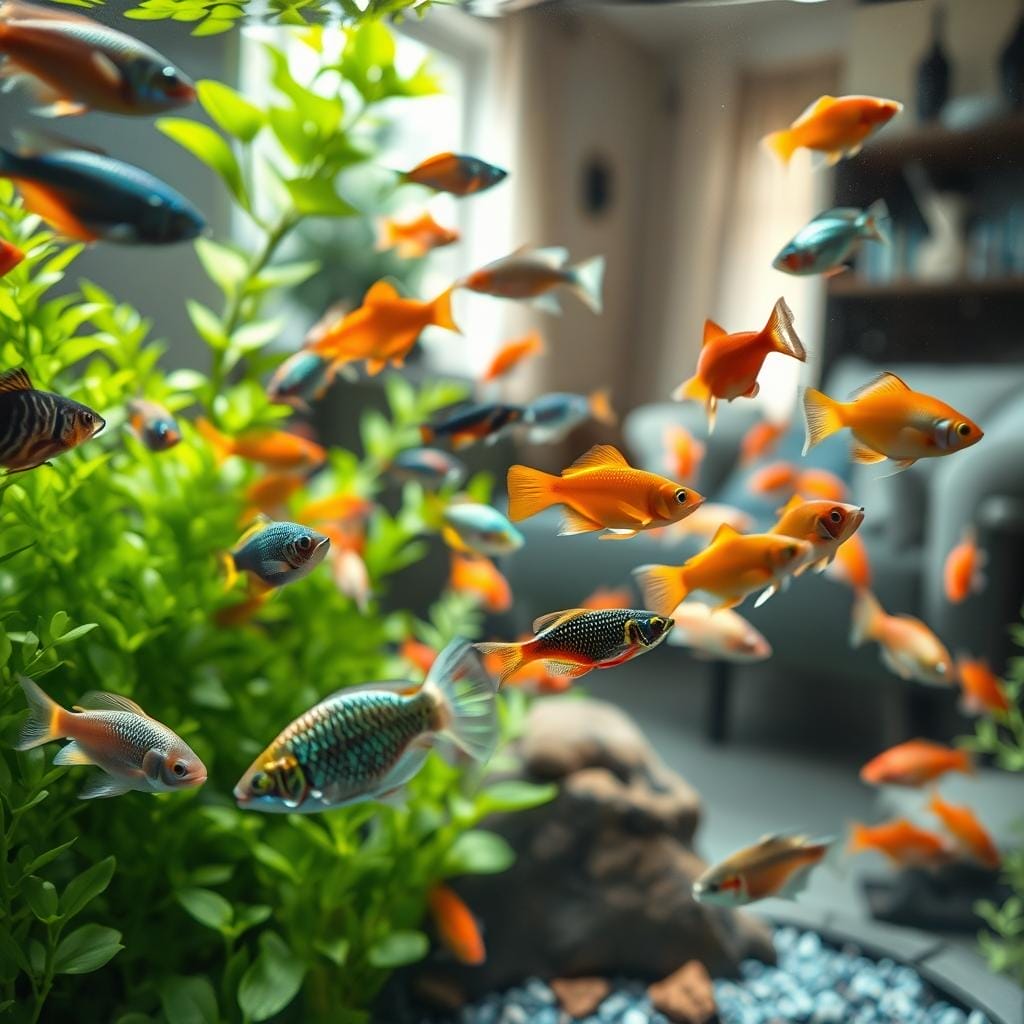
Peaceful species display natural curiosity without aggression toward tankmates. They tend to be schooling varieties that feel secure in groups of six or more. This group size allows them to show their most vibrant colors and confident behaviors.
When your residents feel safe, they reward you with stunning displays and natural interactions. The right combination creates a living artwork that brings daily joy. Your careful selection pays off in a balanced, engaging underwater world.
Essential Tank Setup and Water Condition Guidelines
The foundation of a successful aquatic display begins with careful attention to your setup details. Getting these elements right from the start creates a stable environment where your colorful swimmers can truly flourish.
Your initial choices about equipment and water management will determine the long-term health of your underwater world. Thoughtful planning now prevents common problems later.
Optimal Tank Size and Filtration Systems
Choosing the right tank size is your first critical decision. A spacious environment prevents overcrowding and reduces stress among your aquatic residents. This careful planning pays off with healthier, more active inhabitants.
Your freshwater environment needs consistent temperature control. Most colorful species thrive between 75-80°F. Even in warm climates, a reliable heater prevents dangerous fluctuations.
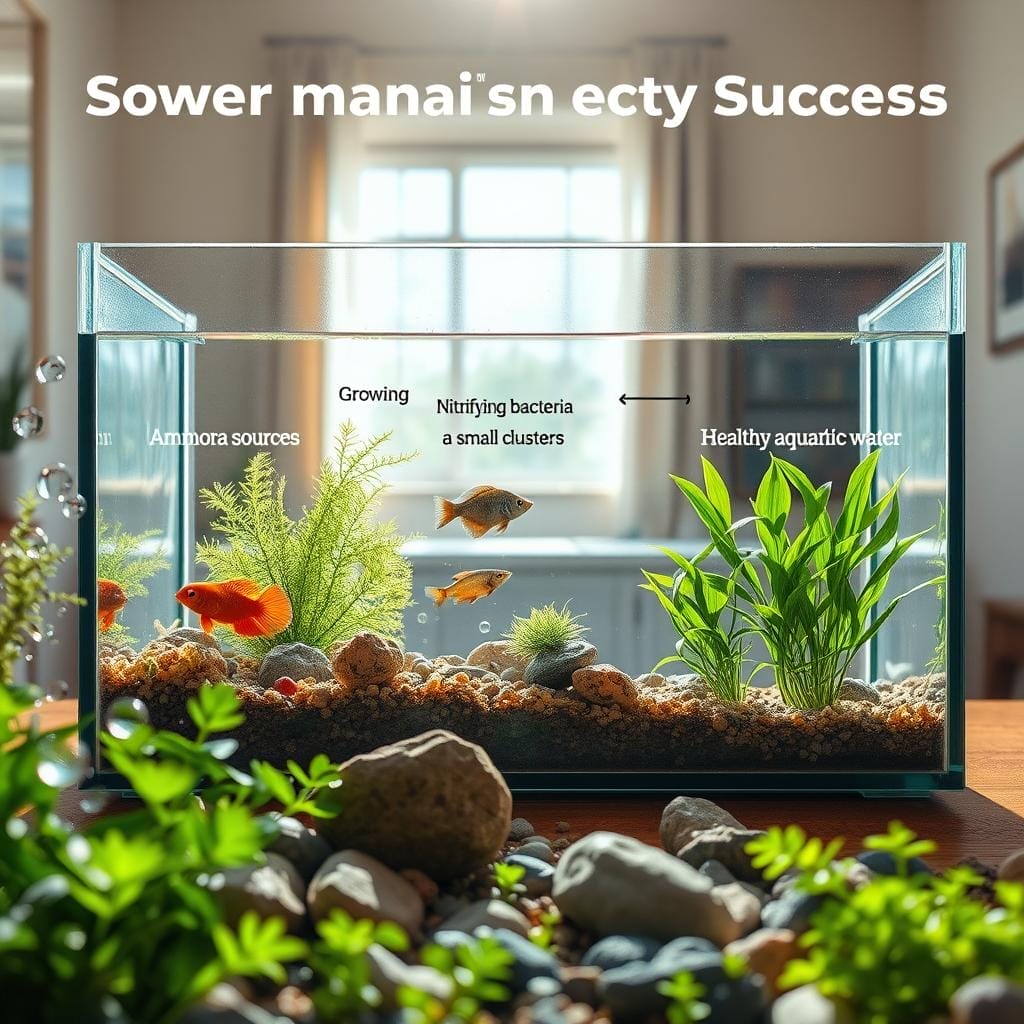
A quality filtration system works tirelessly to maintain clean water conditions. It removes waste while supporting beneficial bacteria that keep your aquarium balanced. This invisible ecosystem is vital for long-term success.
Regular testing helps you monitor key parameters like pH and nitrate levels. Understanding the nitrogen cycle transforms harmful substances into safer compounds. Your consistent care creates the perfect home for vibrant underwater life.
Exploring Tropical Community Fish and Their Benefits
Your journey into community aquariums gains depth when you understand where these colorful swimmers originate. Many popular species come from equatorial regions where water temperatures stay consistently warm year-round.
These freshwater fish offer a wide range of colors and patterns that transform your tank into a living canvas. You get to enjoy dynamic behaviors and interactions that create constant visual interest.
The natural compatibility of these species makes building your peaceful community easier. Many evolved in similar environments with comparable water parameters. This shared background reduces potential conflicts.
You benefit from options suitable for every experience level. Beginners find species requiring easy care, while advanced hobbyists can challenge themselves with more delicate varieties. Your skills can grow alongside your aquarium.
Selecting from diverse freshwater fish allows you to create a truly unique ecosystem. Each species brings distinct characteristics that complement others in size and temperament. Your tank becomes a harmonious world where different inhabitants thrive together.
The appeal of community tanks lies in observing natural behaviors unfold daily. You witness schooling patterns, feeding interactions, and social dynamics that mimic life in the wild. This living artwork rewards your careful planning with endless fascination.
Beginner-Friendly Community Fish Species for Your Aquarium
Starting your aquarium adventure becomes much more rewarding when you choose species known for their beginner-friendly nature. These aquatic residents offer easy care requirements and peaceful temperaments that build your confidence.
You’ll find success with these options because they adapt well to various water conditions. Their forgiving nature makes them perfect for learning proper aquarium maintenance.
Highlighting Guppies, Neon Tetras, and More
Guppies stand out as ideal starter fish species with their vibrant colors and active swimming. Their small size and peaceful demeanor make them wonderful additions to any setup.
You’ll love how these colorful swimmers accept various foods and thrive in groups. Their stunning fins and patterns create constant visual interest in your tank.
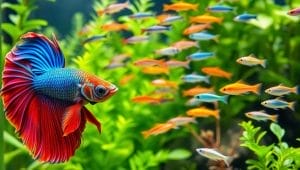
Neon tetras bring mesmerizing blue and red stripes that glow under aquarium lights. These tetras display their best colors when kept in groups of six or more.
Consider adding zebra danios for energetic movement and bold striped patterns. Bottom-dwelling catfish like Corydoras help maintain cleanliness while being peaceful companions.
You can explore varieties like cherry barbs for striking red accents. Each of these freshwater fish has earned its name through reliability and beauty.
Your selection of compatible tank mates ensures a harmonious environment where all inhabitants thrive together.
Choosing Compatible Tank Mates for a Balanced Aquarium
Building a successful multi-species aquarium depends heavily on your ability to match inhabitants that naturally coexist. Your careful selection ensures all residents feel secure and display their best behaviors.
You need to consider each aquatic resident’s temperament, activity level, and physical dimensions. This thoughtful approach helps everyone get along peacefully in your shared environment.
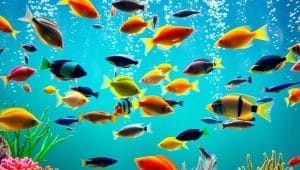
Your setup works beautifully when you match swimmers that occupy different water levels. Surface dwellers, mid-level swimmers, and bottom feeders create a natural balance. They rarely compete for the same space or resources.
Avoid pairing slow-moving varieties with long, flowing fins with energetic species like zebra danios. Some active fish may nip at attractive fins, causing stress. Instead, match similar activity levels for harmony.
Size compatibility matters greatly in your selection. Larger peaceful fish might see very small tank mates as food. Always research each species by name to understand their full adult size.
Certain varieties like tiger barbs do best in larger groups. This reduces their tendency to bother others in the aquarium. Your freshwater community thrives when you understand these social dynamics.
Your balanced aquarium becomes a peaceful world where every resident feels secure. This attention to detail rewards you with natural behaviors and vibrant displays.
Feeding and Nutritional Best Practices for Aquarium Fish
Proper nutrition is the cornerstone of a vibrant and healthy aquarium. Your feeding routine directly impacts the well-being, color, and energy of every inhabitant. A balanced approach ensures your underwater world thrives.
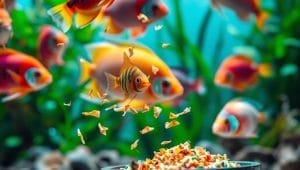
You will discover that most peaceful species accept a wide range of commercial fish food. High-quality flakes and pellets form an excellent staple diet. Supplementing this base food with frozen or live options like brine shrimp adds vital variety.
Dietary Requirements and Recommended Fish Food
Each type of aquatic life has unique needs. Guppies happily eat almost any food you offer. Neon tetras require tiny particles they can easily consume.
Bottom-dwellers like catfish need sinking wafers to reach them. Algae eaters, such as Bristlenose Plecos, still need blanched vegetables and specialized wafers. They cannot live on tank growth alone.
Feed your freshwater aquarium small amounts two or three times daily. Offer only what your swimmers can finish in a few minutes. This prevents waste and keeps the water clean.
Avoiding overfeeding is one of your most important tasks. It prevents health issues and maintains excellent water quality. Your careful attention to diet rewards you with active, colorful inhabitants.
Designing a Natural Habitat with Plants and Decor
A thoughtfully designed habitat does more than look good—it directly supports the well-being of every swimmer. By mimicking natural environments, you create a secure space where inhabitants thrive. Your careful planning pays off in vibrant health and captivating behaviors.
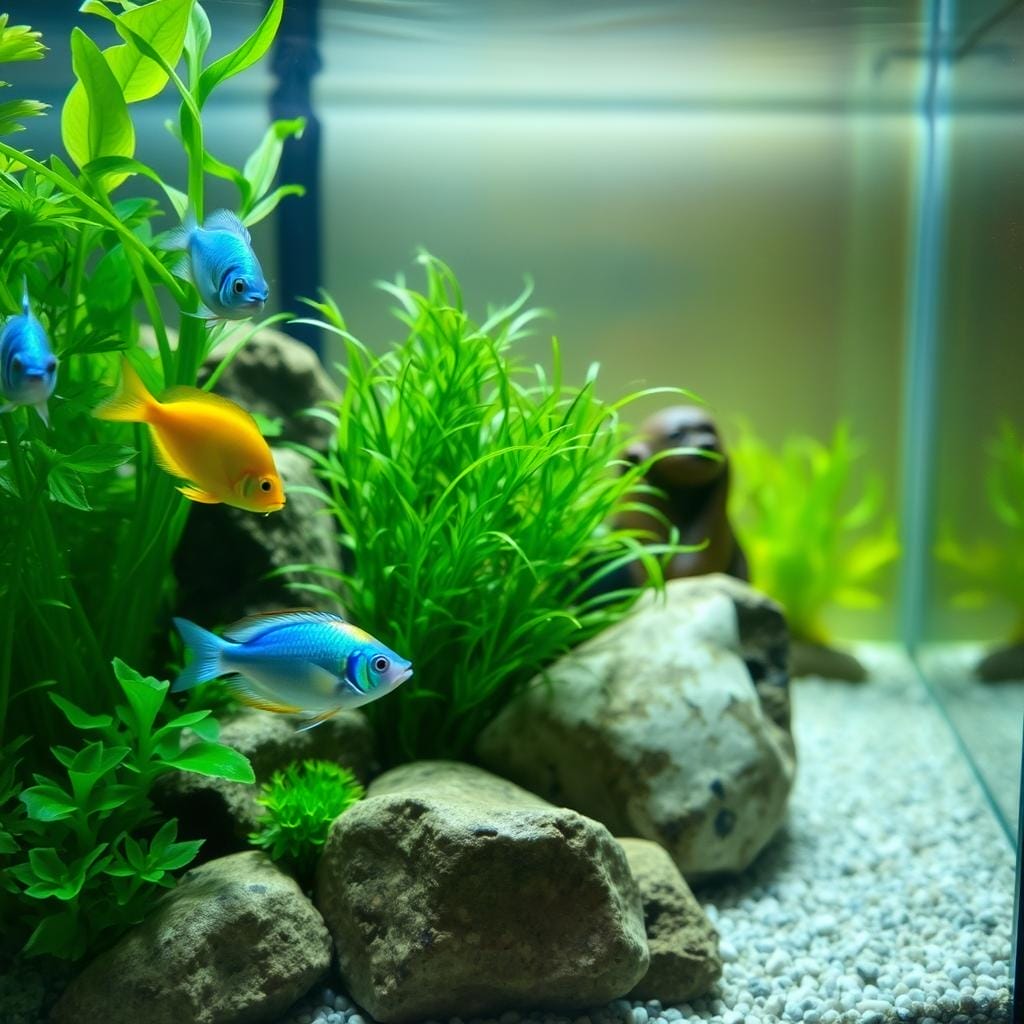
Live plants are the heart of a healthy freshwater aquarium. They provide essential hiding spots, making shy species like neon tetras feel safe. This security reduces stress, allowing their brilliant colors to shine.
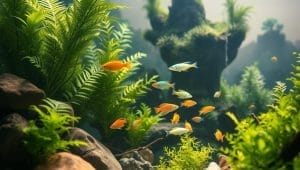
Your tank benefits from a wide range of plant types. Tall species in the background create depth, while shorter ones in the front offer open sightlines. This layout gives energetic zebra danios room to swim while providing cover for others.
Incorporate driftwood, rocks, and caves into your design. These elements offer territories and resting places. Many popular aquarium selections naturally interact with such decor, displaying more interesting habits.
Beyond beauty, plants work hard for your aquatic world. They absorb harmful nitrates and produce oxygen, improving water quality. A well-planted tank often requires less cleaning over time.
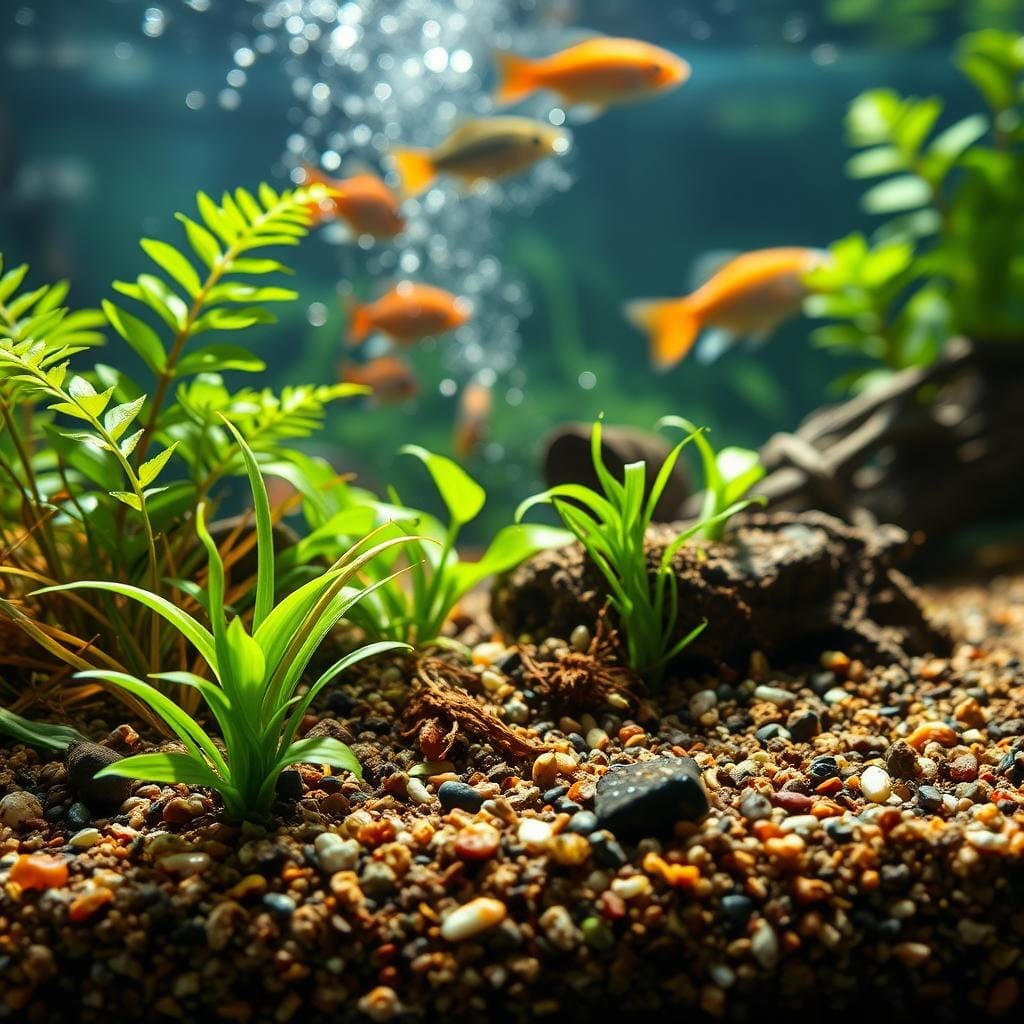
Choose a dark substrate to make the colors of your inhabitants pop. This simple choice mimics riverbeds found in nature. Your balanced community will reward you with a stunning, living display.
Managing Schooling Behavior and Group Dynamics
When aquatic residents feel secure in proper numbers, they reward you with stunning displays. Many schooling fish need companions of their own kind to thrive. Your attention to group sizes creates a healthier, more vibrant environment.
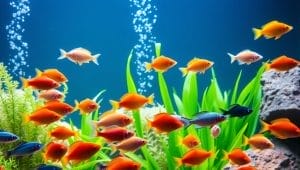
Different species have unique social requirements. Neon tetras prefer large groups of fifteen or more, while harlequin rasboras need at least eight companions. Cory catfish perform delightful synchronized dances when kept in proper numbers.
You’ll notice that fish kept in appropriate groups show brighter colors and more confident behaviors. White Cloud Mountain minnows become withdrawn without their own kind. Understanding schooling behavior versus independent tendencies helps you plan your tank effectively.
Observe how your tank mates interact within their group. Some species like celestial pearl danios appreciate occasional alone time. Your peaceful community benefits when each schooling fish has enough companions.
Proper groups create mesmerizing coordinated swimming patterns. Rummynose tetras stick together tightly, creating stunning visual effects. Your peaceful fish will feel more secure around others of their kind.
Remember that some fish need groups least six strong, while others require larger numbers. Your community fish will display their best behaviors when social needs are met. This attention to detail transforms your aquarium into a harmonious underwater world.
Also Read: Common Aquarium Problems and How to Fix Them
Addressing Aggression and Territorial Challenges
You might notice some tension among your tank inhabitants despite your careful planning and selection process. Even peaceful species can show unexpected behaviors that require your attention.
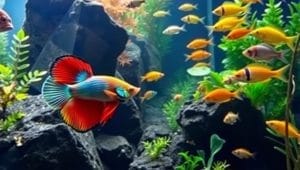
Understanding why conflicts occur helps you create effective solutions. Some fish naturally compete for space or resources.
Mitigation Strategies and Care Tips
Male honey gouramis may fight unless you provide ample space. Keeping just one male per setup prevents this issue.
Zebra danios are active swimmers that might nip at flowing fins. Avoid pairing them with slow-moving tank mates.
Tiger barbs do best in large groups to reduce aggression toward others. Their social nature needs proper management.
Size differences can cause problems. Larger fish might see small tank mates as food, regardless of their peaceful name.
Your observation skills help spot early warning signs. Look for fin damage or constant chasing. Providing hiding spots gives stressed fish safe retreats.
Avoid overcrowding your community tank. Proper space reduces stress and helps everyone get along better.
Maintaining a Clean and Healthy Freshwater Aquarium
Maintaining crystal-clear water conditions is the key to showcasing the vibrant beauty of your underwater world. Your consistent care routine transforms your aquatic environment into a thriving ecosystem where every inhabitant flourishes.
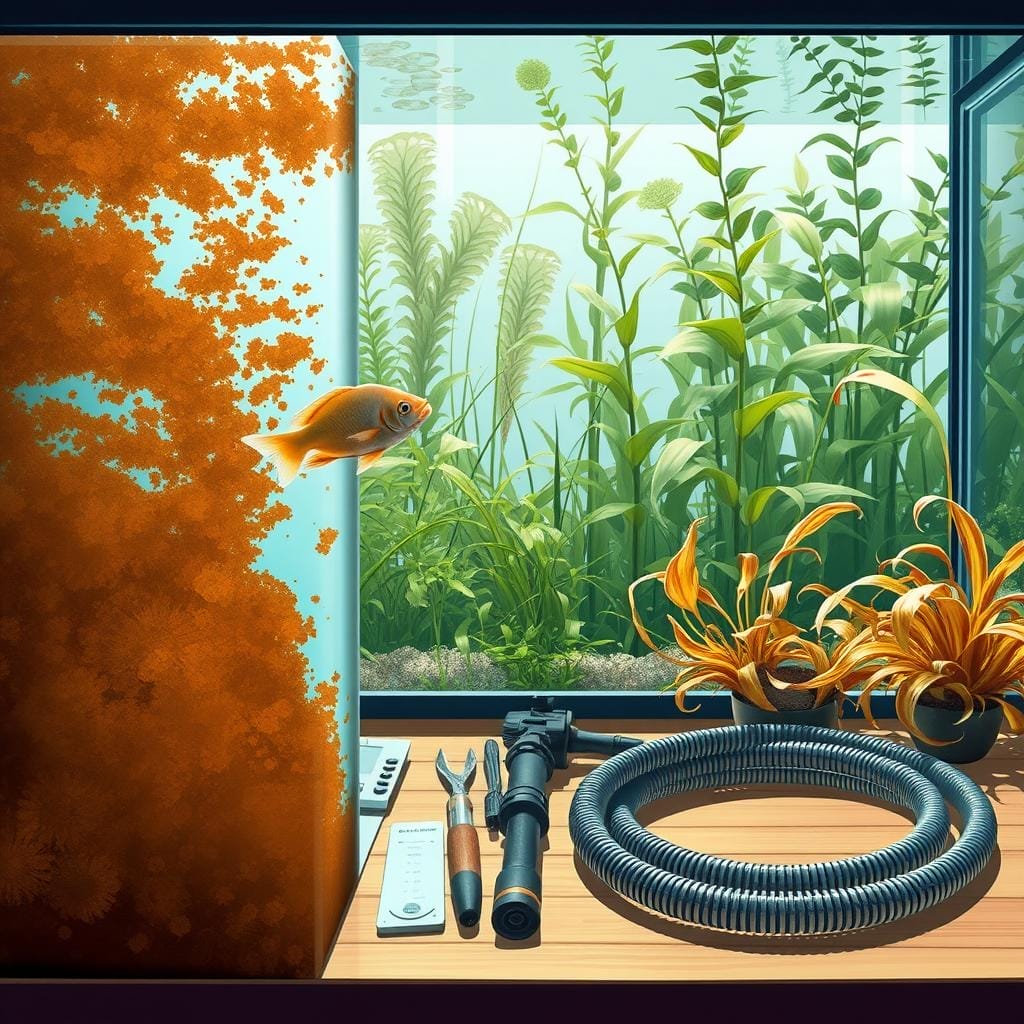
Establish a weekly maintenance schedule that includes 20-25% water changes. This removes accumulated waste while replenishing essential minerals. Vacuum your substrate during these changes to eliminate uneaten fish food and organic debris.
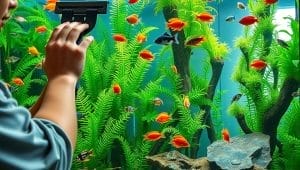
Add helpful species like Corydoras catfish to naturally clean your tank. These bottom-dwellers consume leftover food that falls to the substrate. Bristlenose plecos effectively control brown algae, while otocinclus fish work tirelessly on surface growth.
Monitor your filter media regularly and clean it according to manufacturer guidelines. Test water parameters weekly to catch issues early. Check ammonia, nitrite, nitrate, pH, and temperature for stable conditions.
Avoid overfeeding—this is the primary cause of poor water quality in freshwater setups. Your peaceful community benefits from consistent maintenance that prevents harmful buildup.
Your diligence creates a healthy environment where inhabitants display vibrant colors and active behaviors. Proper care ensures your aquatic residents enjoy long, healthy lives in your beautifully maintained aquarium.
Selecting the Right Equipment for Your Community Tank
The right equipment transforms your setup from a simple container into a thriving aquatic home. Your choices directly influence the health and happiness of every inhabitant.
Quality components create the stable conditions necessary for success. They work together to mimic a natural environment.
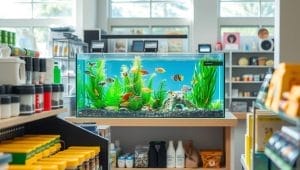
Filters, Heaters, and Lighting Options
Your filter is the heart of the aquarium. It cleans the water and supports beneficial bacteria. Choose one rated for your tank size or slightly larger for best results.
A reliable heater maintains a steady temperature. Most inhabitants thrive between 75-80°F. An adjustable model with a thermostat gives you precise control.
Lighting supports your swimmers and any live plants. Aim for 8-10 hours of moderate light daily. This schedule encourages plant growth without promoting excess algae.
Don’t forget a thermometer to monitor water temperature. For bottom-dwellers like catfish, a soft sand substrate prevents injury. Your thoughtful equipment selection ensures all tank mates live comfortably.
Investing in good gear from the start makes long-term care much easier. Your peaceful underwater world will reward your careful planning.
Innovative Ideas for a Vibrant Aquarium Setup
Creative aquarium design allows you to express your personal style while creating an optimal environment for your swimmers. Your setup becomes more than just a home—it transforms into a living work of art that reflects your vision.
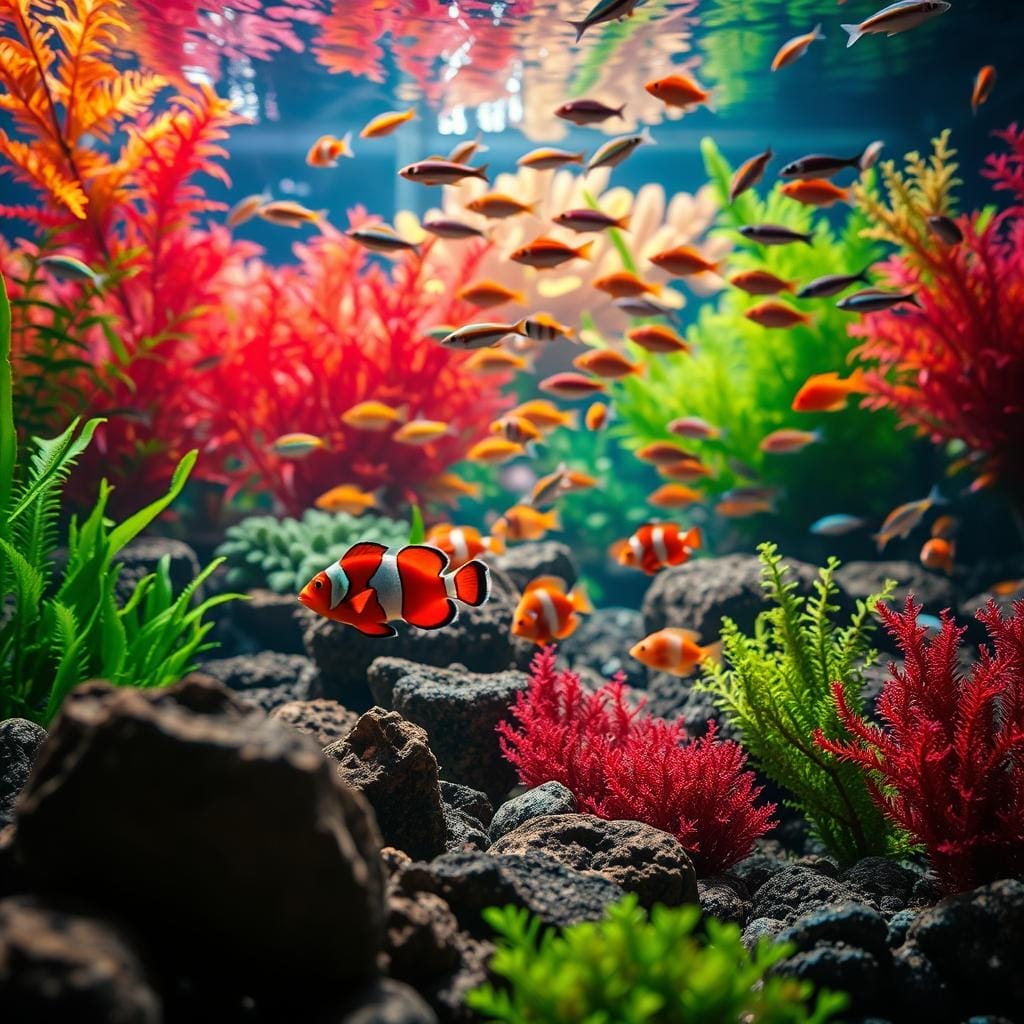
Consider building color-themed community tanks that showcase complementary hues. Pairing blue danios with orange platies creates striking visual contrast that catches the eye. You might design a “rainbow” setup featuring varieties with different colors throughout the entire length of your fish tank.
Create dynamic movement by selecting species that occupy different water levels. This approach ensures activity from top to bottom, making your aquarium feel alive in every dimension. Your choices should include surface swimmers, mid-level explorers, and bottom dwellers.
Substrate selection dramatically affects how your aquarium fish appear. Dark sand makes bright colors pop, while natural tones create a peaceful backdrop. Live plants in various textures and hues add depth while supporting water quality.
For specific inspiration, explore our top community tank selections that work well in themed setups. Celestial pearl danios create galaxy-like patterns against dark backgrounds when paired with appropriate tank mates.
Your creativity can shine through careful species selection by name and temperament. Themed environments like biotope aquariums replicate specific natural habitats using authentic plants and decor. This approach creates both visual appeal and biological harmony.
Final Reflections on Building Your Ideal Fish Haven
As you stand ready to begin your aquatic adventure, remember that patience and careful observation will be your greatest allies. Your dedication to learning about proper care has prepared you for success.
Starting with hardy, beginner-friendly species allows you to build confidence. You can expand your community as your experience grows. Your tank will become a living ecosystem that rewards your attention.
Understanding proper aquarium cycling methods ensures a healthy start for your new inhabitants. This foundation supports the peaceful community you want to create.
Your aquarium brings relaxation and beauty to your daily life. The relationships between different species will continue to fascinate you. Your thoughtful planning creates a safe home where your fish can thrive.
Take pride in the environment you’re building. Your ideal underwater world awaits—apply your knowledge with care and enjoy the journey.
FAQ
What exactly is a community aquarium?
A community aquarium is a freshwater setup where different species live together peacefully. The goal is to create a balanced environment where inhabitants get along. This requires careful selection based on size, temperament, and water condition needs.
Which species are considered the best for beginners?
Excellent starter choices include guppies, neon tetras, and zebra danios. These varieties are known for their hardy nature, vibrant colors, and easy care requirements. They adapt well to a wide range of conditions and are generally peaceful.
How important is tank size for a group of fish?
Tank size is critical for health and harmony. A larger volume of water is more stable and reduces stress. For a small group, a 20-gallon tank is a great starting point. It provides ample swimming space and helps maintain high water quality.
What should I feed my aquatic pets?
A high-quality flake or micro-pellet food serves as a good staple diet. It’s best to supplement this with frozen or live treats like brine shrimp. Offering a varied menu ensures your pets receive all the necessary nutrients for vibrant color and energy.
Can I keep different types of catfish together?
Yes, many smaller catfish, like Corydoras, are fantastic additions. They are peaceful bottom-dwellers that help clean up leftover food. Just ensure they are kept in a small group of their own kind to feel secure.
How do I manage aggression from certain species like barbs?
Keeping potential fin-nippers in larger groups of six or more can spread out any aggressive behavior. Providing plenty of plants and decorations also helps break sightlines and create hiding spots, reducing conflicts among tank mates.
Aquarium harmonyCommunity Fish CareCommunity fish speciesCreating Fish CommunitiesFish Tank CommunityTank Mates CompatibilityTropical Community FishTropical Fish Tank Setup
Hi, I'm Millie a passionate fish enthusiast and blogger. I loves learning about all kinds of aquatic creatures, from tropical fish to stingrays.