
Video Recording Setup: Tips for Capturing Your Aquarium
 Millie Douglas
Updated on: December 1, 2025 .
20 min read
Millie Douglas
Updated on: December 1, 2025 .
20 min read
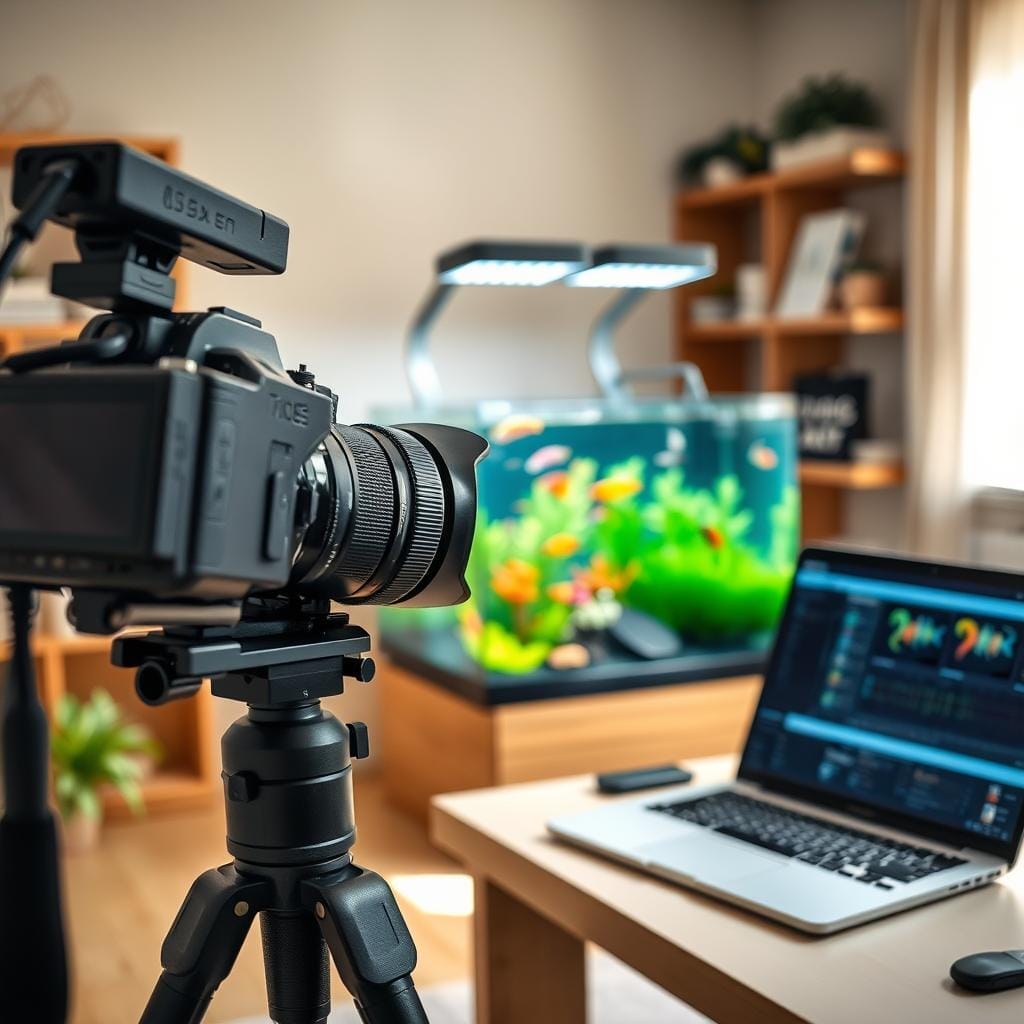
Have you ever tried to film your beautiful aquarium, only to end up with a blurry, reflective mess that doesn’t do your underwater world justice?
You are not alone. Capturing the vibrant life inside a glass tank presents unique challenges. This guide is here to change that. We will walk you through creating a fantastic video recording setup specifically for your aquatic habitat.
Whether you want to document your tank’s progress for your own memories or share its beauty with others online, we have you covered. You do not need a Hollywood budget or a film degree to get stunning results.
We will explore everything from choosing the right gear to simple tricks for managing light and glass reflections. Our goal is to make this process easy, fun, and successful for you.
By the end, you will have a clear plan to start filming footage that truly showcases your finned friends and aquatic plants. Let’s dive in and unlock the secrets to amazing aquarium footage together.
Understanding Aquarium Videography
Aquarium filming brings together three tricky elements: water, glass, and unpredictable aquatic life. This combination creates challenges you won’t find in other types of photography. Understanding these basics will help you capture stunning footage that truly represents your underwater world.
Light behaves differently when it hits water and glass surfaces. You’ll notice reflections and bending light that can either enhance your footage or create distracting glare. Learning to work with these effects is key to improving your final product’s quality.
Your main goal is to showcase the natural beauty of your fish and plants while minimizing unwanted visual issues. The glass tank can introduce color distortion and reflections that hide your aquarium’s true colors. With the right approach, you can overcome these obstacles.
Think about what type of material you want to create. Are you documenting fish behavior for your own memories? Or are you sharing your aquascaping skills with other enthusiasts? Your purpose will guide your filming strategy.
This knowledge helps you make smart choices about equipment and configuration. You’ll discover that patience becomes your best friend in aquarium filming. Fish don’t follow directions, so capturing perfect moments often takes multiple sessions.
The footage you produce can serve many purposes. From personal documentation to building connections with fellow aquarium lovers worldwide, your creative work has lasting value. Each recording session brings you closer to mastering this unique art form.
Establishing Your Content Goals
What do you hope to accomplish with the moving images of your underwater world? Before selecting any gear, take time to define your purpose. This clarity will guide every decision you make.
Defining the Purpose of Your Videos
Think about the “Four N’s” framework for your content. Do you want to Inspire others with beautiful aquascapes? Or Inform viewers about proper fish care?
Maybe you aim to Empower beginners with educational tutorials. Perhaps you simply want to Entertain people with relaxing aquarium footage. Your choice determines your entire approach.
Differentiating Between Informative and Inspirational Content
Informative videos often need close-up shots and clear narration. They might document tank maintenance or species behavior. This content serves educational purposes.
Inspirational pieces focus on visual beauty. They use wider angles and dramatic lighting. These videos create emotional connections with your audience.
Your goals affect technical choices. Educational content might work well for a small business. Relaxing footage could gain traction on social media platforms.
Consider whether you’ll appear on camera or focus solely on the aquarium. This decision shapes your equipment needs and filming strategy from the start.
Planning Your Video Recording Setup Strategy
The secret to great aquarium footage lies in thoughtful preparation before you press record. A solid plan transforms your filming experience from chaotic to controlled. This strategic approach saves you time and prevents costly mistakes.
Consider these essential questions for your filming setup:
- What types of content will you create most often?
- When will you typically use your filming space?
- How much room do you realistically have available?
- Will you work alone or occasionally include guests?
- What camera angles best serve your content goals?
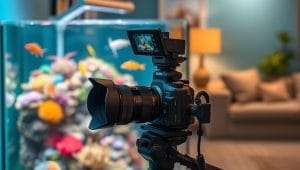
Your planning should account for different content styles. You might focus on full tank displays one day and close-up portraits the next. Each approach requires slightly different equipment placement.
Think about your available space honestly. Whether you have a dedicated room or a small corner, your studio configuration affects everything. Proper planning ensures efficient use of your area.
This preparation guide helps you build a flexible system. Your first video might be simple, but your setup should grow with your skills. Map out your ideal arrangement on paper first.
Taking this crucial step now means smoother filming sessions later. You’ll spend less time troubleshooting and more time capturing beautiful aquatic moments. Your future self will thank you for this foundation.
Choosing the Ideal Location for Aquarium Filming
Finding the perfect spot in your home for aquarium filming requires balancing several important factors. Your chosen location becomes the stage where your aquatic world comes to life on screen.
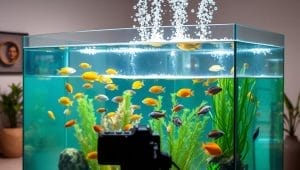
The right room can make your footage look professional with minimal effort. Think about how you’ll use the space before making your final decision.
Considering Ambient Noise and Natural Light
Natural light from windows creates beautiful, soft illumination for your aquarium. This gentle lighting brings out the true colors of your fish and plants.
Be mindful of direct sunlight though. Harsh rays can create unwanted reflections on the glass surface.
Ambient noise matters more than you might think. Avoid rooms with loud appliances or street noise. These sounds can distract from your peaceful underwater scenes.
Exploring Room Options for a Home Studio
Your living room offers a personable feel that works well for casual content. This space feels authentic and welcoming to viewers.
A dedicated home office or spare room gives you more control. You can optimize lighting and minimize distractions in this private studio space.
Make sure you have enough room to move your equipment freely. You’ll need space for different camera angles and positions.
Choose a location where you feel comfortable spending a lot of time. Your filming spot should inspire creativity whenever you’re ready to capture special moments.
Mastering Your “video recording setup”
Many aspiring aquarium content creators discover that success comes from focusing on essential equipment rather than expensive gadgets. Your filming space should work for you, not against you.
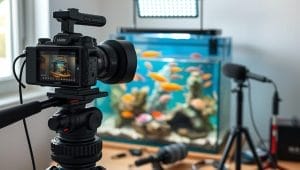
The foundation of any good studio setup includes four key components. You need a reliable camera, quality microphone, stable tripod, and proper lighting. These elements work together to showcase your aquarium’s beauty.
You can create an effective home studio on a modest budget. Prioritize the equipment that makes the biggest difference first. Many successful creators started with basic gear and upgraded gradually.
Your computer serves as the command center for your creative work. Ensure it has enough power to handle footage without frustrating delays. This keeps your workflow smooth and enjoyable.
Think of your setup as a system where each piece supports the others. Good lighting enhances what your camera captures. Clear audio ensures viewers hear your narration perfectly.
Start with the essentials and add gear as you identify specific needs. This approach prevents overwhelm while building a studio setup that grows with your skills. Your organized space means you can start filming quickly whenever inspiration strikes.
Optimizing Lighting for Underwater and Aquarium Scenes
Creating professional-looking aquarium scenes starts with understanding how to work with illumination rather than against it. Proper lighting transforms ordinary footage into something truly special. It brings out the vibrant colors of your fish and plants while minimizing unwanted reflections.
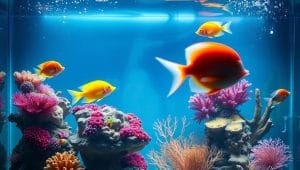
Leveraging Natural Light from Windows
Natural light from a window provides beautiful, color-accurate illumination for your aquarium. This free resource creates soft shadows that enhance your aquatic world’s natural beauty. Position your tank near a window but avoid direct sunlight to prevent harsh reflections.
On bright days, hang a thin white sheet over your windows to diffuse the light. This simple trick creates that soft, professional look while preventing overexposure. North-facing windows offer consistent natural light throughout the day.
Incorporating Artificial Lighting Techniques
When natural light isn’t available, artificial lights ensure consistent results. Choose daylight-balanced LED lights that accurately reproduce colors. These neutral lights show your aquarium’s true vibrancy without yellow-orange tones.
The three-point lighting setup works wonderfully for aquarium scenes. Position your brightest light at 30 degrees to one side, a slightly dimmer fill light opposite, and a small backlight above. Softbox lights create even, diffused illumination that minimizes glass reflections.
Take time to experiment with different lighting angles during test sessions. You’ll discover the perfect balance that showcases your aquarium’s beauty without distracting reflections. Your patience with light adjustment pays off in stunning footage.
Designing a Visually Captivating Background
The space behind your aquarium plays a crucial role in how viewers perceive your underwater world. Your background sets the stage without stealing the show from your aquatic life.
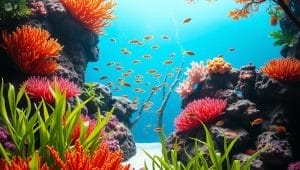
Selecting Backdrops that Enhance Aquarium Colors
Don’t let the pursuit of perfection stop you from getting started. A simple, clean wall works beautifully for showcasing your fish and plants. The key is choosing a background that complements rather than competes.
Neutral tones like soft grays, whites, or blues create a calming background. These color choices keep attention focused on your aquarium’s vibrant life. Your tank provides all the visual interest needed.
A minimalist approach often works best. Adding too many decorative items can distract from the underwater beauty. Sometimes less truly is more when creating your backdrop.
If you film in a shared living space, simply clear away clutter. Ensure the wall behind your aquarium is neat and tidy. This creates an acceptable background without dedicated studio construction.
Consider how your background reflects your content style. Educational pieces might benefit from a few aquarium-related items. Relaxation-focused content works best with completely neutral backdrops.
Avoid backgrounds with mirrors or reflective surfaces. These can show your equipment or create unwanted reflections. Choose a color scheme that enhances rather than fights with your aquarium lighting.
Essential Equipment for High-Quality Video Capture
You might worry that creating stunning aquarium footage requires a huge investment in professional gear. The good news is that fantastic results come from understanding a few key pieces of equipment, not from owning the most expensive items.
Also Read: Common Aquarium Problems and How to Fix Them
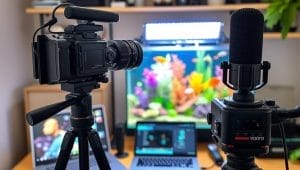
Your camera is the heart of your project. You don’t need the latest model. Many affordable options, like a Canon Rebel or Sony Alpha a6000, produce excellent quality.
Even a modern smartphone can capture beautiful scenes when used correctly. Prioritize features that matter for aquarium work.
Choosing Cameras, Lenses, and Tripods
Look for a camera with strong performance in low light. This is essential for capturing the subtle details in your tank. Reliable autofocus is also critical for tracking your active fish.
While 1080p resolution works well, 4K gives you more flexibility later. It allows for cropping and zooming while maintaining clarity.
A sturdy tripod is non-negotiable. Even tiny shakes are magnified through glass. A stable tripod, like a Vanguard Alta Pro or a simple Amazon Basics model, ensures buttery-smooth footage.
Choose a tripod that adjusts to different heights and angles. This lets you film from eye-level or capture overhead shots looking down into the water.
Investing in the Right Accessories
Your computer or laptop needs enough power for editing. Look for a strong processor and plenty of storage. This prevents frustrating lag when you work on your projects.
Small accessories make a big difference. An external monitor helps you see your composition clearly. A remote control lets you start and stop filming without touching the camera.
Always keep extra batteries on hand. You never want to miss a perfect moment because your equipment died. These simple additions greatly improve your filming experience.
Starting with solid core equipment sets you up for success. You can always add more specialized gear as your skills grow. The right tools empower your creativity.
Enhancing Audio for Clear Aquatic Narration
Great audio is the invisible hero that makes your underwater storytelling come alive. Viewers will forgive imperfect visuals much more readily than poor sound quality. Your narration should sound as clear and natural as the water in your aquarium.
Microphone Options for Crisp Recording
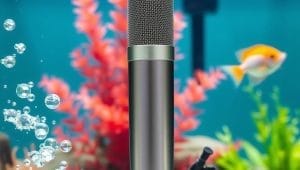
Your camera’s built-in mic often produces thin, echo-prone audio. Invest in a dedicated microphone for professional results. Lavalier microphones clip discreetly to your collar, positioning close to your mouth for clear voice capture.
They effectively isolate your narration from background noise like filter hum. If you prefer to remain off-camera, a cardioid pattern mic on a desk stand captures your voice from the front while minimizing room echo.
Setting Up Audio Equipment in a Home Studio
USB microphones offer the simplest setup—just plug into your computer. XLR mics require an audio interface but provide more professional-grade sound quality. The Rode Wireless GO II system allows you to move freely while maintaining consistent audio.
Test your mic positioning during practice recording sessions. Adjust distance and angle until you achieve clear, natural-sounding results. Don’t forget headphones for real-time monitoring and precise adjustments during editing.
Remember that cleaning up your audio during post-production can further enhance your final product. Your voice should complement your beautiful aquarium visuals perfectly.
Adjusting Room Acoustics for a Pristine Sound Environment
Achieving crystal-clear narration requires more than just a good microphone—it demands proper room acoustics. Your audio quality can make or break your aquarium content, even with stunning visuals. Addressing sound issues before you start saves frustration during editing.
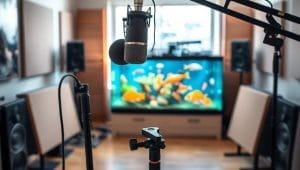
Hard surfaces like tile floors and bare walls create echo by bouncing sound waves around your room. This makes your voice sound hollow rather than clear and intimate. If your aquarium sits in a carpeted room, you’re already ahead—carpet naturally absorbs sound.
For spaces with hard surfaces, simple DIY solutions work wonders. Hang thick blankets on walls or place pillows strategically around your recording space. Even positioning soft furniture nearby helps control reflections.
Professional acoustic treatment includes foam panels and bass traps. These tools absorb unwanted frequencies without deadening the room completely. The goal is natural, clear narration that complements your beautiful aquarium.
Don’t forget external sounds from aquarium equipment. Filters and pumps create constant background noise your microphone picks up. Position your mic away from these sources for cleaner audio.
DIY Tips for Building a Budget-Friendly Studio
You can transform ordinary household items into a surprisingly effective filming space for your aquatic world with just a bit of ingenuity. Many successful creators started with very basic equipment and upgraded gradually as their skills grew.
Begin by using what you already own rather than buying everything new. Your existing smartphone, computer, and basic household lamps can serve as your initial home studio setup. This approach saves you a lot of money while you learn what upgrades matter most.
Get creative with repurposing common items. Thick blankets become excellent sound-dampening panels. White poster boards reflect light to fill shadows beautifully. Existing bookshelves or furniture can double as camera supports.
Shop secondhand for equipment through platforms like Facebook Marketplace. You’ll find quality used cameras, tripods, and lighting gear at a fraction of retail prices. This smart way of shopping stretches your budget significantly.
DIY lighting solutions work wonderfully for aquarium filming. Clamp lights from hardware stores with daylight-balanced LED bulbs provide adjustable illumination. White sheets diffuse harsh light for professional-looking results.
Don’t let the pursuit of perfection delay your start. Your skills and personality matter far more than expensive equipment. Viewers connect with your unique perspective, not your camera model.
Allocate your budget strategically. Invest more in elements that directly impact viewer experience, like decent lighting and clear audio. Economize on less critical items like fancy backdrops.
Remember that a functional home studio doesn’t require thousands of dollars. With creativity and patience, you can build an amazing space that grows with your content creation journey.
Integrating Camera Accessories and Remote Controls
Beyond your main camera gear, thoughtful accessories create efficiency and reliability in your filming routine. These tools transform your workflow from frustrating to fluid.
A simple remote control lets you start and stop filming without walking back to your camera. This saves time and keeps your energy focused on your aquarium content. Consider a remote camera control system for even more flexibility.
An external monitor gives you a clear view of your composition. You’ll see exactly what your camera captures without guessing. This helps frame your aquarium’s most interesting features perfectly.
Mark your tripod position with masking tape on the floor once you find the ideal spot. Also mark where you stand or sit. This ensures consistent framing across all your videos.
Record audio to both your camera and a separate device for safety. If one source fails, you protect your valuable narration. Always keep extra batteries and memory cards nearby.
These small additions make a big difference in your filming experience. They help you capture beautiful aquarium moments with confidence and consistency.
Experimenting with Set Design for a Professional Look
Thoughtful arrangement of your filming space creates visual depth that makes your aquarium content stand out. Your set doesn’t need to be elaborate, but careful planning elevates your work above casual smartphone clips.
Think of your studio design in two layers. The background behind your tank sets the stage, while foreground elements add context and depth to your shots.
Mixing Functional and Aesthetic Elements
For your foreground, keep things simple and functional. A clean desk surface works perfectly. It provides space for equipment or aquarium products you might discuss.
Choose desk and furniture colors that complement your aquarium. Neutral tones like white or natural wood allow your vibrant fish to remain the visual focus. Avoid competing colors that distract from your underwater world.
If you’re building a personal brand, include subtle branding elements. A small logo or consistent color scheme helps viewers remember your channel. Your brand should feel authentic to your personality.
Add one or two carefully chosen decorative items to your background. A piece of driftwood or aquarium-themed book adds interest without overwhelming the scene. These items should reflect your passion for the hobby.
Your home office or recording space should feel genuinely “you.” Viewers connect with authentic personalities. Don’t create a sterile set that lacks personal touch.
Experiment with different arrangements during test sessions. Take photos to compare setups side-by-side. Find the balance that works for your content and personality. For more detailed guidance, explore this resource on building set for studio production.
Implementing Step-by-Step Setup Procedures
Taking a systematic approach to building your aquarium filming space transforms an overwhelming project into manageable achievements. This logical progression ensures you address each critical element in the right order.
Following a clear sequence prevents costly mistakes and saves valuable time. You’ll build confidence as you complete each phase successfully.
From Planning to Test Recordings
Begin with thorough planning where you define your content goals and evaluate your available space. This initial step establishes your foundation and helps create a realistic budget.
Choose your location carefully, considering lighting and acoustics. Even rearranging furniture can create the perfect filming corner in a shared space.
Address sound treatment early by adding soft materials to absorb echo. Test your audio quality before investing in expensive microphones that might not perform well in an untreated room.
Set up your backdrop and basic design simply at first. You can always add decorative elements later once your core workflow is established.
Install your equipment methodically, starting with tripod and camera. Add lighting from multiple angles, then position your microphone while making small adjustments at each step.
Conduct thorough test sessions before creating official content. Film yourself explaining aquarium details while reviewing footage for framing, lighting, and audio issues.
Make incremental improvements based on your test results rather than trying to perfect everything at once. Each small change brings you closer to your ideal studio environment.
Capturing the Beauty of Your Aquarium on Camera
The moment has arrived to transform your prepared studio into a living gallery of underwater motion. You will quickly see how your technical preparation pays off in stunning visual results.
Approach your first sessions with patience. Your fish won’t perform on command. Water conditions change visibility, and you might need multiple attempts to catch that perfect schooling moment.
Experiment with different angles to showcase your tank’s personality. Try straight-on shots for the full scene. Close-ups highlight individual fish character. Overhead perspectives reveal your aquascape’s layout beautifully.
Pay close attention to your camera‘s focus settings. Continuous autofocus tracks fast swimmers smoothly. Manual focus gives you precise control for stationary plant shots.
Always record more footage than you think you need. Aquarium content often reveals hidden treasures during editing. You might discover a beautiful color flash or interesting interaction you missed while filming.
Review your work immediately after each session. Note what worked well and what needs adjustment. This practice helps you refine your technique with every new project.
Your unique perspective matters more than technical perfection. Viewers connect with authentic creators who share genuine passion. Your enthusiasm shines through even if the quality isn’t Hollywood-level.
Start creating regularly instead of waiting for perfect conditions. You’ll learn more from actually making videos than from endless planning. Your journey begins with that first press of the record button.
Final Reflections on Creating a Stellar Video Studio
The true magic of content creation emerges not from perfect equipment, but from the authentic enthusiasm you bring to every project. Your filming journey will evolve over the years as you discover what truly matters for your unique style.
Remember that your home studio grows alongside your skills. Many creators start with basic gear and upgrade gradually. The important thing is to begin creating videos today rather than waiting for the ideal setup.
Your creative space becomes a sanctuary where passion meets purpose. Authentic connection with your audience matters far more than technical perfection. Let your love for aquariums shine through every piece of content you share with people worldwide.
FAQ
What is the most important thing to consider when starting my home studio for aquarium content?
Your content goals are the most important starting point. Knowing if you want to create educational tutorials or relaxing, inspirational clips will guide your decisions on equipment, lighting, and your entire studio setup.
How can I get good quality video without buying expensive lights?
You can achieve great results by leveraging natural light from a window. Position your tank so the window light illuminates the scene indirectly, avoiding harsh glare. A simple reflector can help bounce light and reduce shadows for a more professional look.
What type of microphone is best for recording clear audio in a room with background noise?
A lavalier microphone that clips to your shirt is an excellent choice. It stays close to your sound source (your voice) and minimizes ambient room noise, which is crucial for crisp narration in a home office or living space.
Can I use my smartphone to create high-quality social media videos?
Absolutely! Modern smartphones have incredible cameras. The key is stability—use a tripod to prevent shaky footage. Pair it with good lighting and an external microphone for audio, and you can produce fantastic marketing content.
How do I choose a background that makes my aquarium’s colors stand out?
A solid, neutral-colored wall or a simple backdrop often works best. Darker colors like navy blue or black can make the vibrant colors of your fish and plants pop, creating a visually captivating scene without distracting from the main attraction.
What’s a simple way to improve the sound in my space for recording?
To enhance room acoustics, add soft items like a rug, curtains, or even a couch. These materials absorb sound reflections and echo, resulting in a much cleaner audio recording for your business or personal brand content.
Aquarium setupAquarium video recordingCapturing marine lifeFilming aquatic lifeFish tank videographyRecording equipmentUnderwater videographyVideo production tips
Hi, I'm Millie a passionate fish enthusiast and blogger. I loves learning about all kinds of aquatic creatures, from tropical fish to stingrays.